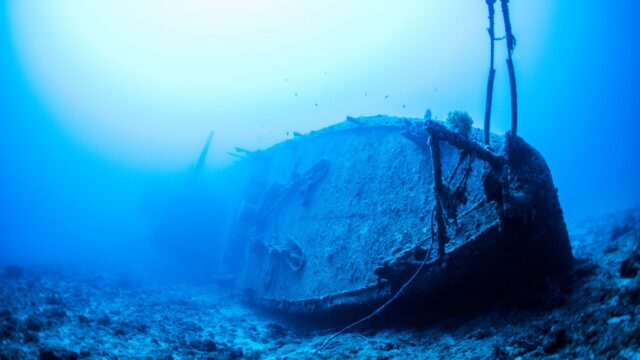
Divers Find Copper Chain Mail on Sunken 1495 Danish Warship
Archaeologists found copper alloy chain mail and a rare munitions chest on Griffin, King Hans's 1495 flagship that sank off Sweden. Here is what the find shows.
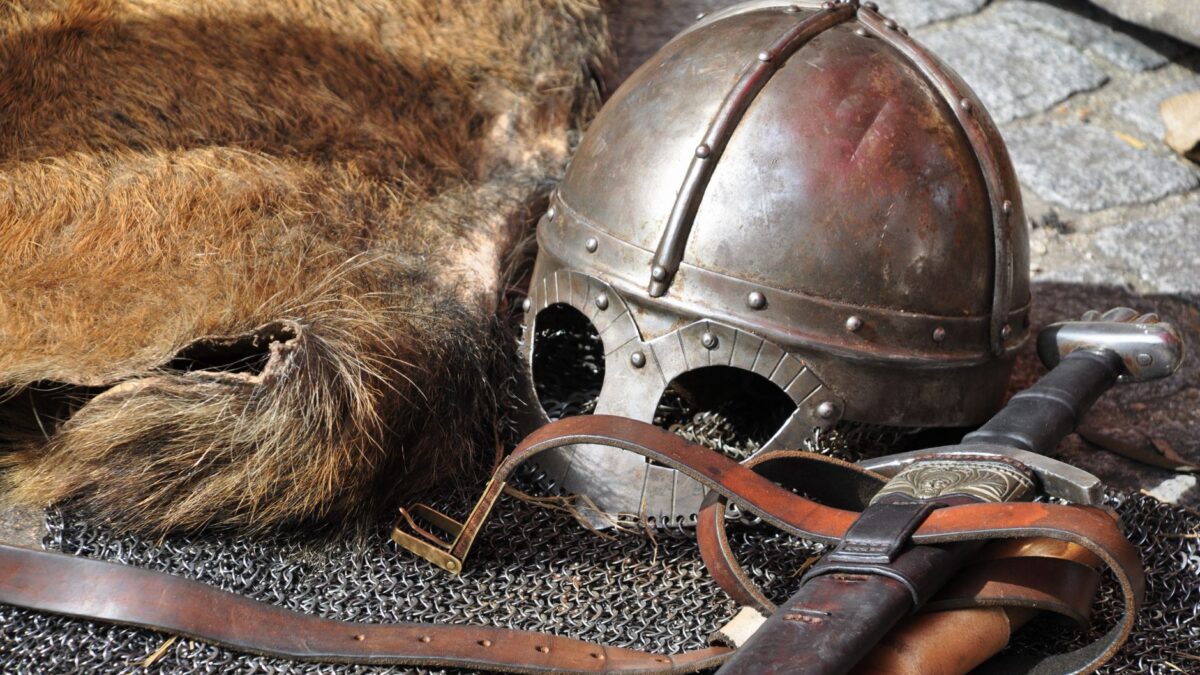
Archaeologists have recovered chain mail made of copper alloy from the wreck of Gribshunden, also called Griffin, a Danish royal warship that exploded and sank in 1495. The armor lay in an area beneath the ship’s forecastle, the raised combat platform at the front, according to a Nov. 24 statement and a Live Science report. The team also found a munitions chest known in German as a “zeuglade.”
Griffin was the flagship of King Hans of Denmark and Norway and doubled as a “floating castle.” Hans was sailing to Kalmar in Sweden to negotiate a political alliance and press Sweden back into a union with Denmark and Norway. He had brought around 150 German mercenary soldiers.
What the divers found under the forecastle
The mail was recovered in October. Rolf Warming, an archaeologist at Stockholm University who leads the Griffin project with Södertörn University, said it was “rather surprisingly, completely exposed” on the wreck. He told Live Science the team found it by chance while documenting the chest, when he noticed fragments of mail near it, along with other items that could indicate more chests.
That leads the team to think the space was a storage area just beneath the forecastle. Rodrigo Pacheco-Ruiz, an archaeologist at the University of Southampton in the U.K. and co-investigator on the project, said historical sources place German mercenaries, called Landsknechts, aboard when the ship sank. They may have stored their armor there, he said, though a precise function for the space has not been established.
Warming described the mail as of exceptionally high quality, but not necessarily the gear of an elite knight. Such armor could stay in use for long periods and be repaired or reused, so the fragments may be older equipment that was still active.
The ship and its loss
The wreck was rediscovered in the Baltic Sea off Sweden’s south coast in the 1970s and formally identified as Griffin in 2013. During a stop at the port of Ronneby, in what is now Sweden, the ship caught fire, perhaps after a lightning strike, and sank. Eyewitnesses who escaped reported that many men died. Hans was onshore at the time.
The wreck is well preserved, according to Live Science, because the Baltic has low salinity and lacks shipworms. These are marine mollusks nicknamed the “termites of the sea” for the damage they do to wood.
How sure is this?
The results come from a field season and a university statement, not a peer-reviewed paper, and no journal or DOI was given. The identification of the space as a stowage area is the team’s working interpretation. Warming said it is probable that the mail belonged to the mercenaries but it could belong to someone else, and the same uncertainty applies to the chest. The contents of the chest are unknown.
What comes next
The team took samples from the chest to determine what it held and to look for traces of gunpowder. Chemical analysis is also under way to investigate where the armor and the chest came from. Warming said a central question is whether the mercenaries brought their own ammunition and tool kit aboard or whether the royal fleet supplied them, which could shed light on supply chains and military logistics of the period.
Warming said the discovery shows how much remains on the wreck site.
Source: Live Science
Site editor: Nikita Sheikin