November’s Beaver Supermoon Rises Nov. 24, First of Four in a Row
The Beaver Moon on Nov. 24 is the first of four straight supermoons, up to 13% larger and 30% brighter than the year's smallest full moon.
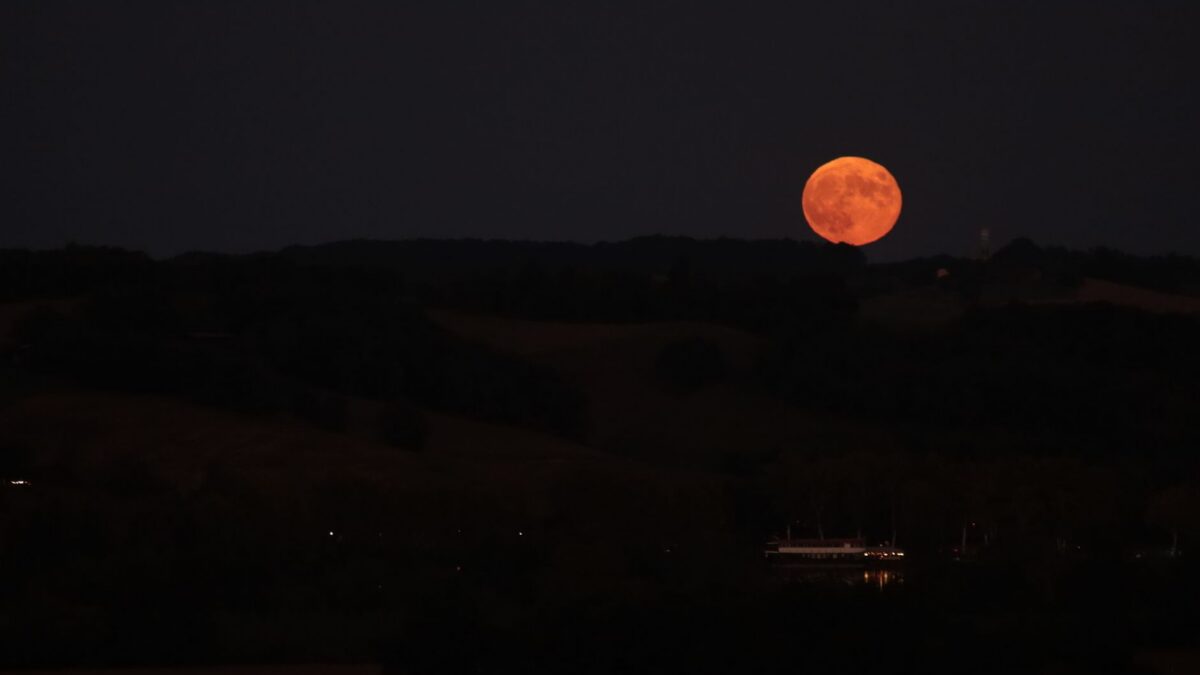
November’s full moon rises on Nov. 24 and is a supermoon, the first of four in a row, according to Space.com. Supermoons can appear up to 13% larger and 30% brighter than the smallest full moon of the year, which fell in May 2026.
Visibility depends on your location and the weather. A planned livestream from the Virtual Telescope Project, which was to start at 10:30 a.m. EST (1530 GMT) with views from robotic telescopes in Manciano, Italy, was cancelled because of clouds over the site, Space.com reported in an editor’s note.
What makes this a supermoon
The moon travels around Earth in an elliptical orbit that takes 27 days. The closest point on that path is called perigee, and the farthest is apogee. Space.com describes a supermoon as a full moon that reaches peak illumination within 90% of perigee.
The small full moon in May occurred while the moon was near apogee. A full moon happens when the moon sits opposite the sun in Earth’s sky, so the same lunar disk can look different in size and brightness depending on where it is along its orbit.
Where the Beaver Moon name comes from
The name Beaver Moon comes from the time of year. According to the Old Farmer’s Almanac, as cited by Space.com, the moon rises when beavers are busy building dams and preparing for winter.
How the figures were given
The size and brightness figures are general comparisons between a supermoon and the year’s smallest full moon, as reported by Space.com. They are upper limits (“up to”), and the outlet did not give separate figures for the Nov. 24 moon itself. Space.com did not name the other three supermoons in the series in this report.
How sure is this?
This is a predictable orbital event, not a new research result, and no study or journal is involved. The supermoon definition and percentages come from Space.com’s reporting, and the exact appearance of the moon at any location depends on cloud cover and local conditions.
For later dates in the sequence, see the site’s full moon calendar with Eastern times and traditional names.
Source: Space.com
Site editor: Nikita Sheikin