What Is a Supervolcano? Yellowstone, Toba and the Real Odds
Supervolcanoes leave holes tens of kilometers wide, but their giant eruptions are rare. Here is what the term means, where they are and what Yellowstone is more likely to do next.
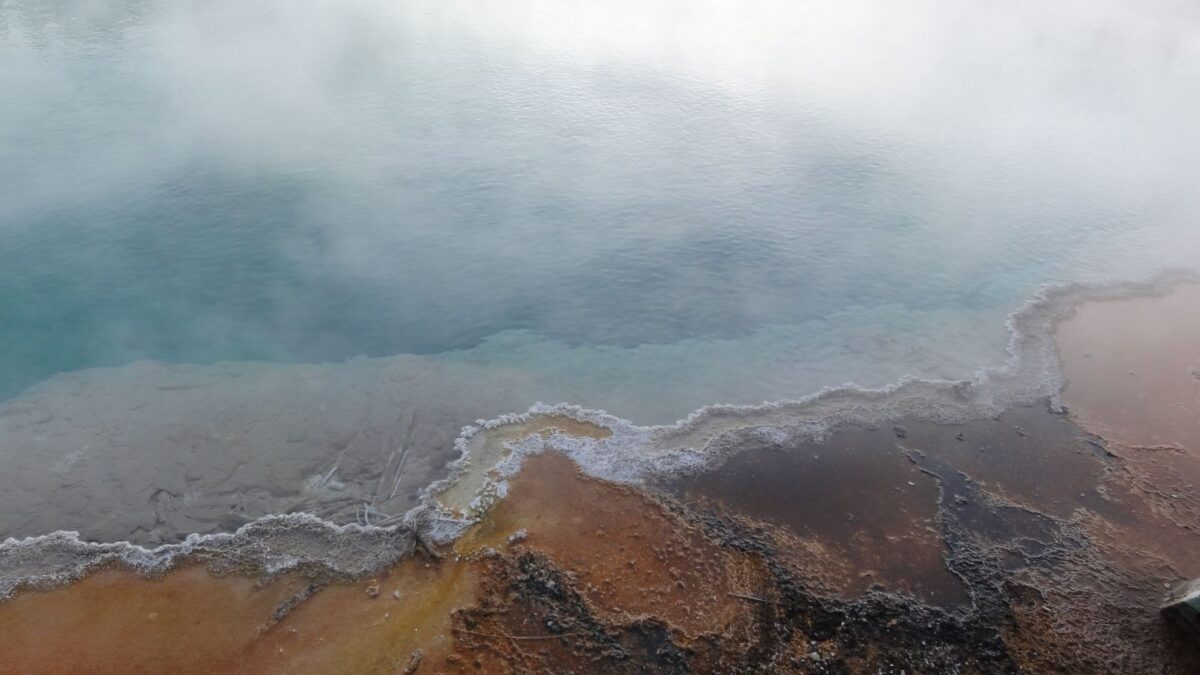
A supervolcano is a volcano that has produced at least one eruption of magnitude 8 on the Volcanic Explosivity Index, throwing out more than 1,000 cubic kilometers (240 cubic miles) of material, according to the US Geological Survey (USGS). Yellowstone, Long Valley in California, Toba in Indonesia and Taupo in New Zealand are examples. The USGS puts the yearly chance of another Yellowstone super-eruption at about 1 in 730,000.
These eruptions do not build a classic cone. They empty a magma chamber so fast that the ground above collapses into a vast basin called a caldera, often tens of kilometers across.
What makes a volcano a supervolcano?
The label comes from the size of a single eruption, not from the shape or activity of the volcano. Scientists rank explosive eruptions on the Volcanic Explosivity Index (VEI), a scale from 0 to 8 in which each step means about ten times more erupted material. VEI 8 is the top, for deposits larger than 1,000 cubic kilometers.
Such eruptions are rare. The USGS notes that none of the more than 5,000 eruptions with a VEI assigned from the last 10,000 years reached 8. Every known VEI 8 eruption happened tens of thousands to millions of years ago, so scientists classify them by measuring the ash and rock they left behind.
For scale, the USGS compares Yellowstone’s three giant eruptions with Mount St. Helens in 1980: they were roughly 6,000, 700 and 2,500 times larger. Our explainer on why volcanoes erupt covers what happened at St. Helens.
Where are the world’s supervolcanoes?
The USGS Yellowstone Volcano Observatory names Yellowstone, Long Valley, Toba and Taupo, and says large calderas in Japan, Indonesia and South America are likely candidates too.
| Volcano | Location | Giant eruptions (approx.) | Notes |
|---|---|---|---|
| Yellowstone | Wyoming, Idaho, Montana | 2.1 million, 1.3 million and about 631,000 years ago | The 1.3-million-year eruption was smaller than VEI 8 |
| Long Valley | Eastern California | About 760,000 years ago (Bishop Tuff) | Volume estimates for its Bishop Tuff deposit vary with the method used |
| Toba | Sumatra, Indonesia | About 74,000 years ago | The most explosive known eruption of the last 2.6 million years, with published volume estimates in the thousands of cubic km |
| Taupo | North Island, New Zealand | About 27,000 years ago | The most recent supervolcanic eruption, per USGS |
Ages and volumes are estimates. Yellowstone’s youngest giant eruption is often rounded to 640,000 years, and volume figures change with how deposits are measured, as magma or as loose ash and rock.
How likely is a Yellowstone super-eruption?
Very unlikely in any human time frame. The USGS approximates the yearly chance of another caldera-forming eruption at Yellowstone at about 1 in 730,000, or 0.00014 percent. It calls the figure rough, because it comes from averaging just two intervals between three past eruptions, which it says is hardly enough to make a critical judgment.
The USGS compares those odds to the chance of a 1-kilometer asteroid hitting Earth; our guide on how NASA tracks asteroid impact risk explains that side of the comparison.
Yellowstone is also not “overdue.” The USGS puts the average gap between its giant eruptions at about 725,000 years, and says that an average of just two intervals is meaningless. Volcanoes do not erupt on a schedule.
What would a super-eruption do?
A Yellowstone super-eruption would be a regional disaster with global side effects. The USGS describes falling ash across a wide area, heavy impacts in Montana, Idaho and Wyoming, collapse of the ground into a new caldera, and short-term changes to global climate lasting years to decades.
The effects of past super-eruptions on life are still argued over. Toba is the best-studied case. Some researchers once proposed it caused a “volcanic winter” that nearly wiped out early humans. Later evidence has weakened that idea: a 2013 study in PNAS found Toba ash in Lake Malawi sediments without signs of a volcanic winter in East Africa, and a 2020 study in Nature Communications reported that people kept making the same stone tools in India’s Son River valley before and after the eruption. These are regional records, and debate about wider effects continues.
What is more likely to happen at Yellowstone?
Smaller events are far more likely than a super-eruption. The USGS ranks them this way:
- Hydrothermal explosions. The most likely event: superheated water flashes to steam just below the surface and blasts out a crater. Some craters in Yellowstone exceed 1 km across, and the youngest formed within the past few thousand years.
- Lava flows. The most likely kind of volcanic eruption. About 80 mostly nonexplosive eruptions have happened since the last giant one, and the most recent lava flow, on the Pitchstone Plateau, came about 70,000 years ago.
- Earthquakes. Yellowstone has frequent small quakes and occasional larger ones, which are a normal part of an active volcanic area.
- Caldera-forming eruption. The least likely, and the worst case.
Hydrothermal areas are dangerous for a simpler reason: boiling water under thin crust. Stay on marked boardwalks and trails in any geothermal area.
How is Yellowstone monitored?
The Yellowstone Volcano Observatory, a partnership led by the USGS, tracks earthquakes with seismometers and ground movement with GPS stations, along with gas and temperature measurements. It says it has detected no signs that an eruption is imminent.
The USGS also notes that earthquakes cannot yet be predicted; our explainer on how earthquakes are measured covers how their size and shaking are reported.
Bottom line
A supervolcano is a volcano that has had at least one VEI 8 eruption, over 1,000 cubic kilometers of material. Yellowstone, Long Valley, Toba and Taupo qualify. The USGS puts the yearly odds of another Yellowstone super-eruption at about 1 in 730,000, says the volcano is not overdue, and expects hydrothermal explosions and lava flows to be the likelier events.
FAQ
Is Yellowstone going to erupt soon?
The USGS says it has seen no signs that an eruption is imminent. Its rough estimate for another caldera-forming eruption is about 1 in 730,000 per year.
When was the last supervolcano eruption?
The most recent was at Taupo in New Zealand, about 27,000 years ago, according to the USGS. Toba in Indonesia erupted on a similar scale about 74,000 years ago.
How many supervolcanoes are there?
There is no fixed count, because the label depends on finding and measuring ancient deposits. The USGS names Yellowstone, Long Valley, Toba and Taupo and says large calderas in Japan, Indonesia and South America likely qualify too.
Would a Yellowstone eruption end life on Earth?
No. The USGS describes severe regional damage from ash and a short-term global climate effect lasting years to decades, not the end of life on Earth.