How Batteries Work: Ions, Electrons and Why Lithium-Ion Wears Out
Every time your phone charges, lithium ions shuttle from one side of the battery to the other and back. That shuttle earned three chemists the 2019 Nobel Prize.
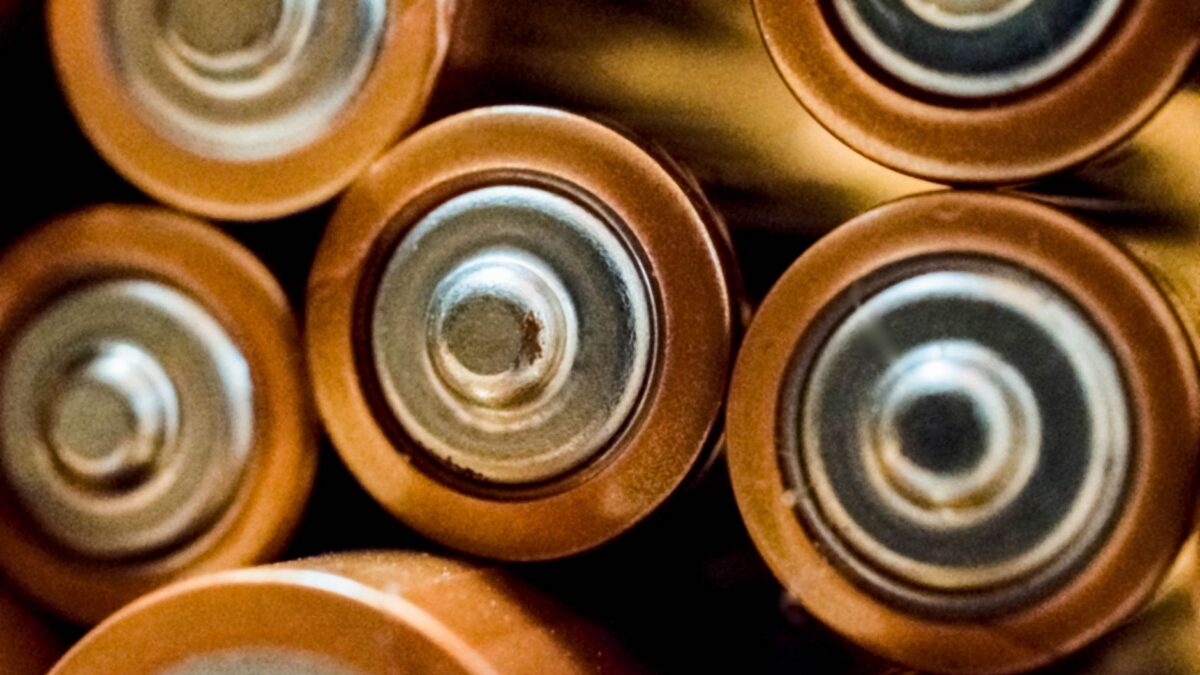
A battery stores energy in chemicals and releases it as electricity. It has two electrodes, an anode and a cathode, separated by an electrolyte. When the battery powers a device, electrons flow out through the device’s circuit while charged atoms called ions move through the electrolyte inside the battery to balance the charge. In a rechargeable lithium-ion battery, charging pushes the lithium ions back.
Picture the battery as two parking lots joined by a one-lane road for ions, while the electrons take a long detour through your phone. The electrons can only make that trip if the ions can make theirs, which is why a battery sitting on a shelf does not empty itself in seconds.
What are the parts of a battery?
Every battery has the same basic parts, according to the US Department of Energy’s explainer DOE Explains: Batteries: two terminals, the cathode and the anode, separated by an electrolyte. Most also have a thin porous separator that keeps the two electrodes from touching, which would cause a short circuit.
- Anode. The negative electrode during discharge. In most lithium-ion batteries it is made of graphite, a form of carbon.
- Cathode. The positive electrode during discharge, usually a metal oxide in lithium-ion cells.
- Electrolyte. A liquid, gel or solid that lets ions pass but not electrons.
- Separator. A porous layer that keeps the electrodes apart while letting ions through.
Why do electrons and ions take different paths?
The split between the two paths is what makes a battery useful. A chemical reaction at the anode releases electrons, and a reaction at the cathode takes them in. The electrolyte blocks electrons, so the only way for them to get from one side to the other is through the outside circuit: your flashlight bulb, phone or car motor. Meanwhile, ions travel through the electrolyte to keep the charges balanced, the DOE explains.
Disconnect the circuit and the electrons have nowhere to go, so the reaction stops and the energy stays stored. That is why a charged battery can be put away and used later. The voltage of a battery depends on how strongly the two electrode materials pull on electrons; pairing materials with a bigger difference gives a higher voltage.
How does a lithium-ion battery charge and discharge?
In a lithium-ion battery, lithium ions shuttle between two materials that can hold them inside their structure. When the battery discharges, ions leave the graphite anode, cross the electrolyte and slot into the metal-oxide cathode, while electrons travel the same direction through the device. Charging uses outside power to drive both back the other way.
The Royal Swedish Academy of Sciences put the advantage simply when it awarded the 2019 Nobel Prize in Chemistry: lithium-ion batteries are not based on chemical reactions that break down the electrodes, but on lithium ions flowing back and forth between anode and cathode.
| Step toward lithium-ion (Nobel Committee) | Who | What it achieved |
|---|---|---|
| 1970s | M. Stanley Whittingham | Titanium disulfide cathode that holds lithium ions; lithium metal anode; just over 2 volts, but too explosive to be practical |
| 1980 | John B. Goodenough | Showed a cobalt oxide cathode with lithium ions can reach about 4 volts |
| 1985 | Akira Yoshino | First commercially viable lithium-ion battery, with a carbon (petroleum coke) anode instead of reactive lithium metal |
| 1991 | (market) | Lithium-ion batteries first went on sale |
Why do lithium-ion batteries beat older types?
Lithium is the lightest metal and gives up electrons readily, so lithium-ion cells pack more energy into less weight than older rechargeable chemistries such as lead-acid and nickel-metal hydride. The Nobel Committee notes that Yoshino’s design produced a lightweight, hardwearing battery that could be charged hundreds of times before its performance deteriorated.
Lithium-ion batteries have also improved steadily. The DOE’s Vehicle Technologies Office reported that the volumetric energy density of lithium-ion batteries for electric vehicles rose from 55 watt-hours per liter in 2008 to 450 watt-hours per liter in 2020, more than eight times higher (DOE Fact of the Week #1234).
| Battery type | Rechargeable? | Typical uses | Energy for its weight |
|---|---|---|---|
| Alkaline (zinc and manganese dioxide) | No (standard cells) | Remotes, flashlights, toys | Moderate |
| Lead-acid | Yes | Car starter batteries, backup power | Lowest of the common types |
| Nickel-metal hydride | Yes | Rechargeable AA cells, many hybrid cars | Medium |
| Lithium-ion | Yes | Phones, laptops, electric vehicles, grid storage | Highest of the common types |
Exact energy densities vary widely with design and change as the technology improves, so the last column is a ranking rather than a figure.
Why do batteries wear out?
Rechargeable batteries wear out because the chemistry does not reverse perfectly. The DOE says the reactions in a rechargeable battery do not completely reverse as it is charged and discharged, and over many cycles this changes the chemistry and structure of the battery materials, which can reduce both performance and safety. The result is a battery that holds less charge than when it was new.
How fast a battery ages depends on its chemistry, its design and how it is used, which is why device makers publish their own charging and storage guidance.
Why can lithium-ion batteries catch fire?
Lithium-ion batteries hold a lot of energy in a small space and contain a flammable liquid electrolyte. If a cell is damaged, defective or overcharged, it can heat up enough to trigger reactions that release still more heat, a runaway loop known as thermal runaway, which can spread to neighboring cells. Damaged or swollen batteries should be handled according to the manufacturer’s instructions or local recycling guidance.
Batteries are only one way to handle electricity: solar cells make it directly from light, as explained in how solar panels work. For nature’s own sudden discharge of stored charge, see what causes lightning.
Bottom line
A battery is a controlled chemical reaction that can only run when electrons travel through your device. In lithium-ion batteries, lithium ions shuttle between graphite and a metal oxide, which is why they are light, rechargeable and dense with energy. They wear out because each cycle leaves a little damage behind, and they can overheat if damaged.
FAQ
What is the difference between the anode and the cathode?
During discharge, the anode releases electrons into the circuit and the cathode takes them in. In most lithium-ion batteries the anode is graphite and the cathode is a metal oxide.
Who invented the lithium-ion battery?
The 2019 Nobel Prize in Chemistry went to John B. Goodenough, M. Stanley Whittingham and Akira Yoshino for developing it. Yoshino built the first commercially viable version in 1985, and the batteries reached the market in 1991.
When was the battery invented?
The DOE dates the invention of the battery to 1800. Modern rechargeable lithium-ion batteries arrived nearly two centuries later.
Why does my phone battery hold less charge over time?
Each charge and discharge leaves small, permanent changes in the battery’s materials. Over hundreds of cycles those changes add up, so the battery stores less energy than when it was new.