How Caves Form: Acid, Lava, Waves and Ice
A cave passage may grow by no more than a millimeter a year, and a foot-long stalactite can hold thousands of years of dripping water. Here is how the underground gets hollowed out.
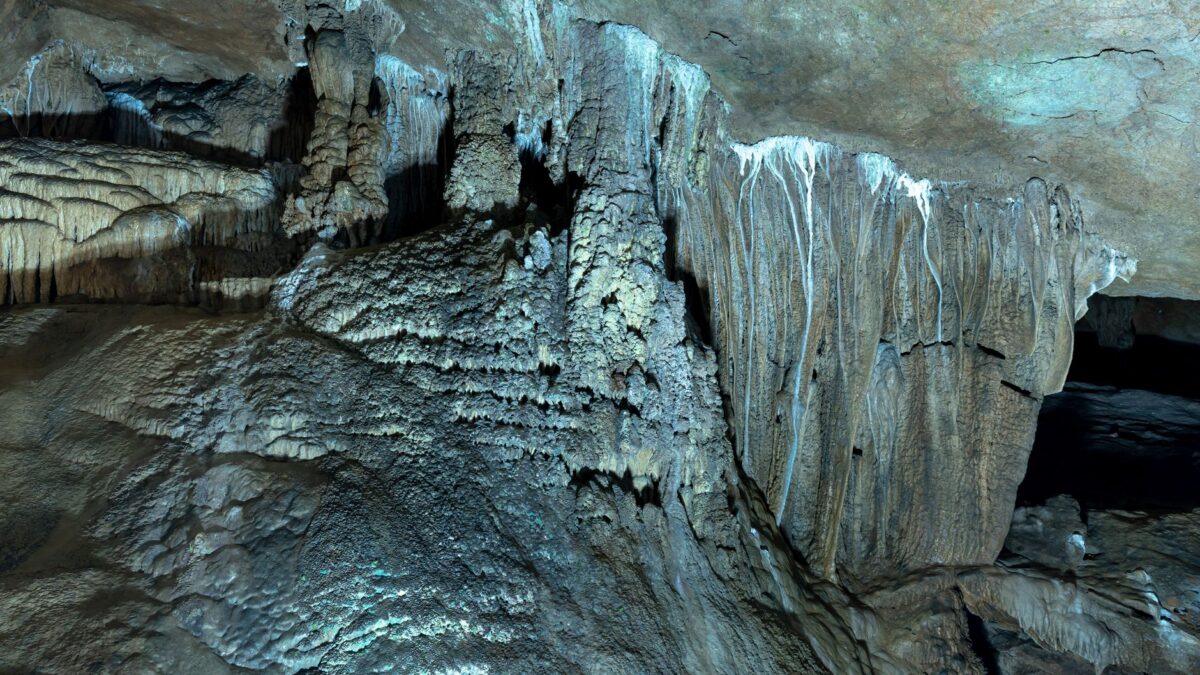
Most caves form when rainwater, made weakly acidic by carbon dioxide it picks up from soil, seeps into cracks in limestone and slowly dissolves the rock. According to the National Park Service, streams can widen such passages by at most about 1 mm a year, so large caves take hundreds of thousands to millions of years. Other caves form in cooling lava, in sea cliffs battered by waves, and inside glaciers.
The dripping formations inside, stalactites and stalagmites, are the same chemistry running in reverse: dissolved rock coming back out of the water.
How does water dissolve solid rock?
Rain falls through the air and then through soil, where decaying plants and roots release carbon dioxide. The water absorbs that gas and becomes carbonic acid, the same weak acid in sparkling water. It is weak, but limestone, marble and dolomite are made of carbonate minerals that it dissolves over time.
The National Park Service explains that these “solution caves” form along joints, faults and layers in the rock, where water can get in. Water enters through cracks, sinkholes and streams that disappear underground. Once a crack becomes a channel, flowing water carries sediment that scours it wider, so physical erosion helps the chemistry along. Gypsum and rock salt dissolve even more easily, and caves in them are usually found in dry climates where they survive at the surface.
Much of the limestone in caves formed from the shells and skeletons of sea creatures on ancient sea floors, then was lifted above sea level by moving plates. We explain that lifting in how mountains form.
Can caves form from below?
Yes. Some caves were dissolved by water rising from deep underground instead of rain soaking down. That water can carry compounds that form sulfuric acid, a far stronger acid than carbonic acid, along with extra carbon dioxide. The NPS gives sources such as volcanic activity and sulfur from oil and gas deposits.
Lechuguilla Cave in Carlsbad Caverns National Park, New Mexico, formed this way, as did Jewel Cave and Wind Cave in South Dakota, according to the NPS. Caves dissolved from below often have mazes of passages and unusual minerals not found in ordinary limestone caves.
How do stalactites and stalagmites grow?
Stalactites and stalagmites grow when water dripping into a cave gives up carbon dioxide to the cave air and can no longer hold all of its dissolved calcite. The calcite comes out as a thin mineral layer, drop after drop.
- Stalactites hang from the ceiling and grow downward, like icicles.
- Stalagmites build up from the floor where the drops land.
- Columns form when the two meet.
- Soda straws are thin, hollow stalactites. Because water runs down the inside, they grow longer faster than solid formations.
Growth is slow and uneven. Cumberland Gap National Historical Park gives a rule of thumb that a formation gains about one cubic inch every 100 years on average, so a 12-inch stalactite that is 3 inches wide at the base represents about 2,800 years of growth, according to its Gap Cave page. The NPS stresses that real rates depend on the acidity of the water, the drip rate and other factors, and that rates today may differ from rates in the past.
That slow growth is why cave formations are protected in parks, and why broken ones do not grow back in any human timescale.
What other kinds of caves are there?
Not every cave is dissolved. The main other types form in quite different ways:
| Cave type | How it forms | Where to find examples |
|---|---|---|
| Solution cave | Weak acid dissolves limestone, marble, dolomite or gypsum | Mammoth Cave, Kentucky; Carlsbad Caverns, New Mexico |
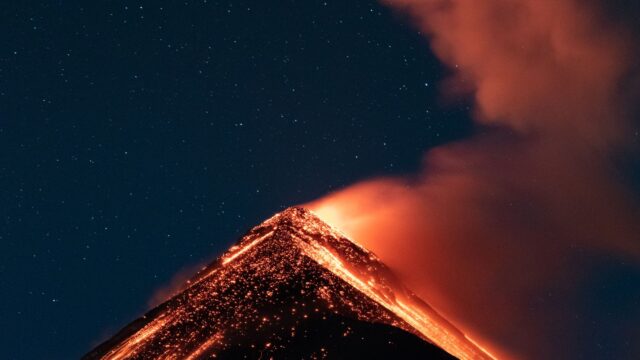
| Lava tube | Surface of a lava flow cools into a crust while molten lava keeps flowing underneath, then drains away | Hawaiʻi; Lava Beds National Monument, California |
| Sea cave | Waves pound weak spots in coastal cliffs | Rocky coastlines worldwide |
| Glacier cave | Meltwater or warm air carves tunnels inside glacier ice | Glaciers in Alaska, Iceland and the Alps |
| Talus cave | Gaps between large fallen boulders | Canyons and rockfall slopes |
Lava tubes form during a single eruption, far faster than solution caves. Our guide to why volcanoes erupt explains why runny basalt lava, the kind that builds tubes, flows rather than explodes. Glacier caves are the shortest-lived: they change shape each season and can collapse without warning.
What are the longest and deepest caves?
The longest known cave is Mammoth Cave in Kentucky, where the National Park Service says mapped passages stretch over 400 miles (about 640 km) as of November 2026. Surveyors keep adding new passages, so the figure grows from year to year.
The deepest known caves are in the Arabika Massif in the western Caucasus, Georgia, where Krubera (also called Voronya) and Veryovkina caves both descend more than 2,000 meters (about 6,600 feet) below their entrances. Expeditions have revised both depths several times, and which one holds the record depends on the latest survey.
Bottom line
Most caves are dissolved out of limestone and similar rocks by rainwater carrying weak carbonic acid from the soil, a process that widens passages by around a millimeter a year at most and takes hundreds of thousands of years or more. Some caves are dissolved from below by sulfuric acid, while lava tubes, sea caves and glacier caves form in other ways. Stalactites and stalagmites grow as dripping water releases carbon dioxide and leaves calcite behind, often about a cubic inch per century.
FAQ
How old are most caves?
Many limestone caves are hundreds of thousands or even millions of years old, according to the NPS. Lava tubes can be much younger, since they form during a single eruption.
Which is which, stalactite or stalagmite?
Stalactites hang from the ceiling and stalagmites rise from the floor. A common memory aid is that stalactites hold on tight to the ceiling.
Are caves still forming today?
Yes. Water is still dissolving limestone in active caves, and formations are still growing wherever water drips. The changes are too slow to see in a human lifetime except in soda straws and other thin formations.
Why are some caves warm and others cold?
Deep inside, many caves stay close to the average yearly temperature of the area above them all year. Caves that trap cold winter air can hold ice, while caves near volcanic heat can be warm.