Why Metals Rust and Why Some Metals Protect Themselves
Rust flakes off and lets the damage go deeper, while the green skin on the Statue of Liberty does the opposite. The difference is all in the oxide layer.
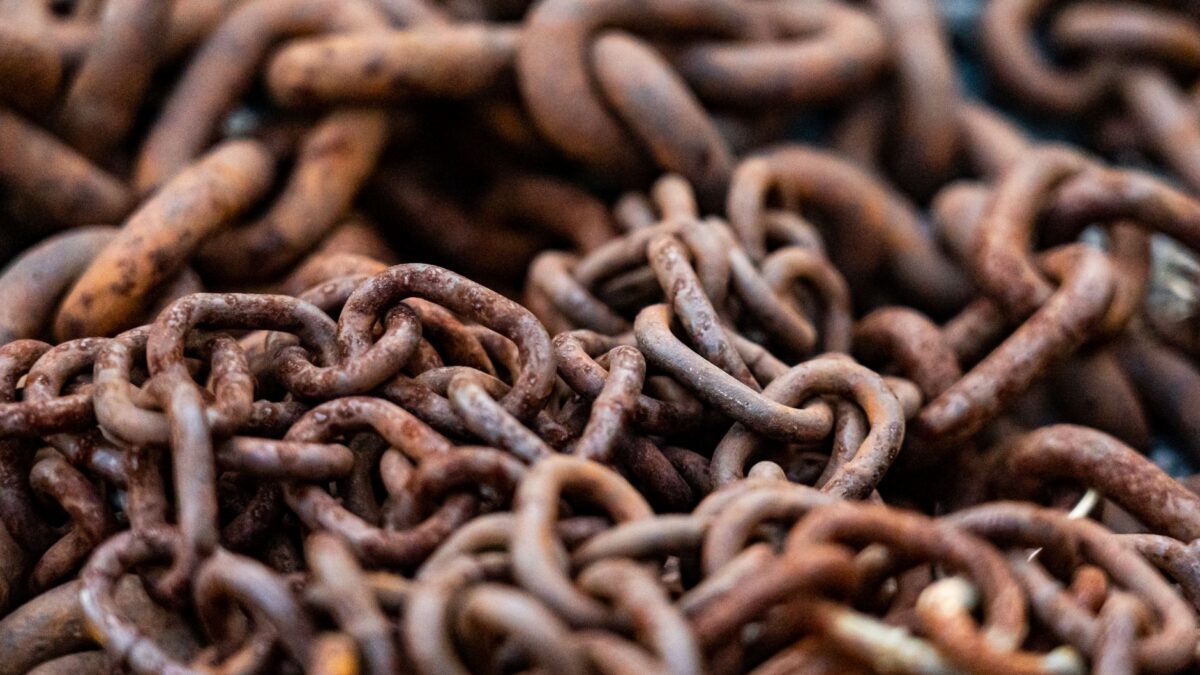
Iron rusts because it reacts with oxygen and water to form hydrated iron oxide, the flaky red-brown solid we call rust. Salt and humidity speed the reaction by helping electric charge move through the water on the metal’s surface. Metals such as aluminum, stainless steel and copper also react with air, but they form a thin, tight oxide or mineral layer that seals the surface and slows further damage.
Rust is different because it crumbles and flakes away, exposing fresh iron underneath, so the damage keeps going.
What happens chemically when iron rusts?
Rusting is a slow electrochemical reaction, close to what happens inside a battery. At one spot on the metal, iron atoms give up electrons and dissolve into the water as iron ions. The electrons travel through the metal to another spot, where oxygen dissolved in the water takes them up. The iron ions and the products of that oxygen reaction then combine and, with more oxygen, form rust.
All three ingredients are needed: iron, oxygen and water. Iron kept in dry air rusts very little, and iron sealed away from oxygen, for example under paint, rusts very little too. Because the process runs like a tiny electric cell, it is often explained alongside how batteries work.
Rust also takes up more space than the iron it replaced. That is why rusting steel bars inside concrete can crack the concrete around them.
Why do salt and humidity make rust worse?
Salt makes rust worse because dissolved salt makes water a much better conductor of electricity. With more charged particles in the water, the flow of electrons and ions between the two spots on the metal speeds up, and the reaction runs faster.
Humidity matters because rust needs a film of water, even a microscopic one. In very dry desert air, iron can last a long time. Near the sea, salt spray and damp air combine, which is why coastal railings, cars driven on salted winter roads and ships need constant protection. Our explainer on why the ocean is salty covers where all that sea salt comes from.
Why don’t aluminum and stainless steel rust?
Aluminum and stainless steel do react with oxygen, but the oxide they form protects them. On aluminum, a very thin layer of aluminum oxide forms almost as soon as fresh metal meets air. It sticks tightly and blocks oxygen and water from reaching the metal below.
Stainless steel works the same way with a different element. The World Stainless Association explains that all stainless steels contain at least 10.5% chromium. Chromium reacts with oxygen to form an invisible chromium-rich oxide film that repairs itself if it is scratched, as long as oxygen is present. More chromium, and additions such as molybdenum, make the film stronger, which is why some grades are chosen for seawater and others for kitchens.
| Metal | What forms on the surface | Does it protect the metal? |
|---|---|---|
| Iron and ordinary steel | Rust (hydrated iron oxide) | No; it is porous and flakes off |
| Aluminum | Aluminum oxide | Yes; thin, tight and quick to form |
| Stainless steel | Chromium-rich oxide film | Yes; self-repairing with oxygen present |
| Copper | Green patina of copper minerals | Yes; slows further corrosion |
| Zinc (galvanizing) | Zinc oxide and carbonate | Yes; and zinc corrodes in place of the steel beneath |
| Gold | Nothing in ordinary air | Not needed; gold does not corrode in air |
How does galvanizing protect steel?
Galvanizing coats steel with zinc, which protects it in two ways. First, the zinc acts as a barrier and forms its own protective surface layer. Second, zinc gives up electrons more readily than iron. Where the coating is scratched and both metals touch the same water, the zinc corrodes instead of the steel, a trick called sacrificial protection.
The same idea is used on a large scale. Ships and pipelines carry blocks of zinc, aluminum or magnesium, called sacrificial anodes, that slowly corrode away so the steel hull or pipe does not. Paint, oil and plastic coatings work more simply, by keeping water and oxygen off the iron.
Why is the Statue of Liberty green?
The Statue of Liberty is green because its copper skin has reacted with air, water and pollution to form a patina, a layer of copper minerals. When the statue was dedicated in 1886, it was the brown color of a new penny. According to the National Park Service, it took about 30 years for the copper to fully oxidize and form the patina. That mineral layer now shields the metal beneath, much as oxide films protect aluminum.
The copper sheeting is only 3/32 of an inch thick, about 2.5 mm, or the thickness of two American pennies placed together, the park service says. The American Chemical Society describes the color change as a sequence: copper first formed a reddish oxide, then sulfur compounds from polluted air helped form a blue-green copper sulfate mineral, and salt spray added a copper chloride mineral. Unlike rust, these minerals stay put.
How much does corrosion cost?
Corrosion is expensive. A 2016 study by NACE International, the corrosion engineers’ association now called AMPP, estimated the global cost of corrosion at about US$2.5 trillion a year, roughly 3.4% of world GDP, based on 2013 figures. The same study estimated that using known best practices for corrosion control could save 15% to 35% of that cost. The figure was built from national studies that used different methods, so it is a broad estimate rather than a precise count.
Bottom line
Iron rusts when oxygen and water take electrons from it and form flaky iron oxide that falls away and exposes more metal, and salt speeds this up by making water conduct better. Aluminum, stainless steel with at least 10.5% chromium and copper form tight surface layers that protect them instead. Zinc coatings and sacrificial anodes guard steel by corroding first, and corrosion overall was estimated in 2016 to cost about US$2.5 trillion a year worldwide.
FAQ
Is rust the same thing as corrosion?
Rust is one kind of corrosion: the corrosion of iron and steel. Corrosion is the broader term for any metal breaking down by chemical reaction with its surroundings.
Can stainless steel ever rust?
Yes, in some conditions. If the chromium oxide film cannot re-form, for example where oxygen is cut off or salt attacks a small spot, stainless steel can show rust stains or pitting.
Why does rust form faster on a car in winter?
Road salt dissolves in slush and coats the underside of cars. The salty water conducts electricity well, which speeds up the reaction that turns steel into rust.
Does gold rust?
No. Gold does not react with oxygen or water in ordinary conditions, which is why ancient gold objects can still look bright after thousands of years.