New Groove-Toed Frog Species Found in Hainan’s Tropical Rainforest
Researchers have described a new frog, the Hainan groove-toed frog, in China's Hainan Tropical Rainforest National Park. How it was confirmed.
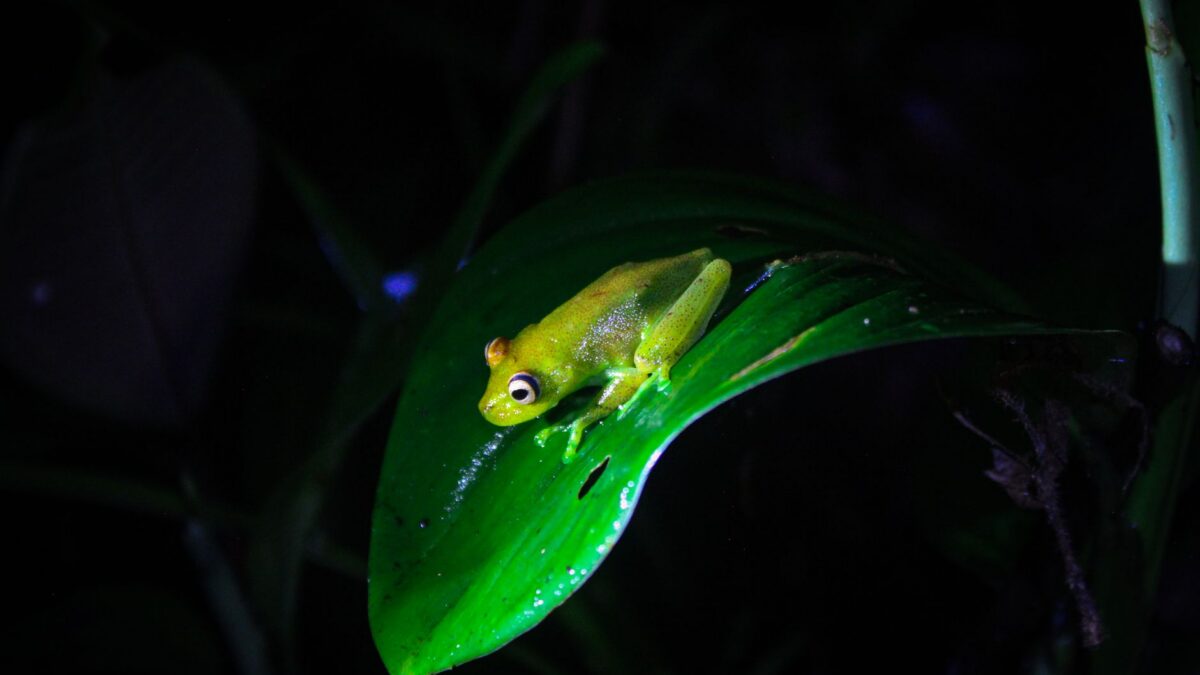
Scientists have identified a frog species new to science in the Hainan Tropical Rainforest National Park in south China, after field surveys that ran from 2024 to 2026. The animal has been named the Hainan groove-toed frog, Rana hainan, and so far it is known only from a handful of protected zones inside the park.
The description was published in ZooKeys, an international journal on animal taxonomy, by a team from the School of Life Sciences at Hainan Normal University and other universities, Xinhua reported on Nov. 8.
How researchers confirmed a new frog
During their amphibian surveys, the team noticed frogs with traits that did not match any known species. The researchers then checked the idea in two ways. They compared the frogs’ body features, known as morphology, with those of related species. They also ran a molecular phylogenetic analysis, which uses DNA to place an animal on the family tree of its relatives and shows whether it sits on a branch of its own.
According to Xinhua, both lines of evidence, along with further comparative tests, pointed to a distinct species. The work combined field observation of wild frogs with laboratory comparisons.
Where the Hainan groove-toed frog lives
The frog has been found mainly in tropical rainforest at elevations between 350 and 950 meters. Its main habitat is evergreen broad-leaved forest, where the trees keep wide leaves all year.
The national park was established in 2021. It protects one of China’s most concentrated and best-preserved stretches of tropical rainforest, with mountains, streams and several forest types that give frogs and other animals many places to live.
The reports give no population estimate for the new frog, and its full range is not yet known. Finding it in several protected zones means it is not limited to a single stream or slope, but how widespread it is outside those areas has not been reported.
What the find means for the park
Wang Jichao, dean of the School of Life Sciences at Hainan Normal University, said the discovery is a major result of biodiversity surveys in the park and nearby areas and adds to the variety of amphibians known on Hainan Island. He called it the “strongest evidence” that the park’s ecological condition is steadily improving, Xinhua reported.
That reading comes from the scientist’s own institution. A newly described species shows that a group of animals had not been catalogued before; whether it also proves the forest is getting healthier is Wang’s interpretation, and the reports do not cite outside scientists on that point.
The park administration says more than 90 new species of plants and wildlife have been described there in the past five years. It also reports that more than 95 percent of Hainan’s primary forest and over 55 percent of its natural forest are now under effective protection.
Why it matters
A species without a name cannot be counted, protected or studied over time. Naming this frog gives conservation managers something concrete to track: where it lives, at what elevations and in what kind of forest. For the Hainan groove-toed frog, that baseline now covers evergreen rainforest between 350 and 950 meters inside one protected park.
Source: Xinhua