MIT Nanoparticles Reprogram 80% of Targeted Immune Cells in Mice
MIT nanoparticles reprogrammed about 80 percent of targeted natural killer cells inside mice, clearing tumors and reversing liver damage. The limits so far.

Researchers at MIT reprogrammed roughly 80 percent of the natural killer cells they targeted inside living mice, using fat-based nanoparticles that carry genetic instructions straight to those immune cells. In mice with T cell lymphoma, five injections of the nanoparticles cleared the tumors completely, according to the study.
The work appears in Nature Biotechnology (DOI: 10.1038/s41587-026-03310-1). Daniel Anderson, a professor in MIT’s Department of Chemical Engineering, is the senior author. Every result so far comes from animals.
How the nanoparticles rewire natural killer cells
Natural killer cells, or NK cells, are immune cells that destroy abnormal cells. Scientists can equip them with a chimeric antigen receptor (CAR), a designed sensor that recognizes one specific protein on the surface of another cell, so the NK cell attacks whatever carries that marker.
The MIT team built lipid nanoparticles, tiny spheres of fatty molecules, that carry messenger RNA with instructions for making such a receptor. The outside of each particle is coated with antibody fragments that stick to receptors on NK cells, which steers the cargo to the right cell type. Once the mRNA is inside, the cell produces the new receptor.
The receptor can be swapped depending on the disease. The researchers described versions aimed at CD19, a protein on B cells, and CD3, a protein on T cells, including the ones involved in autoimmune attacks.
What the mouse experiments showed
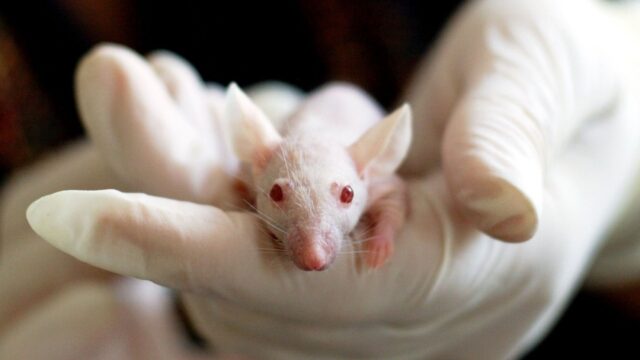
In mice with an aggressive melanoma, three of five animals treated with the nanoparticles went into complete remission. For T cell lymphoma, the team used humanized mice, animals given human blood cells so their immune systems partly resemble a person’s. After five injections, the tumors were gone.
MIT reported that those results matched what the team got from CAR NK cells made the conventional way: collecting the cells, modifying them in a lab and infusing them back.
The team also tested autoimmune hepatitis, a disease in which misdirected T cells attack hepatocytes, the liver’s main working cells. Nanoparticles instructing NK cells to recognize those T cells removed them, and the damaged liver tissue healed. That followed a single injection.
Why it matters
CAR T cell therapy already exists: the U.S. Food and Drug Administration has approved seven cancer treatments based on genetically modified T cells over the past decade, with the strongest results in blood cancers that start in B cells, including some leukemias and lymphomas, and multiple myeloma. Producing them is slow. Blood is drawn from the patient, shipped to a specialized facility where technicians separate the T cells, modify them and grow enough of them, then sent back to the hospital for infusion.
“If a patient can just get an infusion of nanoparticles, it would dramatically simplify the process and reduce costs,” Anderson said.
NK cells solve a separate problem. Using CAR T cells against diseased T cells means the engineered cells and their targets belong to the same family, so they can destroy each other. NK cells are a different cell type, so they can be aimed at harmful T cells without that conflict. “NK cells can treat these T cell malignancies,” said Yuang Chen, the MIT postdoctoral researcher who is a lead author of the paper, speaking about both T cell cancers and T cell autoimmune diseases.
What is still unknown
No CAR NK cell therapy has FDA approval, although researchers are developing them for cancer and autoimmune disorders. The MIT experiments were done in mice, and more research is needed to find out whether the approach is safe and works in people. The paper reports no human data.
The group hopes to aim the method at other conditions involving malfunctioning T cells, among them multiple sclerosis and rheumatoid arthritis. Robert Langer, MIT’s David H. Koch Institute Professor and a co-author, called the study an example of what nano delivery systems can do for cancer and other diseases.
Funding came from Sanofi, the Marble Center for Cancer Nanomedicine and a Koch Institute Support (core) Grant from the National Cancer Institute. The other lead authors are MIT graduate students Julia Monkovic and Haseeb Mughal.
Source: ScienceDaily