Why the Moon Turns Red in a Lunar Eclipse and When the Next One Is
Every red Moon is lit by a ring of sunrises and sunsets around Earth. Here is how lunar eclipses work, how long totality lasts and which ones are coming up through 2029.
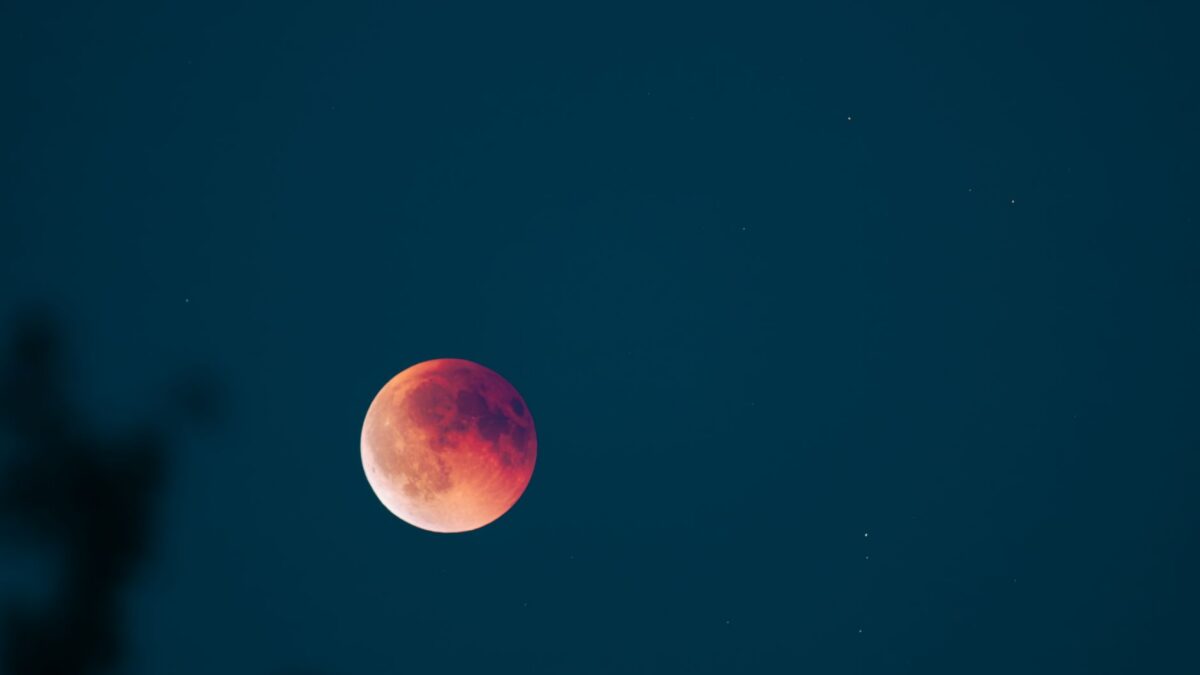
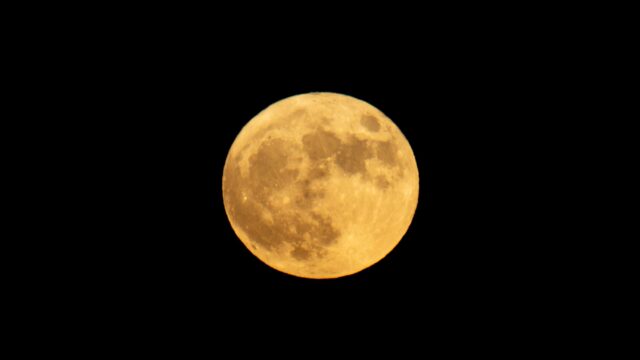
A “blood moon” is the full Moon during a total lunar eclipse, when it sits entirely inside Earth’s shadow and glows copper or deep red. The only light reaching it has passed through Earth’s atmosphere, which strips out blue and lets red through. According to NASA’s eclipse tables, the next total lunar eclipse is on Dec. 31, 2028, and the next ones well placed for the US come on June 26 and Dec. 20, 2029.
Lunar eclipses are the easiest eclipses to watch. Anyone on the night side of Earth can see one, and you need no special equipment or eye protection.
Why does the Moon turn red during a total lunar eclipse?
The Moon turns red because Earth’s atmosphere bends a little sunlight into the shadow, and that light has already lost most of its blue. Air molecules scatter short blue wavelengths far more than long red ones. Sunlight skimming through the edge of the atmosphere travels through a thick slice of air, so mostly orange and red light makes it through and falls on the Moon.
NASA describes the effect as all of the world’s sunrises and sunsets projected onto the Moon at once. It is the same physics that makes the daytime sky blue and sunsets red, which we explain in why the sky is blue.
The shade changes from one eclipse to the next. NASA notes that more dust or cloud in Earth’s atmosphere makes the eclipsed Moon look redder or darker. After large volcanic eruptions, which put fine ash and sulfate high into the air, the Moon can turn very dark, close to gray-brown. Other eclipses leave it bright orange, sometimes with a paler rim on the side nearest the shadow’s edge.
What is the difference between total, partial and penumbral eclipses?
The difference is how deep the Moon goes into Earth’s shadow. The shadow has two parts: a dark inner cone called the umbra and a fainter outer zone called the penumbra.
| Type | Where the Moon goes | What you see |
|---|---|---|
| Total | Fully inside the umbra | The whole Moon turns orange, red or dark brown |
| Partial | Partly inside the umbra | A dark “bite” on one side; the rest stays bright |
| Penumbral | Only in the outer penumbra | A faint gray dimming that many people never notice |
Every total eclipse also has partial and penumbral stages on either side of totality. The Moon first brushes the penumbra, then the umbra slowly covers it, then it turns fully red, and the steps run in reverse afterward.
How long does totality last?
Totality usually lasts from a few minutes to well over an hour, and the whole event, partial phases included, runs about three to four hours. The length depends on how close the Moon passes to the center of Earth’s shadow.
NASA’s eclipse tables give real examples. The total eclipse of March 3, 2026, had about 58 minutes of totality. The eclipse of June 26, 2029, passes close to the shadow’s center and has about 1 hour 42 minutes of totality, with the partial phases spanning about 3 hours 40 minutes.
Because the event is slow, you can step outside for a few minutes at a time. The part most people want to see, the deep color, is the middle of the eclipse.
Do you need eye protection to watch a lunar eclipse?
No. A lunar eclipse is safe to watch with your eyes, binoculars or a telescope, because you are only looking at the Moon, which is dimmer than usual. Eye protection is only needed for solar eclipses, where you look toward the Sun. For that, see our guide to what happens in a total solar eclipse.
Binoculars help a lot. They show the edge of the shadow as it crosses craters and bring out the color during totality. A phone on a small tripod can capture it too, though most phone cameras struggle to show the red without a long exposure.
When are the next lunar eclipses?
There are no total or partial lunar eclipses in 2027, only penumbral ones. The table lists every lunar eclipse from 2027 through 2029, with times of greatest eclipse from NASA’s eclipse tables (given in TD, which is within about a minute of UTC) and NASA’s broad visibility regions.
| Date (UTC) | Type | Greatest eclipse | Totality | Where visible (NASA) |
|---|---|---|---|---|
| Feb. 20, 2027 | Penumbral | 23:14 (6:14 p.m. EST) | None | Americas, Europe, Africa, Asia |
| July 18, 2027 | Penumbral | 16:04 | None | East Africa, Asia, Australia, Pacific |
| Aug. 17, 2027 | Penumbral | 07:15 (3:15 a.m. EDT) | None | Pacific, Americas |
| Jan. 12, 2028 | Partial (very small) | 04:14 (11:14 p.m. EST, Jan. 11) | None | Americas, Europe, Africa |
| July 6, 2028 | Partial | 18:21 | None | Europe, Africa, Asia, Australia |
| Dec. 31, 2028 | Total | 16:53 | 1 h 11 min | Europe, Africa, Asia, Australia, Pacific |
| June 26, 2029 | Total | 03:23 (11:23 p.m. EDT, June 25) | 1 h 42 min | Americas, Europe, Africa, Middle East |
| Dec. 20, 2029 | Total | 22:43 (5:43 p.m. EST) | 54 min | Americas, Europe, Africa, Asia |
The Dec. 31, 2028, eclipse happens around midday on the US East Coast, so it cannot be seen from the lower 48 states. The June 2029 eclipse is the standout for North America: it falls late on the evening of June 25 in US time zones, and its totality is unusually long. For the Dec. 20, 2029, eclipse, the Moon will be low in the east around sunset in eastern states, so a clear eastern horizon matters.
Exact start and end times for your city are on NASA’s lunar eclipse page. Visibility always depends on the weather and on whether the Moon is above your horizon at the time.
Why don’t we get a lunar eclipse every full moon?
The Moon’s orbit is tilted by about 5 degrees to Earth’s orbit around the Sun, so at most full moons the Moon passes a little above or below Earth’s shadow. An eclipse can only happen when a full moon falls close to one of the two points where the orbits cross. That lines up during “eclipse seasons” roughly every six months, which is why lunar eclipses tend to arrive about half a year apart. A solar eclipse often comes about two weeks before or after a lunar one in the same season; our eclipse calendar for the US lists both.
Bottom line
A blood moon is a total lunar eclipse: the full Moon inside Earth’s shadow, lit only by red light bent through our atmosphere. It is safe to watch without protection and lasts long enough to dip in and out. The 2027 eclipses are faint penumbral ones; the next total is on Dec. 31, 2028, and the best for the US are on the night of June 25-26 and the evening of Dec. 20, 2029.
FAQ
Is a blood moon the same as a lunar eclipse?
Usually yes. “Blood moon” is a popular name for the red Moon during a total lunar eclipse, not an astronomical term. Some people also use it loosely for any reddish Moon near the horizon.
How often do total lunar eclipses happen?
They are irregular. Some years have two, and some stretches go two or more years without one, as in 2027, which has only penumbral eclipses. When one happens, it is visible from roughly half of Earth at once.
Can a lunar eclipse happen during a supermoon?
Yes. If a total eclipse falls on a full moon near the Moon’s closest point to Earth, it is sometimes called a “super blood moon.” The Moon looks only slightly larger than at an average eclipse. Our page on supermoons explains the size difference.
Why is the eclipsed Moon sometimes dark brown instead of red?
The color depends on how clean Earth’s atmosphere is. Dust, cloud and volcanic aerosols block more light, so the Moon can turn very dark, while a clear atmosphere gives a brighter orange-red.