Next Solar Eclipse in the US: Dates for Solar and Lunar Eclipses
A date-by-date list of the solar and lunar eclipses Americans can see over the coming years, based on NASA's eclipse tables, plus how to watch each kind safely.
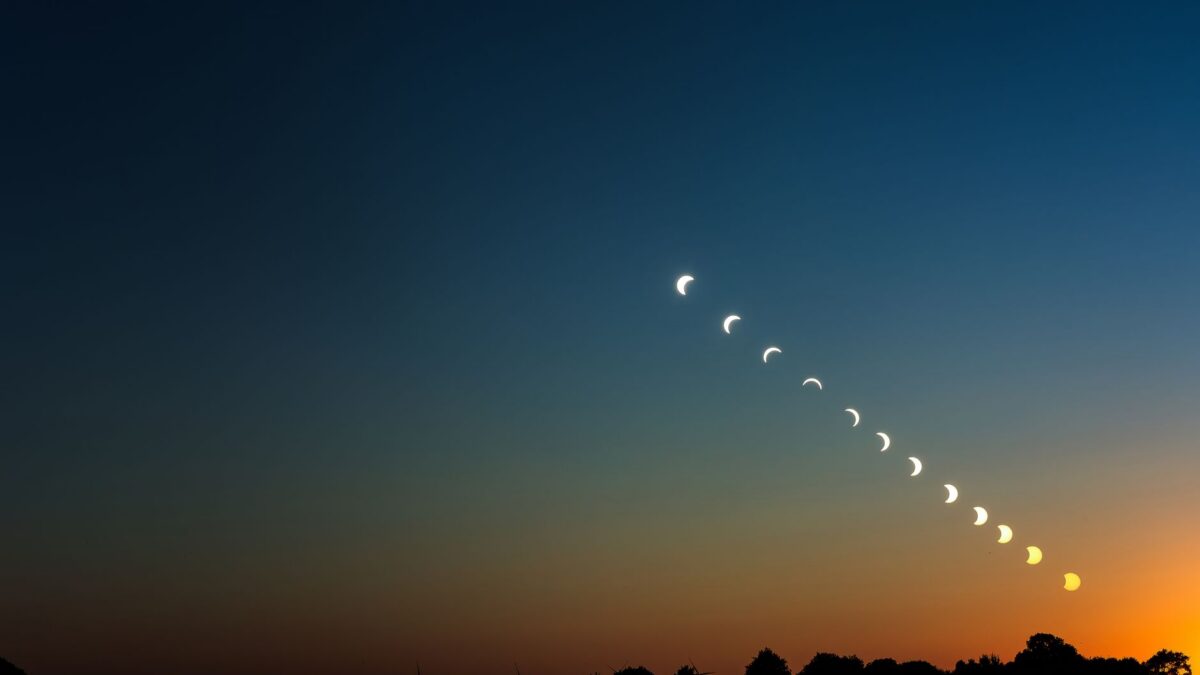
The next total solar eclipse visible from the contiguous United States will happen in August 2044, crossing Montana and North Dakota, followed by a coast-to-coast total eclipse on Aug. 12, 2045. Before then, Alaska gets a total eclipse on March 30, 2033, and much of the U.S. sees a partial solar eclipse on Jan. 14, 2029. The next well-placed total lunar eclipses for U.S. viewers come on June 26 and Dec. 20, 2029.
Dates below come from NASA’s eclipse tables, which use Universal Time. An eclipse late in the evening in the U.S. can carry the next day’s date in those tables.
When is the next total solar eclipse in the United States?
The next total solar eclipse in the lower 48 states is on the evening of Aug. 22, 2044, local time (Aug. 23 in Universal Time). Its path of totality crosses Greenland and northern Canada, then reaches Montana and North Dakota near sunset. The bigger event follows on Aug. 12, 2045, when a total eclipse crosses the country from coast to coast, with totality lasting up to about six minutes at its longest point along the path.
Alaska sees totality sooner. NASA’s tables show a total eclipse on March 30, 2033, with a path that crosses far eastern Russia and Alaska.
What solar eclipses can you see from the US before 2044?
Several partial and annular eclipses reach parts of the U.S. in the meantime. The table lists those that NASA’s tables show reaching U.S. territory.
| Date | Type | What US viewers see |
|---|---|---|
| Aug. 2, 2027 | Total (Spain, North Africa, Middle East) | Partial only, in northern Maine |
| Jan. 26, 2028 | Annular (South America, Spain, Portugal) | Partial in parts of eastern North America |
| Jan. 14, 2029 | Partial | Partial across much of North America |
| June 12, 2029 | Partial | Partial in Alaska |
| March 30, 2033 | Total | Total in parts of Alaska; partial elsewhere in North America |
| Jan. 5, 2038 | Annular (Caribbean, Africa) | Partial in parts of eastern North America |
| June 21, 2039 | Annular | Annular in parts of Alaska; partial in much of North America |
| Aug. 22-23, 2044 | Total | Total in Montana and North Dakota |
| Aug. 12, 2045 | Total | Total from coast to coast across the US |
How much of the Sun is covered in a partial eclipse depends on where you are. NASA’s future eclipses page has maps for upcoming events.
When is the next lunar eclipse visible in the US?
The next lunar eclipse visible from the U.S. is a faint penumbral eclipse on the night of Feb. 20-21, 2027. Penumbral eclipses only dim the Moon slightly, so many people do not notice them. There are no total or partial lunar eclipses in 2027.
| Date (UT) | Type | Visibility from the US |
|---|---|---|
| Feb. 20, 2027 | Penumbral | Visible; very subtle dimming |
| Aug. 17, 2027 | Penumbral | Visible on the night of Aug. 16-17; very subtle |
| Jan. 12, 2028 | Partial | Visible, but only a small sliver of the Moon is shadowed |
| Dec. 31, 2028 | Total | Best seen from Europe, Asia, Australia and the Pacific; little or none from most of the lower 48 |
| June 26, 2029 | Total | Visible across the Americas |
| Dec. 20, 2029 | Total | Visible across the Americas |
A lunar eclipse is visible from the whole night side of Earth at once, so if the Moon is up during the eclipse where you are, you can see it. That makes lunar eclipses far easier to catch than solar ones.
How do you watch a solar eclipse safely?
Never look at the Sun without proper eye protection, even when most of it is covered. Viewing even a thin crescent of the Sun with bare eyes can cause permanent eye damage.
- Use eclipse glasses or handheld solar viewers that meet the ISO 12312-2 international safety standard. Regular sunglasses, even very dark ones, are not safe.
- Check the filter before use. Throw it away if it is scratched, torn or punctured.
- Do not look through a camera, binoculars or a telescope unless a certified solar filter covers the front of the lens. Eclipse glasses worn behind an unfiltered lens do not protect your eyes.
- Supervise children closely so they keep their viewers on.
- Only during totality, when the Moon fully covers the Sun, is it safe to remove protection. Put it back on as soon as the bright Sun starts to reappear.
During an annular eclipse, a bright ring of Sun stays visible the whole time, so eye protection is needed throughout. A pinhole projector, which casts an image of the Sun onto paper or the ground, is a safe, low-cost alternative. NASA’s eclipse safety page has more detail.
Do you need eye protection for a lunar eclipse?
No. A lunar eclipse is safe to watch with your bare eyes, binoculars or a telescope, because you are looking at the Moon, which reflects only sunlight. Binoculars make the copper color of a total lunar eclipse easier to see. If you enjoy night-sky events, our meteor shower calendar and guide to spotting the International Space Station cover events you can see more often.
Bottom line
The lower 48 states wait until August 2044 for the next total solar eclipse, then get a coast-to-coast one on Aug. 12, 2045. Alaska sees totality on March 30, 2033, and most of the U.S. gets a partial solar eclipse on Jan. 14, 2029. For a total lunar eclipse, mark June 26 and Dec. 20, 2029, and use ISO 12312-2 viewers for any solar eclipse.
FAQ
When was the last total solar eclipse in the US?
The last total solar eclipse in the contiguous U.S. was on April 8, 2024, crossing from Texas to Maine. The one before that, on Aug. 21, 2017, crossed from Oregon to South Carolina.
Why are eclipse dates sometimes listed a day apart?
NASA and other astronomy sources list eclipses in Universal Time. An eclipse in the U.S. evening can fall after midnight UT, so the table shows the next calendar day.
Where can I buy safe eclipse glasses?
Look for viewers that state compliance with ISO 12312-2 from a reputable seller. The American Astronomical Society keeps a list of suppliers whose products meet the standard.
What is the difference between an annular and a total eclipse?
In a total eclipse the Moon covers the whole Sun. In an annular eclipse the Moon is slightly farther from Earth, so a bright ring of Sun stays visible and eye protection is needed throughout.