Dinosaur Fossil Stored 25 Years Is a New Species, Paludohadros
A fossil dug up in Surrey in 2001 and kept at the Natural History Museum is a new iguanodontian, Paludohadros proudlovii, about 16 feet long as a juvenile.
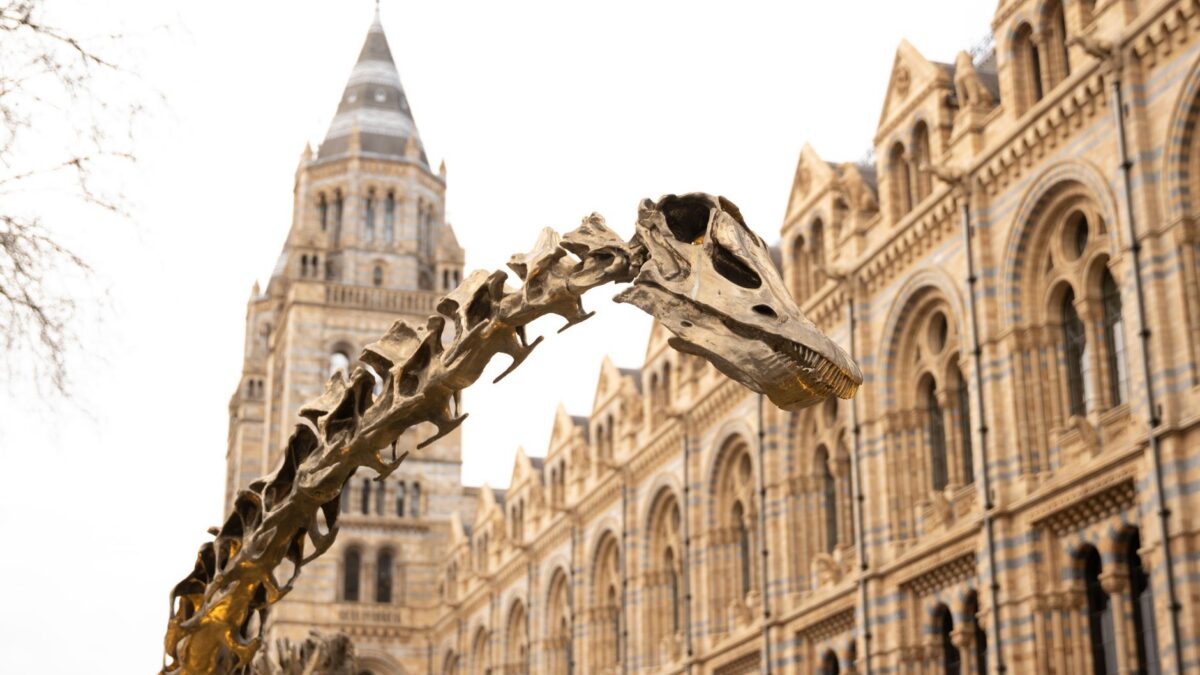
A dinosaur fossil excavated in Surrey, England, in 2001 and stored for decades at the Natural History Museum has been named as a new species, Paludohadros proudlovii, according to a report from A-Z Animals. The animal was an iguanodontian, a plant-eating dinosaur, and the specimen was about 16 feet long. Researchers think it was a juvenile that could have grown to twice that size.
The bones had been filed as Iguanodon or the related Mantellisaurus. A fresh look at the museum’s collection changed that, and several other museum fossils are now being checked as possible Paludohadros specimens.
How a known species turned out to be new
The fossil came from the Ewhurst brickworks in Surrey, where the Weald Clay Formation is exposed. Iguanodontian fossils are common across southern England, so identifying the find as a familiar type seemed reasonable when it was donated to the museum.
The reassessment began in 2023, when Natural History Museum scientists published a detailed study of Mantellisaurus. That work pinned down differences between species and led researchers to re-examine fossils that had been grouped together. The Ewhurst remains turned out to be an entirely new iguanodontian. The report does not name the journal or the authors of the new-species description, so those details are not confirmed here.
What the animal was like
The name comes from the Latin word for swamp, a reference to the wetland where it lived, and from Will Proudlove, the former manager of the Ewhurst brickworks, who died before the fossil was excavated. The dinosaur lived about 125 million years ago, in the Early Cretaceous.
Iguanodontians are known for thumb spikes. These may have been used to fend off predators, though they could also have helped break into tough seeds or pull down foliage. The group had strong hind limbs and could move on two legs or on all four, depending on size and activity. The Paludohadros specimen was similar in size to a rhino. Scientists judge it to be young because its bones were not fully developed, so the adult size is an estimate.
A neighbor with teeth
The fossil lay about 300 feet from where Baryonyx walkeri, a large theropod (a meat-eating dinosaur), was found in 1983. Two Baryonyx teeth were also found with the new dinosaur, and researchers think Baryonyx may have preyed on it.
That idea has limits. Baryonyx is widely regarded as a fish eater, and one specimen was found with the remains of a juvenile iguanodontian in its stomach, though the species is unknown. It is impossible to tell whether the predator killed the young animal or scavenged it afterward.
Why it matters
The case shows that museum drawers can hold undescribed species, and that a better study of one dinosaur can reopen the identification of others. Paludohadros joins other recently identified iguanodontians from southern England, including Brighstoneus and Istiorachis. The number of such finds suggests the region had enough vegetation to support many plant-eating dinosaurs.
The museum’s review of other fossils as possible Paludohadros specimens is ongoing.
Source: Yahoo