Colombian Fossil Sea Shows Evolution Turning Without a Mass Extinction
Fossils from Colombia's Paja Formation show dying and rising animal groups sharing one ancient sea. Here is what the Biotic Inflection idea says and its limits.
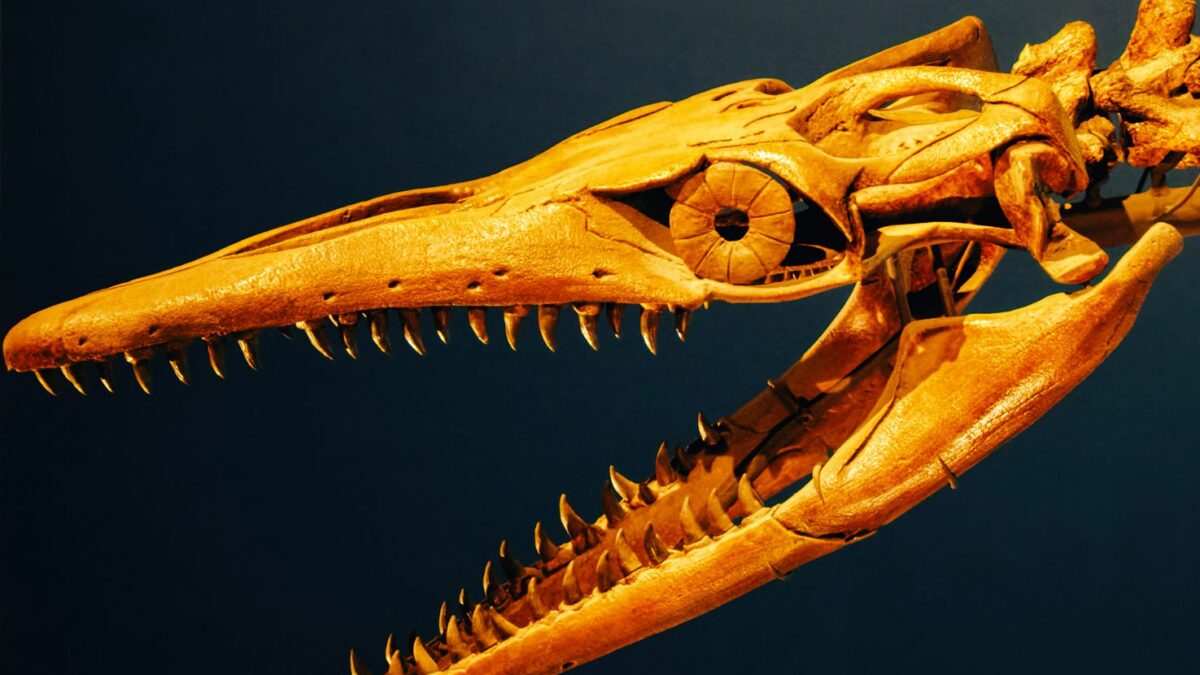
An Early Cretaceous sea that once covered part of central Colombia held long-necked plesiosaurs, marine relatives of crocodiles, sharks, turtles and crustaceans all at once, and the mix suggests that life can make a major evolutionary handover without a mass extinction. Researchers from McGill University and the Centro de Investigaciones Paleontológicas (CIP) in Colombia describe the pattern in the journal Frontiers in Ecology and Evolution.
Their fossils come from the Paja Formation near Villa de Leyva. In those rocks, groups left over from the Jurassic lived alongside newer Cretaceous groups that went on to spread. McGill biology professor Hans Larsson and PhD graduate Dirley Cortés call this kind of overlap a “Biotic Inflection”: a turning point when lineages close to dying out share an ecosystem with lineages that are just starting to diversify.
An ancient sea crowded with top predators
The Paja Formation has yielded an unusually rich fossil record, and most of the specimens are kept at the CIP. Cortés described the animals together as the Paja Biota, which she called one of the most ecologically complex marine communities found so far.
In earlier work, the same team rebuilt the feeding relationships among these animals. That reconstruction showed a dense food web with an unusually large number of apex predators, the hunters at the very top of the chain. A community that complicated gives scientists a good place to study what happens to an ecosystem while old groups fade and new ones take hold.
What let old and new groups share the water
The researchers point to several conditions that may have worked together. The planet was in a warm greenhouse phase, sea levels were high, and coastal waters were rich in nutrients. New ocean connections were also opening between the eastern Pacific and the young Atlantic through the area that is now Colombia.
Larsson described the setting as a “perfect storm” of factors known to promote ecological complexity, arriving just as some ancient lineages were about to disappear. These are the researchers’ proposed explanations based on the fossil record and the environment it preserves; they are not the result of an experiment.
Why it matters for the story of life on Earth
Textbook accounts of big shifts in life’s history often center on mass extinctions, when a catastrophe clears space and survivors take over. The Paja fossils point to another route. Here, the transition shows up as a period of very high diversity, with declining and rising groups living side by side instead of one replacing the other after a die-off.
Larsson said he thinks the team has found “a new model of global biodiversity change.” If similar overlaps turn up in other places and times, the idea could change how scientists read the fossil record around major transitions.
What is still unclear
The researchers say more evidence is needed before anyone can say how common this pattern was. They want more fossil finds, more precise ages for the fossils, and comparisons with rock formations elsewhere in the world. Larsson said the next step is to see how widespread such inflections were and how to measure their effects.
The study is by Dirley Cortés and Hans C. E. Larsson, published in Frontiers in Ecology and Evolution (DOI: 10.3389/fevo.2026.1848892). Funding came from sources including the Natural Sciences and Engineering Research Council of Canada and the Smithsonian Tropical Research Institute.
Source: ScienceDaily