Crystals From Seven Andean Volcanoes Share an Eruption Trigger
Tiny plagioclase crystals from seven Andean volcanoes carry the same chemical mark of reheated magma, a study in Nature Communications reports.
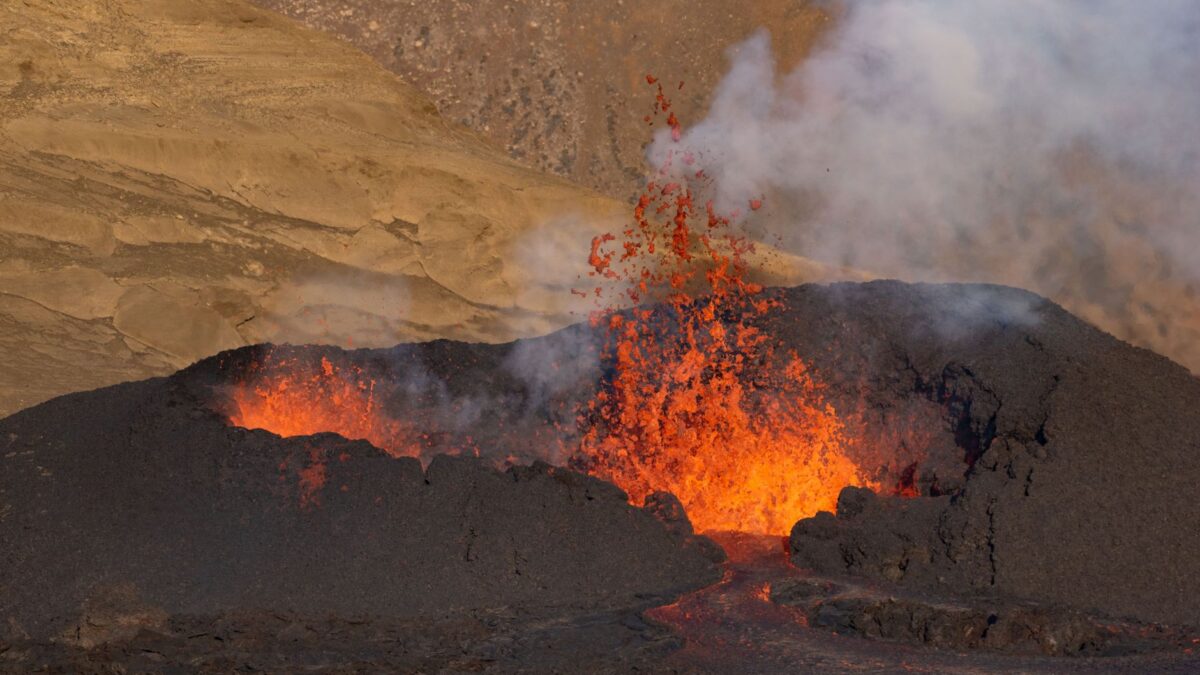
Volcanoes that blew once and went silent look nothing like ones that erupt over and over. Yet crystals from seven of them in the Central Andes record the same event just before eruption: hotter magma arriving from deeper down. The work appears in Nature Communications and was reported by Earth.com.
Doctoral student Daniela Parra-Encalada of the University of Queensland’s School of the Environment led the analysis. Teresa Ubide is senior author, and researchers from Australia, the Universidad de Chile, Spain and Argentina contributed. The volcanoes span 143 miles (230 kilometers) of the range, and the team studied 28 rock samples from lava and ash.
Two crystal generations in every rock
The team focused on plagioclase, the pale mineral that dominates volcanic rock. Its calcium and sodium content shifts with the temperature, water and makeup of the surrounding melt, so each crystal acts as a chemical diary.
Each sample held big crystals, up to about a twelfth of an inch (2 millimeters), formed slowly in underground storage. It also held tiny ones under about a hundredth of an inch (300 micrometers), which appeared as magma made its last ascent. Those small crystals, along with the outer edges of the larger ones, share almost identical calcium-sodium ratios across all seven volcanoes. The authors named this range the plagioclase eruptibility field.
The volcanoes differ widely. Lascar is the region’s busiest, while some neighbors erupted a single time, as far back as 3 million years ago. Some sit on the main arc and others far behind it, where the crust is half as thick.
What the crystal cores and models show
Roughly half the plagioclase never grew from the erupted magma. Its centers formed in a silica-rich melt that sat and crystallized for a long time a few miles below, picking up crustal material. Geologists call such a crystal-heavy, slow-moving body a mush, and eruptions tore pieces of it loose.
Cooling simulations put that old mush at about 1,380°F to 1,560°F (750°C to 850°C), within 7 miles (11 kilometers) of the surface. Eruptibility-field crystals grew hotter, around 1,650°F to 1,790°F (900°C to 975°C), after a fresh batch of magma came in. That batch held more dissolved water, which started to form bubbles and push up pressure in the shallow chamber. Strontium isotopes fit the picture, with old-crust signatures in the cores and the new magma’s signature in the rims.
The pattern shows up elsewhere
Parra-Encalada compared the results with a public database covering 26 volcanic arcs. The global average crystal composition landed inside the Andean field, as did averages for the Cascades and Kamchatka. In the Aleutians and Indonesia, where continental crust gives way to oceanic crust, the rims fit the field but the cores varied widely.
Why it matters for giant eruptions
Two samples came from a deposit under Lascar left by a caldera-forming blast about 4 million years ago. They showed hardly any reheating signal: in a chemical map of one rock slice, 97% of crystals had grown without disturbance. The authors propose that huge silica-rich reservoirs may collapse on their own once enough magma has gathered, so ordinary eruptions and super-eruptions could have different triggers.
Limits and next steps
Spotting volcanoes close to eruption through crystal chemistry has not been tried. Parra-Encalada said a volcano whose large crystals mostly sit within the field may deserve closer attention. Lascar erupted in 2022, two weeks after fieldwork there ended, and some crystal interiors there show the pattern.
The study does not connect the fingerprint to how often or how soon a volcano erupts, which the team’s next paper addresses. The samples cover a single stretch of one continental arc, and most of the worldwide data came from other labs without crystal-by-crystal sorting. The group is now extending the work to Tonga to test an oceanic setting.