Perseverance Detects Corundum on Mars, the Mineral Behind Rubies
NASA's Perseverance rover found a ruby-type glow from chromium in corundum crystals on Mars. Here is how SuperCam spotted it and what it says about impacts.
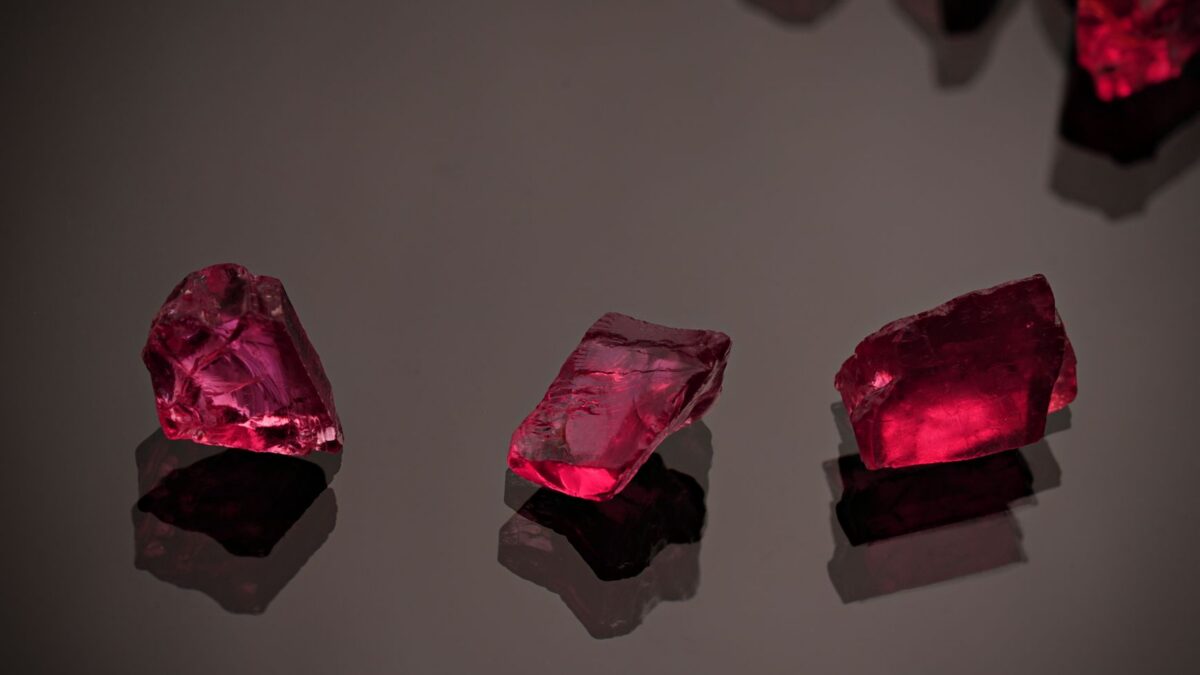
NASA’s Perseverance rover has detected tiny crystals of corundum on Mars, according to a NASA post by Roger C. Wiens, the principal investigator of the rover’s SuperCam instrument at Purdue University. Corundum is the mineral family that includes rubies. The team has not found any collectable rubies, Wiens wrote, but the crystals are telling scientists about the planet’s past.
How a laser revealed a ruby-type glow
About two years ago, the SuperCam team was startled when they fired the instrument’s laser at a light-colored rock and saw strong, narrow peaks of luminescence (light given off after a material is energized) at two wavelengths: 692.7 and 694.1 nanometers. Most luminescence spans a broad range of wavelengths. These peaks were far narrower.
The glow comes from delayed atomic transitions in chromium atoms sitting inside a corundum mineral structure. SuperCam collects the resulting photons and can time how long the emission lasts, which let the team confirm that the light came from chromium in corundum. The instrument can do this as a side benefit of how it carries out Raman spectroscopy, a technique that identifies minerals from the way they scatter laser light.
A team led by Ann Ollila published the results earlier this year in Geophysical Research Letters. Perseverance carries other tools for mineral work too: SHERLOC, SuperCam and PIXL can detect minerals using methods that include x-ray fluorescence, Raman and infrared spectroscopies.
Before SuperCam was installed on the rover, Wiens wrote, the team put a ruby in the laser beam. The whole room pulsed a brilliant red, and the emission was extremely bright.
Why corundum is a surprise on Mars
Corundum is a metamorphic and pegmatitic mineral. Metamorphic rocks form when heat and pressure change existing rock, and pegmatites are coarse-grained rocks that crystallize from molten material. Wiens said the team would not expect to find it on Mars, a planet that lacks plate tectonics.
Large meteor and asteroid impacts offer one explanation. An impact can cause local metamorphism through long-term heating. The rover is working in a very ancient terrain near the rim of Jezero crater, so some evidence of localized metamorphism is expected there. Wiens noted that Perseverance is the first mission to work in terrain like this.
What the team is doing now
Earlier in the mission the team used the luminescence technique only rarely. Lately they have run time-resolved luminescence observations often, mainly on light-toned rocks, to look for more evidence of impact effects.
Why it matters
The detection gives mission scientists a way to look for the footprints of ancient impacts in rocks near Jezero crater. The impact origin is the team’s expectation for the terrain, not a settled result, and the post does not report how many corundum sites have been found or where. The published paper in Geophysical Research Letters holds the full measurements.
Source: NASA