Saqqara Tomb Blocks Hold One of the Earliest Autobiographies
Inscribed blocks from the tomb of Khuwy at Saqqara, dated to around 2400 B.C., carry an official's life story and mention a pharaoh and queen.
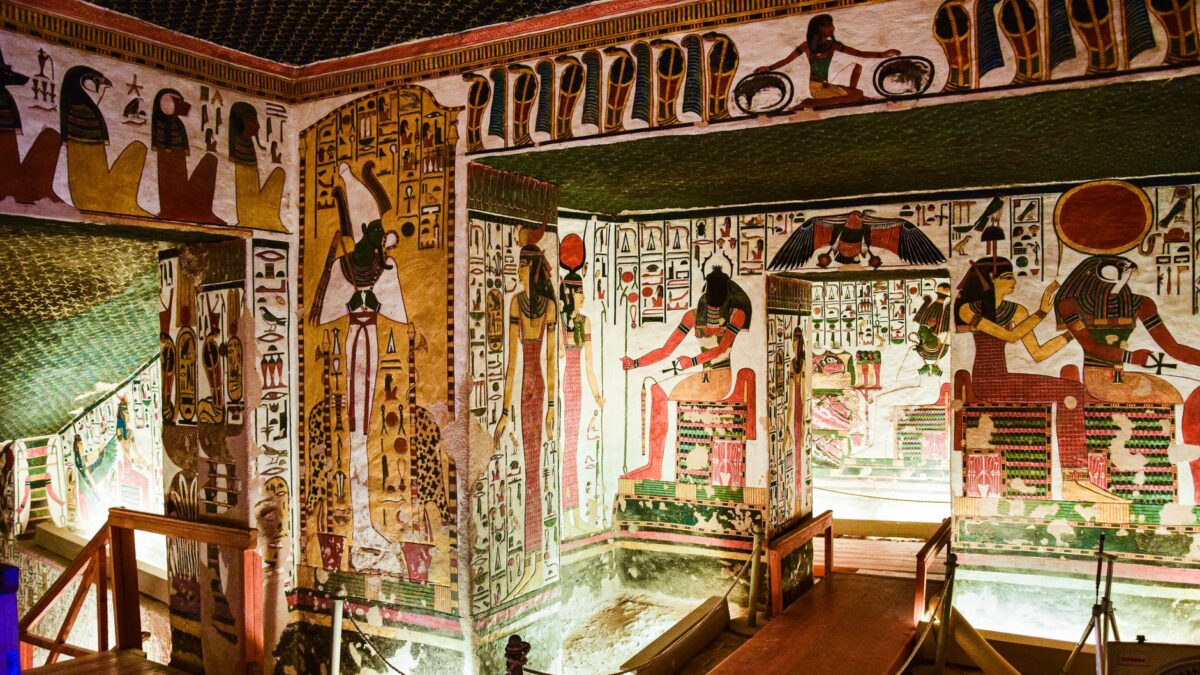
Stone blocks from a tomb at Saqqara, Egypt, carry what is described as one of the world’s earliest known autobiographies. The text was written for Khuwy, an Egyptian dignitary, around 2400 B.C., according to a report by La Brújula Verde that Archaeology Magazine summarized on Nov. 9.
On the blocks, Khuwy lists his life and achievements. One line is a boast about his honesty: “I never took anything from any man.”
Where the text was found
Czech archaeologists located Khuwy’s tomb in a cemetery at Saqqara that surrounds the pyramid of Djedkare Isesi, a pharaoh of the 5th Dynasty who reigned from about 2381 B.C. to 2353 B.C. The tomb dates to around 2400 B.C. and is counted among the oldest decorated underground burial apartments.
Most of the structure that stood above the burial chambers has not survived. What remained were inscribed blocks that once lined its walls, and the autobiography comes from those pieces.
What the inscription says
Khuwy states that he served as an official under six different administrative courts. He also names Djedkare and the pharaoh’s wife, Queen Setibhor. The passage is incomplete and not entirely legible, and the report says it implies Khuwy may have had a close relationship with the royal couple. That reading is an interpretation of a damaged text rather than a settled fact.
The inscription ends with a warning. Khuwy tells readers not to commit any evil act against the tomb or against the people buried in it.
What the stonework suggests
The quality of the tomb and its fine stonework suggests to the researchers that it was built by a royal workshop. That points to a person with ties to the court, and it fits the royal names that appear in the text, though the sources do not describe a direct link between the two observations.
Why it matters
Autobiographical texts from this period are rare, and Khuwy’s is among the earliest known. It gives a first-person account, in the words of an official himself, of how a court dignitary of the 5th Dynasty wanted to be remembered: honest, long in service and protected from tomb robbers or vandals by a written warning.
The finding also adds to what is known about the cemetery around Djedkare Isesi’s pyramid, where Khuwy’s tomb is one of the oldest decorated underground burial apartments.
Where to read more
The scholarly article describing the research appeared in the Journal of Egyptian Archaeology. The original discovery of the tomb was covered earlier by Archaeology Magazine as “Old Kingdom Tomb,” one of its Top 10 Discoveries of 2019. The sources do not give the authors of the article or a DOI.
Source: Archaeology Magazine