Animals That Left Water Nearly 380 Million Years Ago Had Stiff Necks
Early tetrapods nearly 380 million years ago could barely turn their heads, a Nature study reports. Sturgeon helped researchers model the neck movement.
The first animals to move from water onto land nearly 380 million years ago had necks that were far stiffer than scientists assumed, according to a study published Oct. 14 in the journal Nature. The work, announced by Penn State, suggests these early tetrapods (the ancestors of four-limbed vertebrates) could barely turn their heads.
That result challenges a decades-old explanation. Researchers had long reasoned that necks evolved so animals could look around in shallow water and on land. The new findings point to a different origin: the neck may have appeared as part of skeletal changes that let animals use their front limbs for movement.
How did researchers test an animal that left no soft tissue behind?
An international team combined new fossil evidence, experiments on living fish and computer models of ancient anatomy. The difficulty is that the backbones of these animals were made largely of soft tissue, which rarely fossilizes. Tom Stewart, an assistant professor of biology at Penn State, said that in such cases scientists can turn to modern animals as stand-ins for the past.
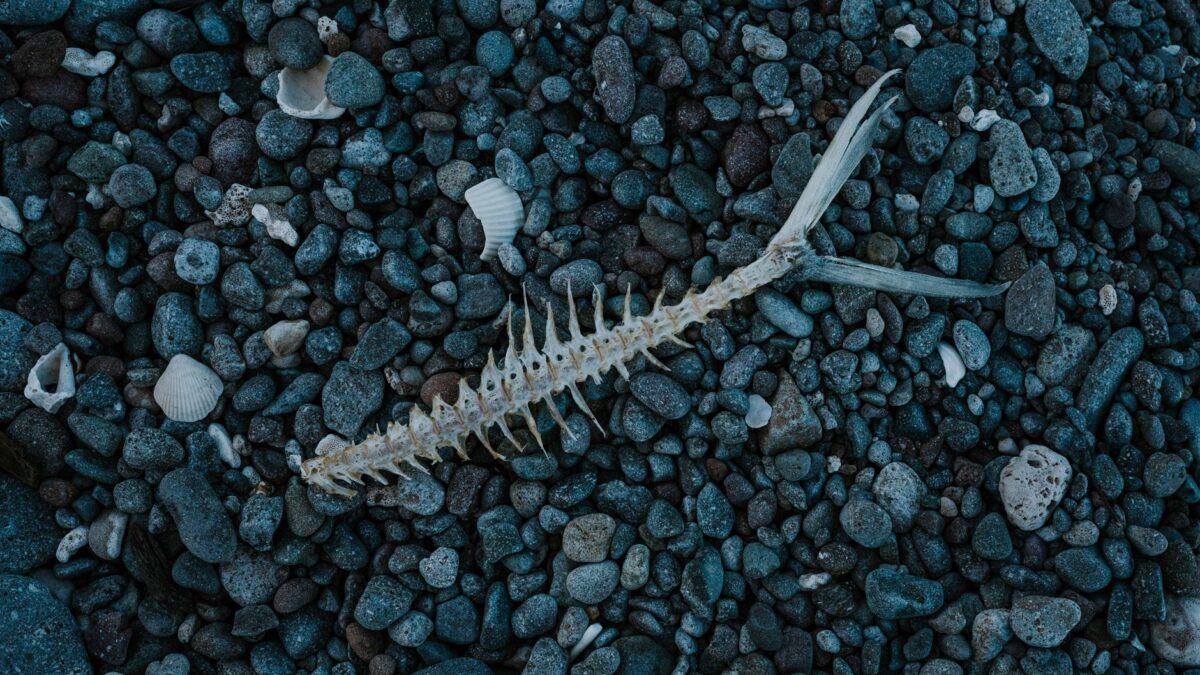
The stand-in was the sturgeon, a modern fish sometimes called a living fossil. Early tetrapods relied on a notochord, a long, flexible rod of tissue that runs through the spine. Their small vertebrae sat around a much larger tube of soft tissue. Sturgeon are only distantly related to those animals, but their backbones have a similar notochord structure.
The team measured the stiffness and mechanical properties of the notochord in sturgeon. It then built those measurements into models of fossil animals, including Tiktaalik, a fossil fish first described in 2006 from remains found on Ellesmere Island in Nunavut, Canada.
What did the models show about the first necks?
Even where the head and shoulders were separated, the backbone would have limited movement severely. Dana Korneisel, a postdoctoral researcher at Uppsala University in Sweden and first author of the paper, said she expected the models to show how much extra movement early necks provided. Instead, almost all of the animals gained little ability to reposition their heads. She called that result “a huge surprise.”
Korneisel said head elevation in these animals was no more than in fish and sometimes less. The head twisting people do when shaking their heads was not possible in any of them.
The researchers add that their estimates may be generous. The models covered the backbone alone, and muscles, skin and even bones embedded in the skin of some early tetrapods could have made the neck stiffer still.
Why did necks appear if not for turning the head?
Modern fish generally lack a distinct neck because their shoulder structures connect directly to the skull, so they turn their bodies to look elsewhere. Fossils from the Devonian Period, roughly 420 to 360 million years ago, show some fish with stronger fins and a clear gap between skull and shoulders. Scientists had assumed that gap freed the head to move.
The new work suggests the separation of skull and shoulders developed alongside changes that let the front limbs support and move the body. In that view, the earliest necks were a consequence of adaptations for locomotion. Korneisel said greater neck mobility did arrive later in tetrapods, but it was not available to these early animals because of their anatomy.
What this means for how scientists reconstruct extinct animals
The study shows how modern animals can fill gaps where soft tissue vanished. Backbones dominated by a notochord are uncommon among living vertebrates, though the researchers say they were widespread through much of Earth’s history. Stewart said the approach joins fossil data with studies of living animals to work out what changes in anatomy meant for behavior.
Stewart also noted that many skeletal changes of that era, about 380 million years ago, are still reflected in human bodies today.
Who did the work and what limits remain?
Besides Stewart and Korneisel, the team included researchers from the University of Washington, the University of Ottawa and Carleton University in Canada. Funding came from the Steven Cohen Award for Student Research, presented by the Society of Vertebrate Paleontology, and the Natural Sciences and Engineering Research Council of Canada.
The conclusions rest on models built from sturgeon measurements, not on living tetrapod ancestors, and the authors acknowledge that other tissues would have restricted movement further.
Source: ScienceDaily