How to See the ISS From Your Backyard With NASA Spot the Station
The space station is one of the easiest things in orbit to see with your own eyes. All you need is the time of the next pass, a clear sky and a few minutes outside.
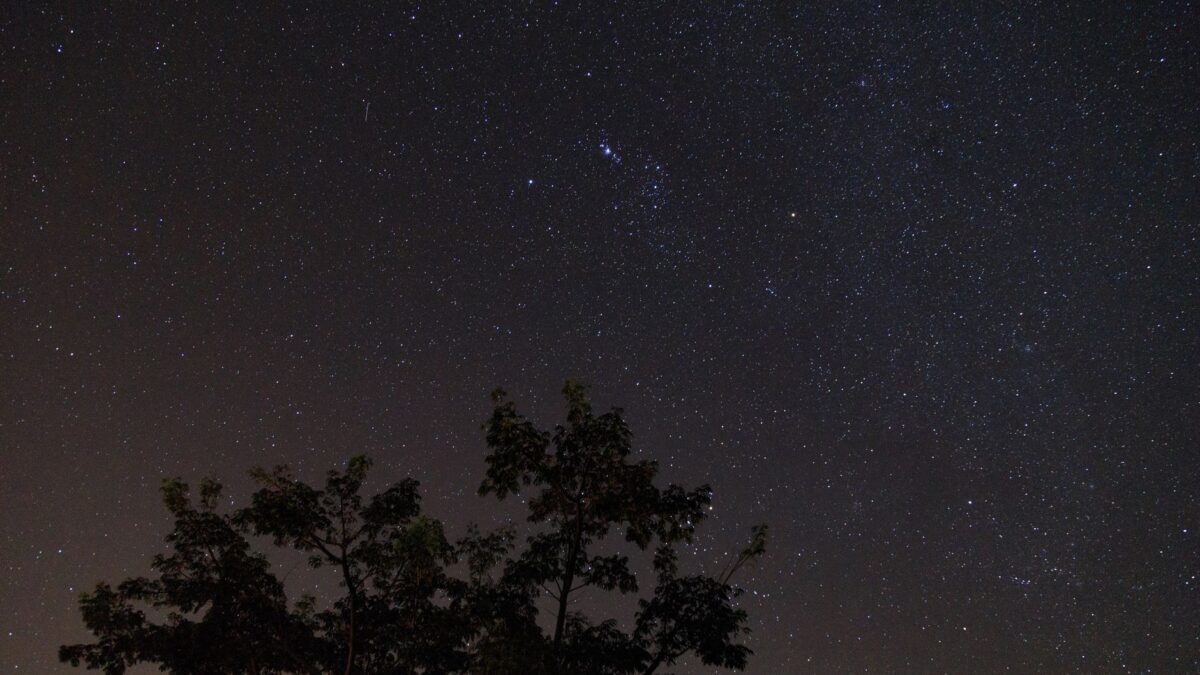
You can see the International Space Station with your own eyes as a bright, steady point of light that crosses the sky in a few minutes. Sightings happen only within a few hours of sunrise or sunset. NASA’s free Spot the Station app gives the time, direction and height of each upcoming pass for your location.
No telescope or binoculars are needed. The station is about 250 miles up and moves at about 17,500 mph, so it glides across the sky much faster than a plane at cruising height.
What does the ISS look like in the sky?
The ISS looks like a very bright star that moves smoothly across the sky without blinking. NASA describes it as similar to an airplane or a bright star in motion, with two differences: it has no flashing lights, and it does not change direction.
On a high pass it outshines every star in the sky. On a low pass near the horizon it looks dimmer and can be lost in haze or city glow. It generally moves from the western part of the sky toward the east, and the app gives the exact start and end directions for each pass.
The station shines by reflecting sunlight. It has no lights bright enough to see from the ground, which is why the timing of a pass matters so much.
When can you see the space station?
You can see the ISS when the sky is dark where you stand but the station, about 250 miles up, is still in sunlight. That happens within a few hours of sunset or sunrise. NASA says all sightings fall in those windows.
In daylight the sky is too bright to see it. In the middle of the night the station is usually in Earth’s shadow, so it reflects no light. Depending on where you live, NASA says sighting chances range from about once a month to several times a week.
The station orbits Earth about 16 times a day on a path tilted 51.6 degrees to the equator. Places far north, such as much of Alaska, never see it pass directly overhead, but they can still see it lower in the sky.
How do you use NASA Spot the Station?
Download the free Spot the Station app from NASA, allow it to use your location or set your town, and turn on alerts. The app lists upcoming sightings and can notify you before each one.
Each sighting has five pieces of information:
| Field | What it means | How to use it |
|---|---|---|
| Time | When the sighting begins, in your local time | Be outside a few minutes early |
| Above the Horizon | How long the station stays visible | Longer passes are easier to catch |
| Maximum Height | The highest point of the pass, in degrees (0 is the horizon, 90 is straight overhead) | Passes above about 40 degrees are the brightest and clearest |
| Appears | Where it first shows up, as height and compass direction | Face this direction at the start time |
| Disappears | Where it leaves your view | Follow it toward this point |
To judge degrees in the sky, hold your fist at arm’s length. One fist is roughly 10 degrees, so a pass with a maximum height of 40 degrees peaks about four fists above the horizon.
How long does an ISS pass last?
A visible ISS pass usually lasts from about one to seven minutes, and the app shows the exact length under “Above the Horizon.” High passes that go nearly overhead last longest. Low passes that skim the horizon are short and easy to miss behind trees or buildings.
A pass can also end suddenly in the middle of the sky. That happens when the station flies into Earth’s shadow and stops reflecting sunlight. NASA notes this on short flyovers, where you cannot see the full pass from horizon to horizon. The light fades over a few seconds and turns orange-red just before it vanishes.
What are the best tips for spotting it?
The best tips are to pick a high pass, find an open view in the direction where it appears, and go outside a few minutes early so your eyes adjust. A clear sky matters more than a dark one, since the station is bright enough to see from most cities.
- Choose a sighting with a maximum height of at least 40 degrees and a duration of three minutes or more.
- Check the weather. Thin cloud can hide the station even when stars are visible.
- Go outside two to five minutes early and face the “Appears” direction.
- Look for a steady light moving smoothly. Planes blink; the station does not.
- Follow it with your eyes toward the “Disappears” point. Binoculars can show its color but are not needed.
Other satellites can be seen the same way, including trains of Starlink satellites soon after a launch. Our guide on how to see Starlink satellites explains how they differ. To learn about the people on board, read how long astronauts stay on the ISS.
Bottom line
The space station is visible to the naked eye as a bright, steady light moving across the sky for a few minutes, within a few hours of sunrise or sunset. NASA’s free Spot the Station app gives the time, length, height and direction of each pass for your location. Pick a pass above 40 degrees, face the “Appears” direction a few minutes early, and follow it until it fades into Earth’s shadow.
FAQ
Can you see the ISS during the day?
No. NASA says the station is not bright enough to see in daylight. All sightings happen within a few hours of sunset or sunrise, when the sky is dark but the station is still lit by the sun.
Why does the ISS disappear in the middle of the sky?
It flies into Earth’s shadow and stops reflecting sunlight. The light fades and often turns reddish over a few seconds before it vanishes.
Do I need a telescope to see the space station?
No. The station is easy to see with the naked eye. Binoculars can help you follow it, but tracking it with a telescope is hard because it moves so fast.
How often does the ISS pass over my house?
It depends on your location and the season. NASA says visible passes range from about once a month to several times a week, and the Spot the Station app lists the dates for your area.