Women With High PFOS Had 93% Higher ER-Negative Breast Cancer Rate
Women with the highest blood levels of PFOS had a 93% higher rate of ER-negative breast cancer in an NIH study. It shows an association only.
Women with the highest blood levels of the forever chemical PFOS had a 93% higher rate of estrogen receptor-negative (ER-negative) breast cancer than women with the lowest levels, according to a National Institutes of Health study in the Journal of Clinical Oncology. For a second chemical, PFOA, the gap was 67%.
The team found no clear link between either chemical and breast cancer overall. The signal showed up only in the ER-negative type, an aggressive form with few known risk factors. The result is an association, not proof that the chemicals cause the disease.
How the researchers measured exposure
The work was led by Alexandra White, an NIH Stadtman Investigator, and drew on the Sister Study, a project run by the NIH’s National Institute of Environmental Health Sciences (NIEHS). Between 2003 and 2009 the study enrolled 50,884 women ages 35-74 across the United States and Puerto Rico. None had breast cancer at enrollment, but each had a sister who did.
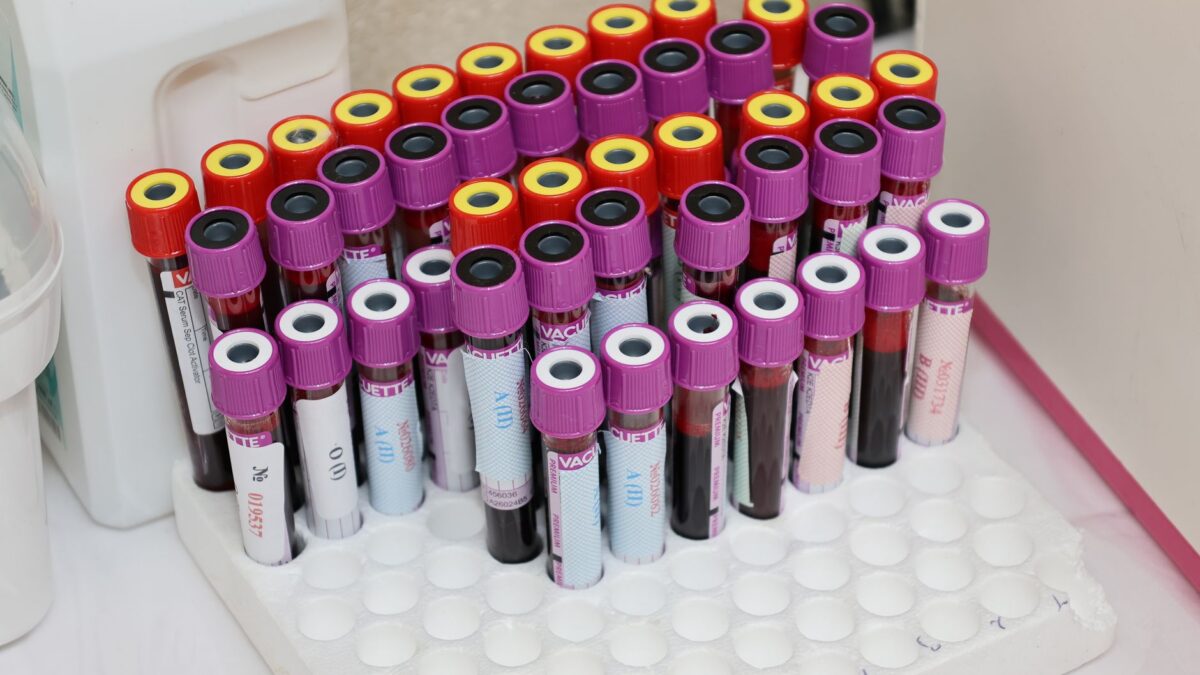
For the PFAS analysis, the scientists compared 1,609 women who later developed breast cancer with a comparison group of 2,269 women. They measured 17 different PFAS chemicals in blood samples collected years before any diagnosis, so exposure was recorded first and cancer outcomes came afterward. This is an observational design: it follows who gets sick, and it does not assign anyone to an exposure.
The percentages are relative differences between the highest and lowest exposure groups. They do not give the chance that any one woman will develop the disease. The authors also ran a meta-analysis (a pooled review) of earlier studies, and it pointed the same way.
What ER-negative breast cancer is
Tumor cells in ER-negative breast cancer lack the receptors that let estrogen drive growth. These tumors are often more aggressive and tend to have poorer outcomes than those that respond to estrogen. Researchers know relatively little about what makes someone more likely to develop one.
What is still unclear
The study did not test how PFAS might act in the body. Because the strongest associations were in tumors without estrogen receptors, the authors suggest the chemicals may work through processes unrelated to hormone signaling, such as changes in gene activity or in the immune system. Neither idea was examined directly, so both remain uncertain.
PFOA and PFOS have largely been phased out and replaced by other PFAS compounds, yet both are still measurable in most people. Whether the newer replacements carry a similar risk is unknown. White said more research is needed on that question. The team also wants further studies in populations with higher PFAS exposure and in groups with higher rates of ER-negative breast cancer.
Why it matters
PFAS stands for per- and polyfluoroalkyl substances, a large family of chemicals used in many consumer products. They resist breaking down in the environment and can stay in the human body for years, which is why they are called forever chemicals.
First author Che-Jung Chang, a researcher at the scientific organization DLH who previously worked as an NIH research fellow, said exposure is potentially modifiable and that the findings could open new avenues for prevention. The study itself tested no prevention strategy.
The paper, “Per- and Polyfluoroalkyl Substance Exposure and Breast Cancer Incidence in the Sister Study,” carries the DOI 10.1200/JCO-26-00318. NIEHS grants supported the work.
Source: ScienceDaily