Cape Trafalgar Stone Tombs Were Used for 200 Years, Bone Dates Show
Radiocarbon dates show two megalithic tombs on Spain's Cape Trafalgar held burials between 1875 and 1625 B.C. What was inside and what remains unclear.
Two monumental stone tombs on Cape Trafalgar in southern Spain were used for about 200 years, between 1875 and 1625 B.C., according to radiocarbon dates on the human bones inside. That is centuries after people in the southern Iberian Peninsula had largely moved to individual graves, which makes the builders late users of a much older tradition.
The work was led by Eduardo Vijande-Vila of the University of Cádiz and published in the journal PLOS One, according to Archaeology Magazine, which cited a report by La Brújula Verde.
Two different ways to build a tomb
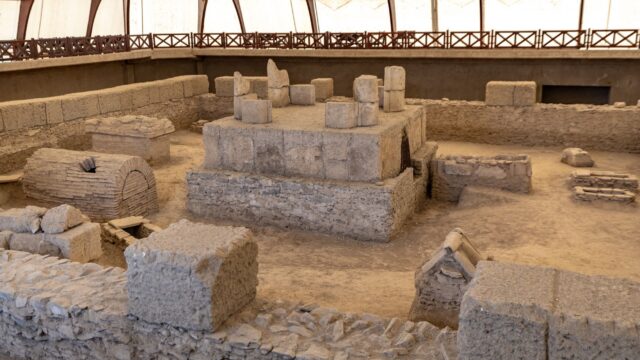
The tombs are megalithic, meaning they are built from large stones. Tomb I has an oval chamber cut into the rock. A passage lined with stone slabs and roofed with capstones leads into it. When the tomb went out of use, the chamber was closed off with a stone wall, the entrance was blocked with a slab, and the whole structure was buried under a mound of stones and sand.
Tomb II has a round chamber roofed with stacked courses of stones. Its original dome collapsed at some point. The people using it then put a pillar in the middle and filled half of the chamber to keep the rest standing.
Who was buried inside
The team studied the bones to count the dead. Tomb I held the remains of at least 13 people and Tomb II at least seven. The numbers are minimums because the bones were moved around after the bodies had decomposed, which mixes up individual skeletons.
One burial was left alone. In Tomb I, archaeologists found the skeleton of a young woman still in its original position, with the bones connected. Radiocarbon dating of her remains shows she was the last person buried there before the chamber was sealed.
What the graves contained
Tomb I produced more grave goods than its neighbor:
- two gold earrings
- three silver beads
- a piece of green mica, a shiny mineral that splits into thin sheets
- an ivory comb
- two shells with holes drilled through them
Tomb II held one earring, one copper arrowhead and one green mica bead.
How the dates were measured
Radiocarbon dating measures how much radioactive carbon, a slowly decaying form of the element, is left in once-living material such as bone. Because it dates the bones themselves, it shows when the people died. It does not directly show when the stone chambers were built.
What is still unclear
The team has not yet settled whether the people of 1875 to 1625 B.C. built these tombs or reused structures that were already old. Further tests could answer that, including luminescence dating, which estimates when grains of sand and stone were last exposed to sunlight. Applied to the mound that covered the tombs, it could show when the structures were buried. If the tombs turn out to be new builds, their makers were among the last people to build megalithic tombs in southern Iberia.
Why it matters
Across southern Iberia, collective burial in large stone tombs gave way over time to graves for single people. The Cape Trafalgar dates show communities still placing their dead together in megalithic chambers centuries after that shift, and still repairing one when its dome fell in. Another famous stone tomb, Newgrange, is known for the way sunlight fills its chamber at the winter solstice.
Source: Archaeology Magazine