How Much Does a Rocket Launch Cost? Published Prices and Contracts
Launch prices are rarely posted in full. Here is what SpaceX and NASA have published, and why a NASA mission on the same rocket can cost far more than the list price.
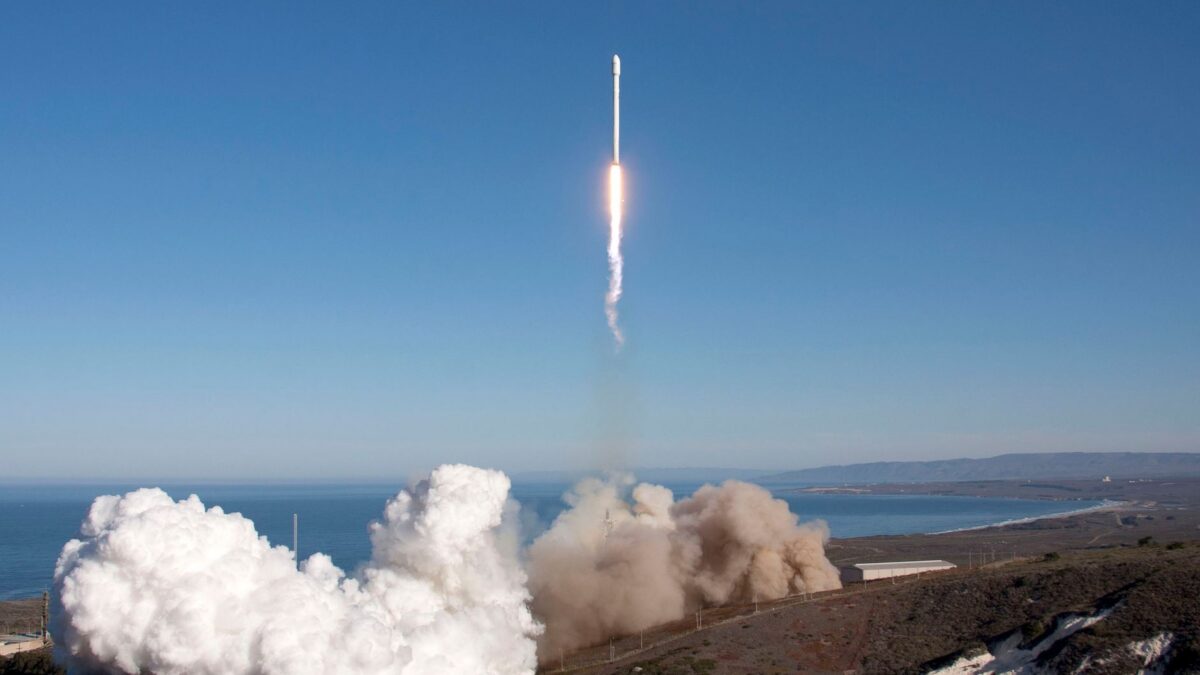
A commercial Falcon 9 launch costs roughly $67 million to $74 million at SpaceX’s published standard price, and SpaceX listed a Falcon Heavy at $97 million in 2022. NASA missions on the same rockets cost more, often $178 million to $255 million in announced contracts, because those totals include extra services. NASA’s own SLS costs about $4.1 billion per Artemis launch, according to NASA’s Inspector General.
Few launch companies publish a price list, so the figures below come from company pages, NASA contract announcements and government audits. Treat them as reference points, not quotes.
What does a Falcon 9 launch cost?
SpaceX has long posted a standard price for a dedicated Falcon 9 launch. In 2022 the published figure was $67 million for a mission of up to 5.5 metric tons to geostationary transfer orbit. Trade reports in 2026 put the posted standard price at $74 million, up from about $70 million in 2025. SpaceX’s capabilities document was not available on its site when we checked in November 2026, so confirm the current figure with SpaceX before relying on it.
Small satellites can buy a slot on a shared Falcon 9 flight instead. SpaceX’s rideshare program sells plates that include 50 kg to 300 kg of payload mass, with sun-synchronous missions about every four months. Rideshare pricing depends on mass and orbit and is set when you book.
How much do other rockets cost?
Most other providers do not post a list price, so public numbers come from government contracts or audits.
| Rocket | Published figure | Source and notes |
|---|---|---|
| Falcon 9 (SpaceX) | $67 million (2022) to about $74 million (2026) | SpaceX standard price for up to 5.5 t to GTO; 2026 figure from trade reports |
| Falcon Heavy (SpaceX) | $97 million | SpaceX standard price published in 2022 |
| Falcon Heavy for NASA’s Europa Clipper | About $178 million | NASA contract announced in 2021, total cost to NASA |
| Falcon Heavy for NASA’s Roman Space Telescope | About $255 million | NASA contract announced in 2022, total cost to NASA |
| Falcon Heavy for NASA’s Dragonfly | About $256.6 million | NASA contract announced in November 2024, includes launch services and other mission-related costs |
| SLS with Orion (NASA) | About $4.1 billion per launch | NASA Office of Inspector General estimate for each of the first four Artemis launches, including Orion and ground systems |
| Electron (Rocket Lab) | No list price posted | Rocket Lab does not publish a standard price on its site |
| Vulcan (ULA), New Glenn (Blue Origin) | No list price posted | Sold under individual commercial and government contracts |
Figures are as of November 2026 and are not adjusted for inflation.
Why do NASA contracts cost more than the list price?
A NASA launch contract buys a full mission service, while a commercial list price covers a standard launch. The NASA announcement for Dragonfly says its $256.6 million contract value “includes launch services and other mission related costs” (NASA, November 2024). The extras usually include:
- Payload processing and integration at the launch site, including special clean rooms for science spacecraft.
- Additional engineering analyses and reviews by NASA’s Launch Services Program.
- Mission-specific hardware, such as payload adapters or a specially configured upper stage.
- Telemetry, tracking and support for planetary launch periods that may last only a few weeks.
- Extra performance for deep-space trajectories, which can mean flying a booster in expendable mode instead of landing it.
The last point matters for cost. Losing a booster that would otherwise fly again adds to the price, which is part of why Falcon Heavy missions to the outer planets cost far more than the list figure. Our explainer on how SpaceX reuses boosters covers why reuse lowers prices. For how NASA chooses and pays providers, see how NASA contracts work.
Why is SLS so expensive?
SLS is expensive because NASA owns it, builds each rocket new, and flies it rarely. The core stage, boosters and engines are discarded on every flight, including RS-25 engines that first flew on the space shuttle. NASA’s Office of Inspector General estimated in a November 2021 report that each of the first four Artemis launches would cost about $4.1 billion to produce and operate, a figure that includes the Orion spacecraft and ground systems as well as the rocket. That total reflects a government-run program with low flight rates, so it is not comparable with a commercial price for a single launch.
What does cost per kilogram mean?
Cost per kilogram divides the launch price by the mass a rocket can carry. It is a rough way to compare rockets, but it can mislead. A rocket’s listed capacity depends on the orbit, whether the booster is recovered, and how much of the rocket’s performance a customer actually uses. A satellite that weighs 4 tons still pays for the whole rocket on a dedicated launch.
The orbit matters most. Low Earth orbit takes far less energy than geostationary transfer orbit or an escape trajectory, so the same rocket carries much less mass to higher orbits. Our guide to how orbits work explains why.
Will launch prices fall further?
Companies building fully reusable rockets, including SpaceX with Starship and others working on reusable boosters, say their goal is a much lower cost per flight. No public price list exists yet for Starship or other next-generation vehicles, and SpaceX’s own posted Falcon 9 price has risen with inflation in recent years. Price changes will show up first in published standard prices and in the values of new NASA and Space Force contracts.
Bottom line
Expect a dedicated Falcon 9 to cost about $67 million to $74 million and a Falcon Heavy about $97 million, based on SpaceX’s published prices (the Falcon Heavy figure is from 2022). NASA’s contract totals of $178 million to $255 million for Falcon Heavy missions also pay for integration and mission services on top of the ride. SLS sits in a different category at about $4.1 billion per Artemis launch, by the Inspector General’s estimate.
FAQ
What is the cheapest way to launch a satellite?
For small satellites, rideshare is usually the lowest-cost route, since many customers split one rocket. The trade-off is less choice of orbit and launch date. A dedicated small rocket such as Electron costs more per kilogram but lets the customer pick the orbit and timing.
Does reusing a booster make the launch cheaper for the customer?
It lowers SpaceX’s cost, which supports its relatively low list prices. Customers do not usually get a separate discount for flying on a used booster, and missions that require an expendable booster can cost more.
Who pays for a NASA launch?
NASA pays the launch provider through a contract funded by its budget, which Congress approves each year. The contract value is announced when it is awarded, usually as a total cost to NASA.
How much does it cost to send a person to space?
Prices for private astronaut seats are not published as a standard list. Prices for suborbital tourist flights and private orbital missions vary and are set in individual contracts.