Why Rockets Launch From Florida, California, Virginia and Texas
Cape Canaveral, Vandenberg, Wallops and Starbase were each picked for a mix of latitude, open water downrange and room to keep people safe.
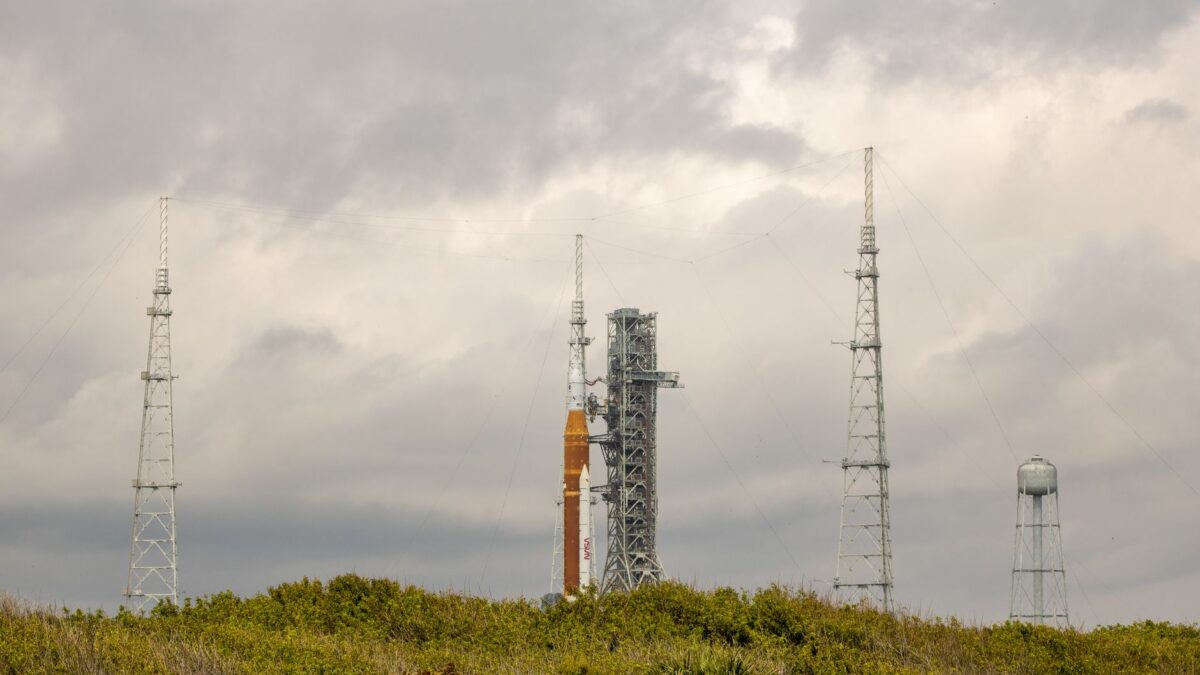
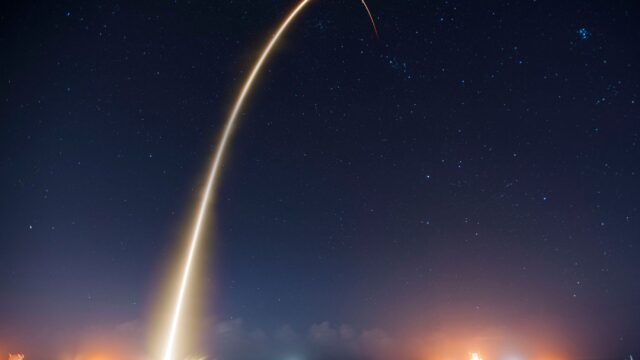
Rockets launch from Florida because Cape Canaveral is one of the southernmost points in the continental United States and has the Atlantic Ocean to its east. Launching east from about 28.5 degrees north adds roughly 910 mph of free speed from Earth’s rotation, and spent stages fall into open water instead of on towns.
The other major U.S. sites follow the same logic with different trade-offs. Vandenberg in California serves polar orbits, Wallops in Virginia serves smaller rockets and space station cargo, and Starbase in Texas is SpaceX’s own site for Starship.
Why does latitude matter for a rocket launch?
Latitude matters because Earth’s surface moves fastest at the equator, and a rocket launched east keeps that speed. At the equator the surface turns at about 1,040 mph. At Cape Canaveral, near 28.5 degrees north, it is about 910 mph, which the rocket does not have to produce with its own engines.
Latitude also sets the lowest orbit inclination a rocket can reach without extra maneuvering. A rocket launched due east from the Cape lands in an orbit tilted about 28.5 degrees to the equator. Satellites bound for geostationary orbit, which sits over the equator, must later burn fuel to remove that tilt, so a site closer to the equator saves fuel for those missions. Our explainer on how orbits work, from LEO to GEO covers inclination in more detail.
| Launch site | Approx. latitude | Earth’s surface speed (approx.) | Main direction of launches |
|---|---|---|---|
| Cape Canaveral and Kennedy Space Center, Florida | 28.5° N | 910 mph | East and northeast over the Atlantic; some polar launches south |
| Starbase, Texas | 26° N | 930 mph | East over the Gulf |
| Vandenberg Space Force Base, California | 34.7° N | 855 mph | South over the Pacific |
| Wallops, Virginia | 37.9° N | 820 mph | East and southeast over the Atlantic |
| Kourou, French Guiana (for comparison) | 5.2° N | 1,035 mph | East and north |
The speeds are calculated from Earth’s rotation at each latitude and rounded.
Why do rockets need open ocean downrange?
Open ocean gives rocket stages, payload fairings and any failed vehicle a safe place to fall. Each launch has a hazard area along its path that must be clear of people, and it is far easier to clear a stretch of sea than a stretch of suburbs.
Cape Canaveral has the Atlantic to the east and northeast, which suits the most common orbits. Vandenberg has the Pacific to the south, which suits polar orbits. A launch site with towns downrange would face tighter limits on which directions it could use, or could not get approval at all. The FAA reviews this public risk for every licensed commercial launch, as explained in our piece on what an FAA launch license means.
How did Cape Canaveral become America’s main launch site?
Cape Canaveral was picked in the late 1940s as a missile test range with the Atlantic and a chain of islands downrange for tracking stations. The first launch from the Cape, a modified V-2 rocket called Bumper 8, flew on July 24, 1950.
The range grew through the missile era and the Mercury, Gemini and Apollo programs. NASA built Kennedy Space Center on Merritt Island next door for the Saturn V and later the space shuttle. Today the area hosts NASA’s SLS pad, SpaceX, United Launch Alliance and Blue Origin pads on both Kennedy and Cape Canaveral Space Force Station, with the Space Force running the range. More information about the NASA side is on the Kennedy Space Center site.
Why are some rockets launched from California instead?
Vandenberg Space Force Base launches rockets south over the Pacific into polar and sun-synchronous orbits, which pass over or near both poles. Many Earth-imaging, weather and reconnaissance satellites use those orbits because they let a satellite see the whole planet as Earth turns underneath.
A polar launch from Florida must fly south past Cuba and other land, so for decades almost all U.S. polar launches went from California. Since 2020, some polar missions have flown from Florida on a narrow southern corridor, but Vandenberg remains the main polar site. Our guide to watching a Vandenberg launch explains why those launches often light up the evening sky across Southern California.
What about Wallops in Virginia and Starbase in Texas?
Wallops Island, Virginia is home to NASA’s Wallops Flight Facility and the Virginia-run Mid-Atlantic Regional Spaceport. It sits farther north, which costs some performance, but it has open Atlantic to the east and less crowded airspace and sea lanes than Florida. Northrop Grumman has flown Antares cargo missions to the space station from there, and Rocket Lab launches Electron from its Launch Complex 2 at the site.
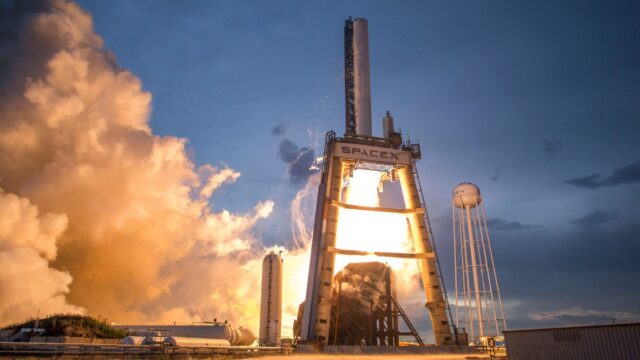
Starbase, Texas, at Boca Chica near Brownsville, is SpaceX’s private site for building and launching Starship. It is the southernmost U.S. mainland launch site, with the Gulf to the east. SpaceX is also building Starship launch facilities in Florida.
Smaller sites include the Pacific Spaceport Complex on Kodiak Island, Alaska, used for some government and commercial launches into high-inclination orbits.
Why not launch from closer to the equator?
Some do. Europe launches from Kourou in French Guiana, close to the equator. For U.S. launches, staying on U.S. territory keeps rockets, payloads, export-controlled technology and launch crews under U.S. law and close to existing factories, roads and ports. Hawaii and Puerto Rico are farther south but lack the large open ranges, infrastructure and land around existing pads. The gain from a lower latitude matters most for geostationary missions. For low Earth orbit and the space station, the speed difference between Florida and the equator is a small share of the roughly 17,500 mph a rocket must reach.
Bottom line
Florida’s latitude gives eastbound rockets a free 910 mph from Earth’s spin, and the Atlantic gives stages and debris a safe place to fall. California covers polar orbits, Virginia serves smaller rockets and cargo flights, and South Texas hosts SpaceX’s Starship work.
FAQ
Why do Florida rockets launch to the east?
Launching east adds the speed of Earth’s rotation, about 910 mph at Cape Canaveral, and sends stages over the Atlantic. Most satellites and space station missions fly to orbits that an eastward or northeastward launch reaches efficiently.
Can rockets launch over land?
Rarely, and only along limited paths. Rockets are normally routed over water so that stages and any failed vehicle fall away from people. Some missions overfly small or sparsely populated areas after a detailed safety analysis.
Why does Vandenberg launch south?
Polar and sun-synchronous orbits need a launch toward the south or north. From Vandenberg, a southern path crosses only the Pacific, while a polar path from most other U.S. sites would cross land.
Is Kennedy Space Center the same as Cape Canaveral?
No. Kennedy Space Center is NASA’s facility on Merritt Island, and Cape Canaveral Space Force Station is the neighboring military-run base. Rockets launch from pads on both, and the area as a whole is often called the Cape.