Are Santa’s Reindeer Female? What Reindeer Antlers Reveal
Santa's reindeer are probably female: adult male reindeer drop their antlers in early winter, while females keep theirs until spring calving.
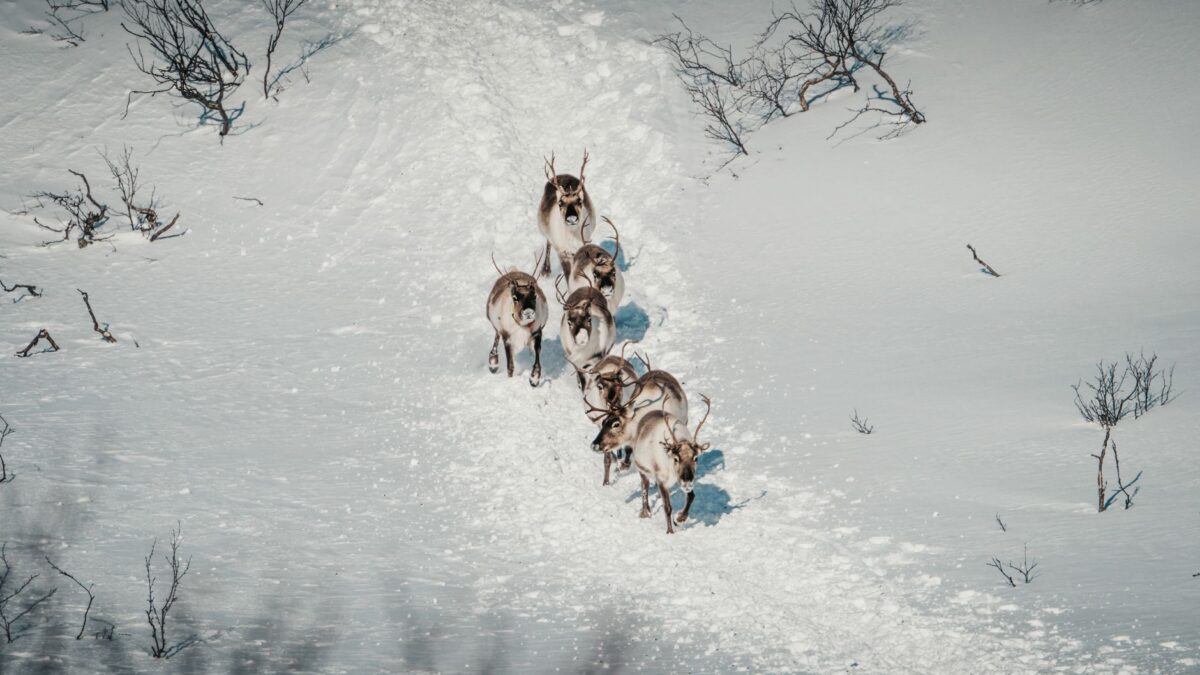
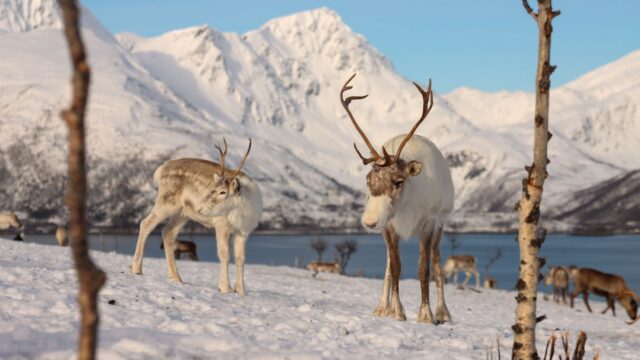
Santa’s reindeer, as they are usually drawn with full antlers on Christmas Eve, are most likely female. Adult male reindeer shed their antlers in late fall or early winter, after the breeding season, while female reindeer keep theirs through the winter and drop them around the time their calves are born in spring. A reindeer with antlers in late December is therefore probably a cow, a young animal or a castrated male.
Do female reindeer have antlers?
Female reindeer do grow antlers, and they are the only female deer that normally do. In every other deer species, from white-tailed deer to moose and elk, antlers are a male trait, and a female with antlers is a rare hormonal oddity. Reindeer, known in North America as caribou (both are the same species, Rangifer tarandus), are the exception.
Female antlers are smaller and simpler than those of adult males. A big bull carries a broad, heavy rack with many points, while a cow’s antlers are thinner and shorter. Some females in some herds grow no antlers at all, so the trait is common rather than universal.
When do male and female reindeer shed their antlers?
Males and females follow different calendars, which is the reason the Christmas question has an answer. The yearly cycle runs roughly like this:
- Adult males grow new antlers through spring and summer, then lose the soft velvet covering in late summer before the autumn rut (breeding season).
- After the rut, usually from late November into December, adult males drop their antlers.
- Young males tend to keep theirs a little longer, often into late winter.
- Females keep their antlers all winter and usually shed them in spring, close to calving.
Castrated males, which many herders in northern Europe and Asia have long used for pulling sleds, also keep their antlers longer than breeding bulls, because the drop in testosterone after the rut is what triggers shedding in intact males. So a strictly accurate team pulling a sleigh on Dec. 24 could include castrated males. Females and young animals remain the simplest answer.
Why do female reindeer need antlers in winter?
Female reindeer use their antlers to defend food during the hardest months of the year. In winter, reindeer dig craters through the snow with their hooves to reach lichens and other plants underneath. A crater takes work to dig, and other reindeer try to push in.
A pregnant female with antlers can drive off rivals, including antlerless adult males that have already shed theirs. That edge helps her get enough food while she carries a calf through the winter. By the time she sheds her antlers in spring, the snow is melting and fresh plants are easier to reach.
What is the difference between antlers and horns?
Antlers are made of bone and are shed and regrown every year, while horns are permanent. A growing antler is covered in velvet, a soft skin full of blood vessels and nerves that feeds the bone underneath. When growth stops, the velvet dries and peels off, often rubbed against trees and shrubs, leaving hard, dead bone.
Horns, found on cattle, sheep, goats and antelope, have a core of living bone covered by a sheath of keratin, the same protein as fingernails. Most horns keep growing for the animal’s whole life and are never dropped. Deer, including reindeer, have antlers; none of them have true horns.
Bone keeps a record of an animal’s life in other ways too. Researchers read old injuries and disease in skulls, as in a study of mummified cat skulls from ancient Egypt, and even identify extinct species from a handful of teeth, as with a giant fossil rodent found in Thailand.
Where did Santa’s reindeer come from?
Santa’s reindeer come from American poetry and advertising. The poem “A Visit from St. Nicholas,” published in 1823 and later credited to Clement Clarke Moore, gave the team its eight names: Dasher, Dancer, Prancer, Vixen, Comet, Cupid, Donder (later often Donner) and Blitzen. Rudolph joined in 1939, in a booklet that Robert L. May wrote for the Montgomery Ward department store.
Neither source says anything about the animals’ sex. The idea that the team must be female is a modern observation based on antler biology, and it works only if the reindeer are pictured with antlers in late December. Many illustrations also give the team the large, branching racks of a mature bull, which a female does not grow.
Where do reindeer live in the wild?
Wild reindeer and caribou live across the Arctic and subarctic: Alaska, Canada, Greenland, Scandinavia, Finland and Russia. Domesticated reindeer are herded in northern Scandinavia and Russia, where the Sámi and several Siberian peoples have kept them for centuries for meat, milk, hides and transport.
In North America, caribou herds make some of the longest land migrations of any mammal, moving between winter ranges in the forest and calving grounds on the tundra. State wildlife agencies such as the Alaska Department of Fish and Game track herd sizes and movements. Several herds in Alaska and Canada have shrunk in recent decades, and biologists watch them closely.
Quick answers
Are reindeer and caribou the same animal?
Reindeer and caribou are the same species, Rangifer tarandus. In North America the wild animals are usually called caribou, while in Europe and Asia the word reindeer covers both wild and herded animals.
Is Rudolph a boy or a girl?
The 1939 story presents Rudolph as male. Read with antler biology in mind, a reindeer with antlers on Christmas Eve is more likely female, young or a castrated male.
Do reindeer antlers hurt when they fall off?
Shedding is not considered painful. The bond between antler and skull weakens before the antler drops, and the base heals over quickly before new growth starts.
Do reindeer eat their shed antlers?
Reindeer and other animals, including rodents, sometimes chew shed antlers, which are a source of calcium and other minerals.
Site editor: Nikita Sheikin