Drowned Forests Off Mozambique Now Form Peat Reefs Full of Sea Life
Peat reefs up to 5,000 years old off Mozambique, made from drowned forests, host fish, turtles and sharks. What the study found and what is unclear.
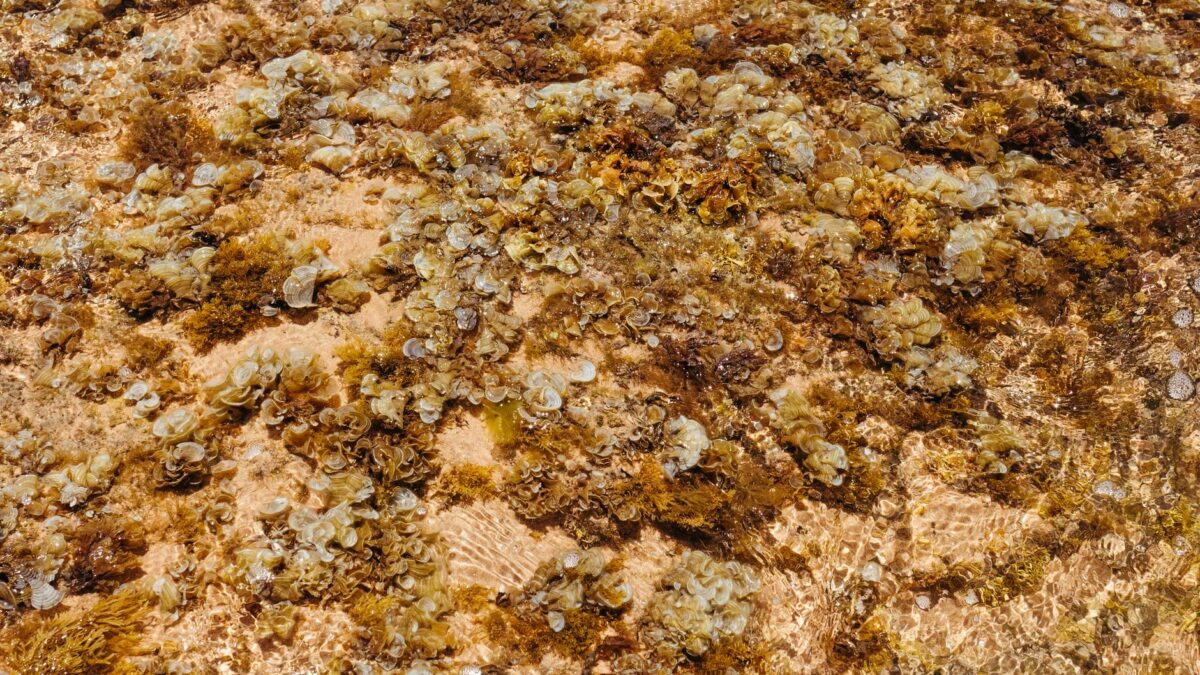
Off the coast of Mozambique, drowned forests have turned into peat reefs dated at 300 to 5,000 years old, and they host fish, invertebrates, turtles and sharks. A study in the journal Scientific Reports describes the reefs in the Bazaruto Archipelago, and its authors say the life on them compares with that of neighboring coral reefs.
Mario Lebrato, a marine biogeoscientist at the Bazaruto Center for Scientific Studies, said the team believes this is “the first ecological study of peat reefs anywhere in the tropics,” Eos reported.
What a peat reef is
Peat is mostly decomposed plant matter, so it holds a lot of carbon. A peat reef forms when trees that once stood on land end up underwater and slowly break down. The leftover material gives marine life a firm, carbon-rich surface to live on along coastlines that are otherwise sandy.
Only a handful of peat reefs have been documented worldwide. There is evidence of others, mostly in Europe, and some in the United States and Southeast Asia. Scientists still argue about how to define peat itself. Richard Lindsay, a peatland ecologist at the University of East London who was not part of the study, said the international debate on that question is still going on.
How the team found and dated the reefs
The researchers were not searching for peat. Lebrato said they kept noticing marine life on dark, firm platforms that did not match any habitat they recognized. They took samples and measured up to 40% carbon by dry weight. For comparison, the U.S. Department of Agriculture puts the average carbon content of trees at about 50% by dry weight, which pointed to a forest origin.
Radiocarbon dating placed the submerged structures at anywhere from 300 to 5,000 years old. That puts their origin in the middle to late Holocene, when ice caps held a large share of the planet’s water. As the world warmed and sea level rose, the ocean covered the Bazaruto coastline and its forests.
Today the shore near the archipelago looks very different. Low plants grow on sand dunes, and the mainland is about 20 kilometers (12.6 miles) away.
Who lives on the reefs
The Bazaruto peat reefs have no coral. Seagrass, microalgae and sponges grow on the peat instead, and they give shelter to young animals and other small residents. “A former forest floor has become a nursery for reef fish,” Lebrato said.
The team recorded invertebrates, fish, turtles and sharks. The reefs lie only 2 to 4 meters deep. Some parts are exposed at low tide from time to time, and storms regularly break them up. They sit inside the marine protected area of Bazaruto Archipelago National Park.
Why it matters for carbon and coastal habitats
Peat reefs are rarely mapped and are often missing from climate models, partly because shifting sand can bury and uncover them. Lindsay said they still represent a large carbon store. By his estimate, a 30-centimeter-thick layer of peat across a hectare can hold as much carbon as a hectare of rainforest.
The study does not settle whether the Bazaruto reefs are storing that carbon or releasing it. The researchers have not yet measured how much carbon the reefs contain. If the reefs stay overlooked, trawling or deep-sea mining could release carbon and wreck habitats rich in species, according to Eos.
Lebrato said the first step is to put peat reefs on coastal maps and into conservation plans and policy, so they are not lost before scientists understand them.
Source: Eos (AGU)