Jaguar Map Finds 307 Core Areas and 176 Corridors Across the Americas
A GPS-collar study of 172 jaguars maps 307 core areas and 176 corridors across the Americas, and shows where isolated populations are cut off.
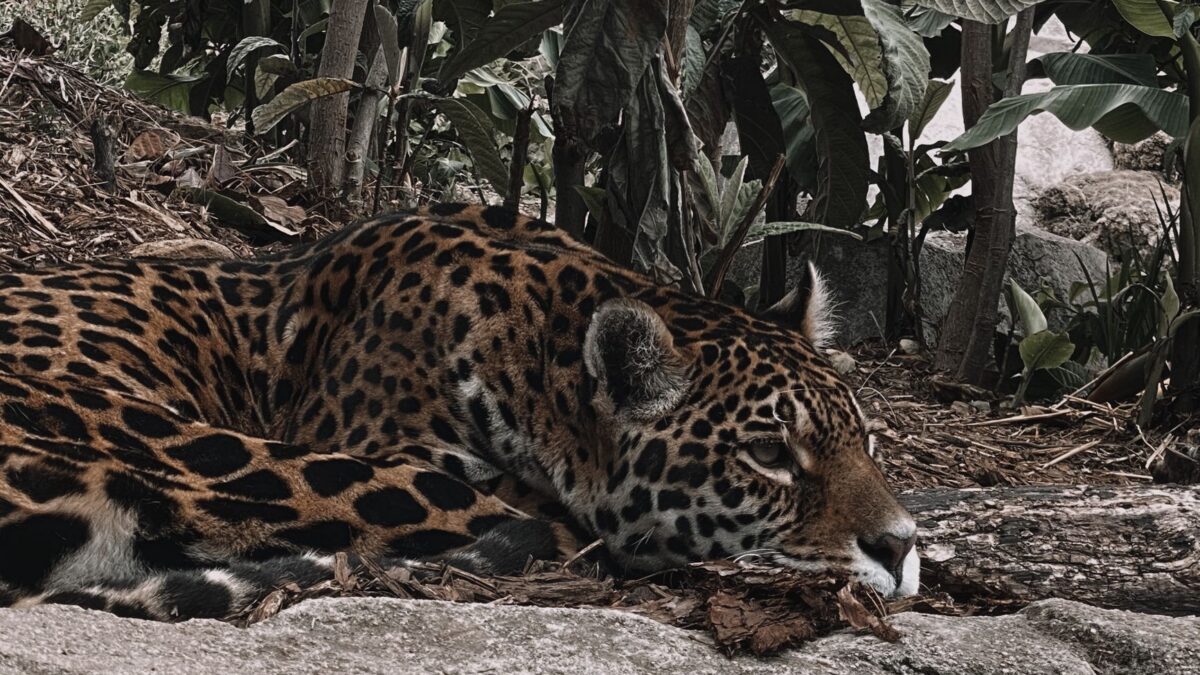
Researchers have mapped 307 core areas for jaguar movement across the Americas, covering more than 7.75 million square kilometers (2.99 million square miles), and 176 corridors that link them. The work, published in the journal Global Change Biology, is the most comprehensive assessment of connectivity across the jaguar’s range to date, according to Mongabay, which reported on the findings.
The largest and highest-ranked core area spans 6.5 million km2 (2.5 million mi2) and stretches across four South American biomes: the Amazon, Llanos, Chaco and Pantanal. Outside that stronghold, the picture is patchier. The jaguar, the largest feline in the Americas, has lost about half of its historical range, the study found.
How the team tracked the cats
Lead author Guilherme Costa Alvarenga, of the Wildlife Conservation Research Unit at the University of Oxford and the Mamirauá Institute for Sustainable Development in Brazil, and colleagues used movement data from 172 GPS-collared jaguars. The animals were captured and monitored in eight countries: Argentina, Belize, Brazil, Colombia, Costa Rica, Mexico, Paraguay and Peru.
The team combined those tracks with satellite imagery to model how populations connect. Alvarenga said the only earlier continent-wide analysis was done 15 years ago and relied solely on expert knowledge, with no camera trap or GPS collar data.
The collars also showed what the cats choose. Jaguars avoid areas with high human population density, extensive landscape degradation and intensive cattle farming. They favor places with more productive vegetation, which tend to hold more prey, and places closer to water. Alvarenga noted that jaguars have an unusually close relationship with aquatic environments among big cats, and that individuals in the Brazilian Pantanal have been reported diving underwater to hunt caimans.
Where the links break
Besides the 176 corridors, the assessment found 507 additional potential corridors between 905 protected areas and Indigenous territories. Connectivity is not continuous, though. Northern populations in Mexico and Central America showed several gaps.
Alvarenga attributed the gaps mainly to land transformed by agriculture and livestock farming, especially soybean plantations and cattle pastures. When animals stay isolated, he said, they begin breeding with relatives and lose genetic diversity, which raises their susceptibility to genetic diseases and weakens their ability to adapt to climate change.
Samuel Cushman, a co-author at the University of Southern Denmark, said a strong core area is not enough without corridors between populations. The Atlantic Forest shows the problem at small scale. Its Green Corridor along the Brazil-Argentina border holds about one-third of the fewer than 300 jaguars still living in that forest, but the habitat is highly fragmented and almost completely cut off from the rest of the biome, the study found.
Some populations are doing better. The Maya Forest has a large, stable population, and conservation work has helped numbers rise in the border region between Mexico and Arizona. The species has gone extinct in El Salvador, and there is no longer evidence of it in Uruguay.
How sure is this?
The paper is peer-reviewed. Its corridors are predictions built from collar data and satellite imagery, not observed crossings. Alvarenga said as much: this mapping was a first step, and the next phase is fieldwork to see whether jaguars actually use the corridors, talk to communities and judge how much restoration those areas need. The collars came from eight countries, so some parts of the range are covered by less movement data than others.
Yara Barros, a Brazilian conservation biologist who was not involved in the study, cautioned that a recovering population is not necessarily a safe one. If it stays isolated, she said, it remains vulnerable to genetic loss and to events that could threaten its survival.
Rivers and a first expedition
Water features in a separate effort. Four South American groups, Fundación Rewilding Argentina, Nativa (Bolivia), Fundación Moisés Bertoni (Paraguay) and Onçafari (Brazil), founded the Jaguar Rivers Initiative to restore, protect and connect 1,200 km2 (460 mi2) of the Paraná River Basin. Its first three years carry an investment of $80 million.
In September 2026, 20 researchers made the first expedition by boat from Corumbá, in Mato Grosso, along the Paraguay River to Argentina. Paola Bocardo, Onçafari’s director of forests, said the team set measurement protocols, did an initial mapping of wildlife and threats, and collected water samples. They saw large pumps drawing water from the river on the banks after it leaves Brazil, and they spotted few caimans, so the initiative added caimans to its monitored species. It also follows the giant river otter and three fish: golden dorado, spotted sorubim and streaked prochilod.
In Argentina, the Gran Iberá wetlands depend on water flowing from Brazil through the Paraná basin. Rewilding Argentina released three jaguars there in 2021, a mother and two cubs, after the species had been absent for 70 years. The population is now just over 50.
Anyone curious about how large mammals spread across the continents can read about when the first people reached the Americas.
Source: Mongabay
Site editor: Nikita Sheikin