NASA Tests Strawberries, Cucumbers and Lemon Basil for Space Menus
NASA tested strawberries, cucumbers and lemon basil as crops for Moon and Mars missions. See which strawberry won and what comes next for each plant.
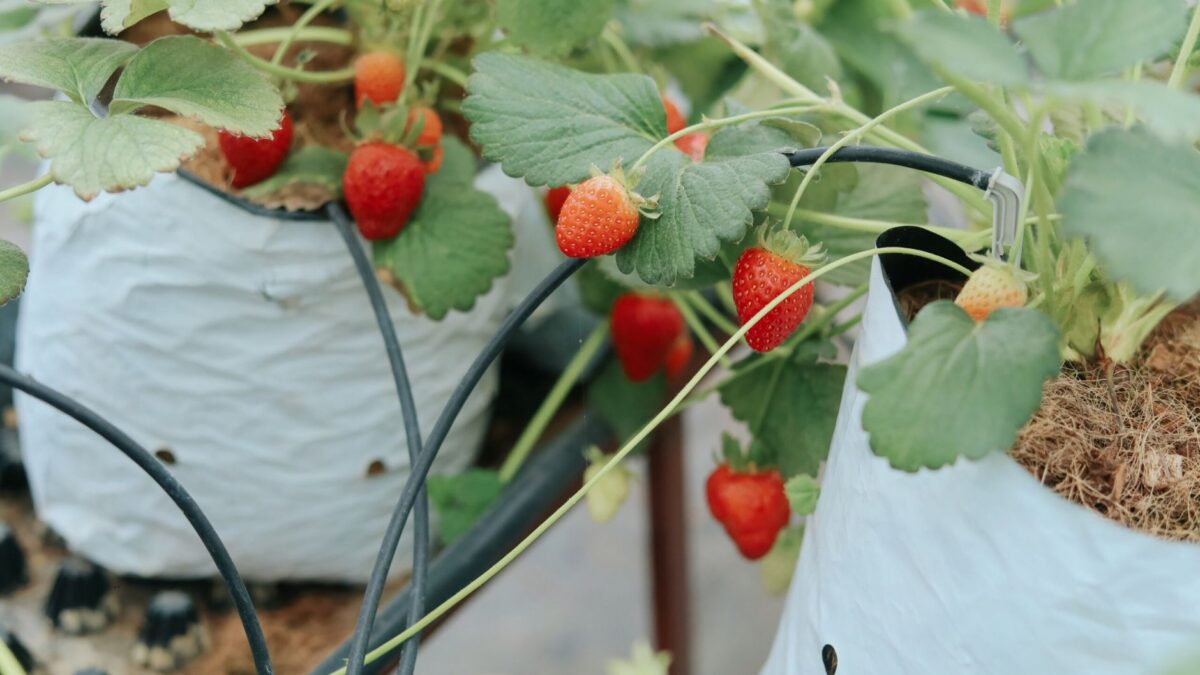
NASA says recent testing points to strawberries, cucumbers and lemon basil as candidate crops for astronauts on future Moon and Mars missions. The agency reported the results in a Nov. 25 update, citing two published studies and ongoing work at its Kennedy Space Center in Florida.
Plants grown in space can absorb carbon dioxide, produce oxygen and recycle water, NASA said. Fresh crops would also add variety to menus on long missions.
How the crops were tested
Researchers at NASA Kennedy, the University of Melbourne and the University of Western Australia compared a wild strawberry with NASA’s leading candidate, a variety called ‘Delizz.’ Both grew under simulated space conditions. NASA’s partner, the Australian Research Council Centre of Excellence in Plants for Space, is also helping expand knowledge of space strawberries. Kennedy researchers are growing strawberries in flight-like growth chambers as well.
The two plants produced very different fruit, according to a study published in September in the journal Life Sciences in Space Research. Delizz grew large, red fruit. The wild strawberry produced small, yellow fruit because of a recessive genetic mutation, meaning the trait appears only when a plant inherits the gene variant from both parents.
Grown from seed, the wild strawberry made twice as many buds, flowers and fruit as Delizz. It still lost: it grew too many runners, the side shoots strawberries send out, which would take up room aboard a spacecraft. Delizz kept its place as NASA’s top pick.
Cucumbers were evaluated by NASA-funded researchers for growth, yield and nutrition under spaceflight conditions. Their results appeared in August in the journal HortScience. The plants showed some signs of enlarged leaves but produced a steady stream of edible fruit. Many crops have been grown in space, NASA noted, but none so far from the gourd family, so cucumbers could be the first.
Lemon basil, an herb with a citrus scent and taste, passed its preliminary round of space crop testing at Kennedy. It also went through seed sanitization, a step required before spaceflight to remove microorganisms from seeds.
How sure is this?
The strawberry and cucumber findings come from published studies in peer-reviewed journals, though NASA’s update does not give sample sizes. The strawberry comparison used simulated space conditions, not actual flight. The lemon basil result is preliminary, as NASA describes it, and no published study is cited for it. None of these crops has yet been shown to grow and be eaten on a long mission.
What comes next
Lemon basil’s next step is an assessment of its growth in plant pillows, the containers that hold plants aboard the International Space Station. NASA’s Biological and Physical Sciences Division also has a new investigation set to launch to the station. It carries a first-of-its-kind prototype growth chamber, which NASA says will inform crop production systems for future Moon base habitats and Mars missions. A launch date was not given.
Source: NASA
Site editor: Nikita Sheikin