Six-Foot Asteroid 2026 QQ8 Becomes Earth’s Temporary Mini-Moon
A six-foot asteroid, 2026 QQ8, has circled Earth since April and will leave in December or January, the Minor Planet Center says. Here is how it was confirmed.
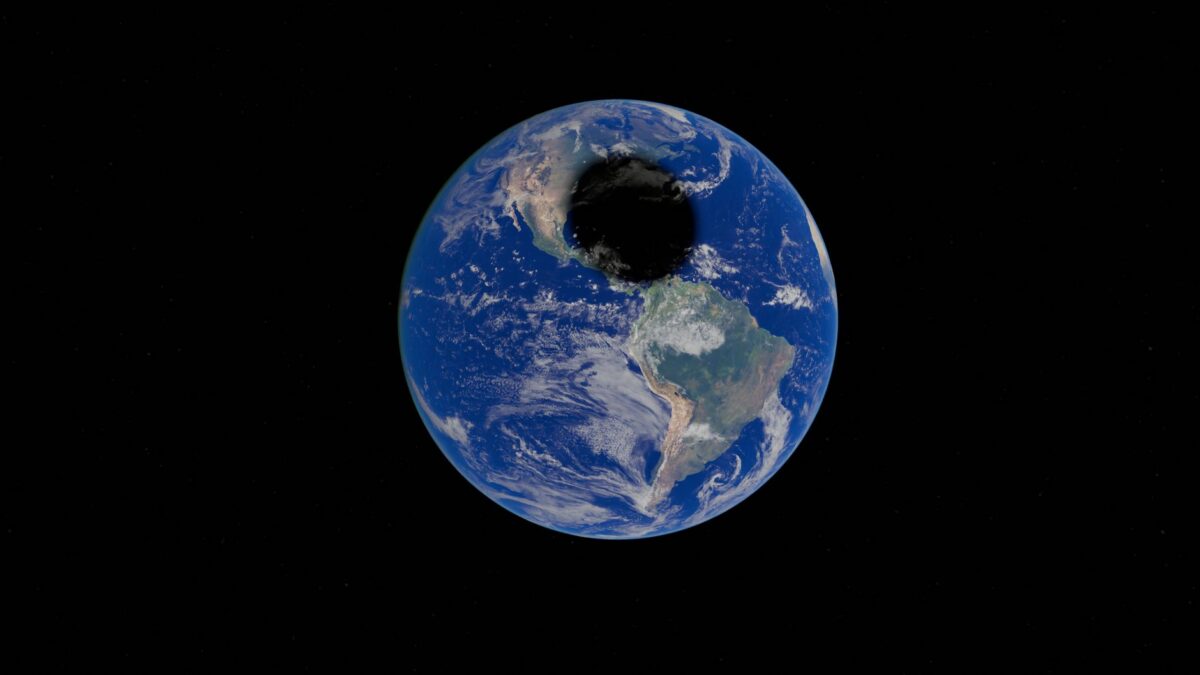
A space rock about six feet across has been circling Earth since April, according to the International Astronomical Union’s Minor Planet Center. The object, named 2026 QQ8, is an informal “mini-moon” and is expected to leave in December or January, then return to an ordinary orbit around the sun.
The Minor Planet Center announced on Oct. 29 that the object is a natural asteroid. It orbits from roughly 1.5 times the average distance of the moon, Live Science reported. Astronomers doubt it poses any danger, and Smithsonian Magazine notes that something this small would probably burn up in the atmosphere even if it came too close.
How the object was found and identified
Hungarian astronomer Krisztián Sárneczky of the Konkoly Observatory first spotted the object in August. He told CNN he was searching for near-Earth asteroids, as he has done on every clear night since 2020, and that it looked like the nearly 400 other near-Earth asteroids he had found. Only precise orbital calculations later showed it was circling Earth.
That set off a weeks-long effort to learn what it was. Human-made objects can be mistaken for mini-moons: according to Asa Stahl at the Planetary Society, people once took the European Space Agency’s Gaia observatory for one. Astronomers used the Lowell Discovery Telescope in Arizona and the University of Hawaii’s telescope on Mauna Kea to confirm that the object formed in space.
What a mini-moon is
“Mini-moon” is an informal term for a small object that Earth’s gravity captures as it passes by. On average, such objects stay less than a year before being flung back into space. Live Science reports that 2026 QQ8 is an Aten asteroid, a type of space rock whose orbit around the sun occasionally brings it close to Earth, and that it approaches our planet about once every ten years. Its exact origin is unclear, though scientists believe most near-Earth asteroids come from the main asteroid belt between Mars and Jupiter.
Quasi-moons are a different case. The Planetary Society describes them as asteroids that appear to act like moons of Earth but actually orbit the sun on paths very similar to Earth’s. For more on how agencies follow objects like these, see this explainer on how NASA tracks asteroid risk.
How sure is this?
The size and classification come from the Minor Planet Center, which is the body that announced the result, and the natural origin was confirmed with two ground-based telescopes. The sources do not describe a peer-reviewed paper on this object. The exact origin is unknown, and the departure date is given only as December or January.
The broader numbers are estimates. Many scientists speculate Earth always has at least one mini-moon, and a study published last year suggests at least six at any given time. Only four other mini-moons have been observed, according to the Planetary Society, because the objects are small and hard to detect.
What comes next
New survey telescopes are expected to turn up more. The Vera C. Rubin Observatory in Chile began its decade-long Legacy Survey of Space and Time over the summer and has already detected thousands of new asteroids in the Southern Hemisphere sky. Matthew Payne, director of the Minor Planet Center and an astrophysicist at the Center for Astrophysics, Harvard & Smithsonian, told CNN the expectation is that the count of known objects will rise from 1.5 million to 5 million once the survey is fully operating.
Source: Smithsonian Magazine
Site editor: Nikita Sheikin