Earth Gains a Temporary Minimoon, 2026 QQ6, Until January
Astronomers confirmed a small rock, 2026 QQ6, is circling Earth as a temporary minimoon. It leaves in January 2027 and poses no risk to the planet.
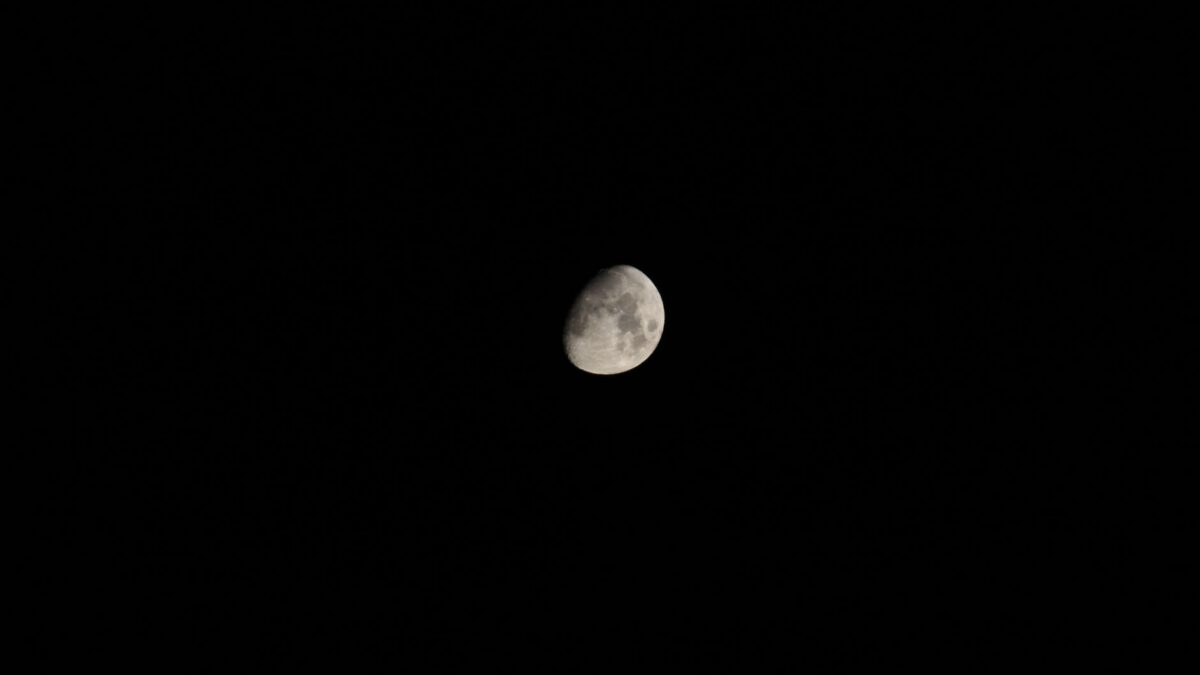
Earth has a temporary second companion. Astronomers have confirmed that a small rock, designated 2026 QQ6, is circling the planet as a so-called minimoon, according to the Daily Mail. It is expected to leave Earth’s gravity in January 2027 and continue its path around the sun.
The object is about six feet (2m) across and entered Earth’s orbit in April of this year. It is too small to see with amateur telescopes, but professional astronomers around the world are tracking it.
How the rock was found and what it turned out to be
Hungarian researcher Krisztián Sárneczky, who has found many asteroids, first spotted the object in August. He reported it to the International Astronomical Union’s Minor Planet Center, which logs and confirms new objects. Experts there disagreed about what it was. Some thought it was a natural rock briefly held by Earth’s gravity. Others thought it might be human-made space junk.
The center said in a statement that the orbit was “suggestive of either a minimoon or an artificial object.” Harvard astrophysicist Avi Loeb went further and suggested it could be a lost panel from the Apollo 13 moon mission.
Follow-up observations settled the question. The Lowell Discovery Telescope in Arizona and the University of Hawaii 2.2-meter telescope both pointed to a natural origin. On October 29, the Minor Planet Center officially recognized it as a minimoon and gave it the name 2026 QQ6.
Where it comes from and how it got here
Scientists believe 2026 QQ6 is an Aten asteroid, a type of space rock left over from the formation of the solar system 4.6 billion years ago. Aten asteroids travel on paths that mostly lie inside Earth’s orbit and cross it often, so they regularly pass close to the planet.
On its own, this rock takes about 359 days to go around the sun and comes close to Earth once every 10 years. Normally it would not get near enough to enter Earth’s Hill Sphere, the boundary between the region where Earth’s gravity dominates and the region where the sun’s pull wins. At some point in April 2026 it must have crossed that line and been temporarily trapped.
Why it matters
The Daily Mail reports that the rock poses no danger. Its closest pass will be around 353,000 miles (568,000km), and it is too small to harm anyone even on a direct collision course. A rock this size would burn up in the atmosphere if it came too close.
Minimoons are not new. The first was detected in 1991, when astronomers found a 30-foot (10m) object named 1991 VG. Its circular orbit and bright surface led some people to wonder whether an alien probe was visiting. Researchers now know such visitors are fairly common. Recent research suggests Earth usually has at least one extra minimoon at any time, and most stay in orbit for less than a year.
That is why astronomers want as many measurements as possible before it leaves. Each observation helps them understand how Earth captures small objects like this one and what the process could mean for the planet’s safety. Large Aten asteroids are a separate matter, since they can be lost in the sun’s glare as they approach Earth.
What happens next
2026 QQ6 is expected to depart in January 2027. Until then, telescopes will keep following it as it completes its short stay around Earth.
Source: Daily Mail