Survey in Tuva Maps Turkic Stone Figures and Rows of Standing Stones
Russian archaeologists documented Turkic ritual complexes in Tuva from the 6th to 8th centuries: stone enclosures, carved figures and long rows of balbals.
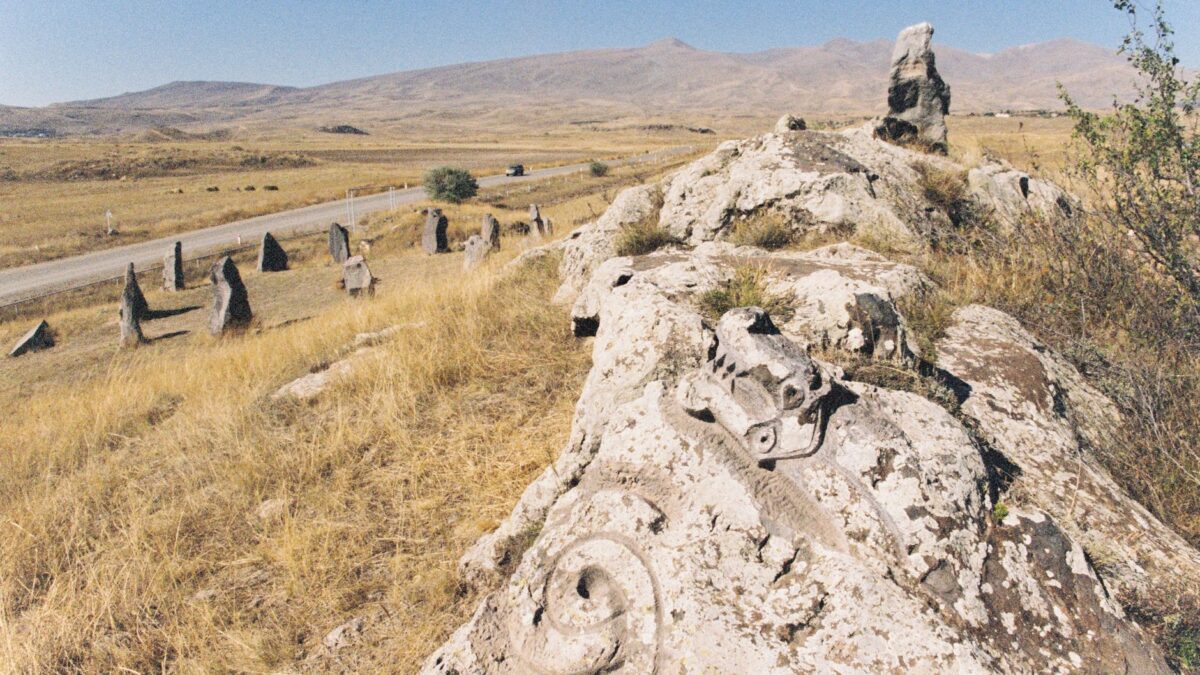
Archaeologists from the Institute for the History of Material Culture of the Russian Academy of Sciences have documented several previously unrecorded ritual complexes in the Republic of Tuva, dating from the 6th to the 8th centuries. According to HeritageDaily, which reported the work, each complex combines rectangular stone enclosures, carved human figures and long rows of standing stones called balbals.
Some of the balbal rows contain dozens of stones and stretch for hundreds of metres. The researchers interpret the sites as ceremonial spaces from the period of the Turkic Khaganates, linked to ancestor veneration and the worship of Heaven.
What the surveys found
The complexes turned up during surveys in the Mongun-Taiga and Ovyur districts of southern Tuva and the Chaa-Khol and Ulug-Khem districts in the central part of the region. Several stand on high riverbanks or in prominent valleys.
A typical complex has rectangular stone enclosures arranged in chains running north to south. A larger carved stone stands on the eastern side. Some of these show a full human figure, others only the upper body or a face cut into the stone. From the sculptures, lines of balbals run eastward, toward the rising sun.
The figures carry detail about daily life. Faces have prominent eyebrows, moustaches, beards and large eyes. Clothing includes caftans, robes, fur garments, headdresses and decorated belts. Some figures hold sabres, daggers, whetstones (tools for sharpening blades) and small bags, and many hold vessels of different shapes.
Revisiting sites first studied in the 1950s
Tuva lies in the Sayan-Altai region, where many carved stone figures of ancient Turkic culture have been documented. Archaeologist Alexander Grach researched the monuments extensively in the 1950s, but many sculptures were recorded one by one, with little attention to the features around them.
The current team is returning to establish precise locations and to study each monument as part of a whole ritual landscape. Marina Kilunovskaya, a senior researcher at the institute, said that studying the sculptures together with their surroundings has changed how the sites are interpreted. The researchers now regard them as parts of large ceremonial spaces tied to remembering ancestors.
The archaeologists suggest communities may have come back to these places repeatedly, adding memorial stones for family founders and revered ancestors. Quality varies widely: carefully made figures sit beside simple, schematic carvings. That could mean skilled artisans made some and community members made others.
How sure is this?
The findings come from surface surveys, and no excavation was done in this round of work. The dating to the 6th through 8th centuries and the ritual interpretation rest on the monuments’ form and on comparison with similar Turkic complexes. At those comparable sites, earlier studies found animal bones and pottery fragments, which are read as remains of funerary feasts. Nothing of that kind was reported from the new sites. The source does not name a peer-reviewed paper, the number of complexes, or a journal, so the results are an institute report rather than a published study. The idea of repeated visits over generations is a suggestion, not a demonstrated finding.
The newly documented monuments have been registered for state protection.
Source: HeritageDaily
Site editor: Nikita Sheikin