Trapdoor Spider Has a 4.6-Billion-Base Genome, 50% Bigger Than Ours
A California trapdoor spider named for Stephen Colbert has a genome about 50% larger than a human's, with 52 chromosomes. Here is how it was read and why.
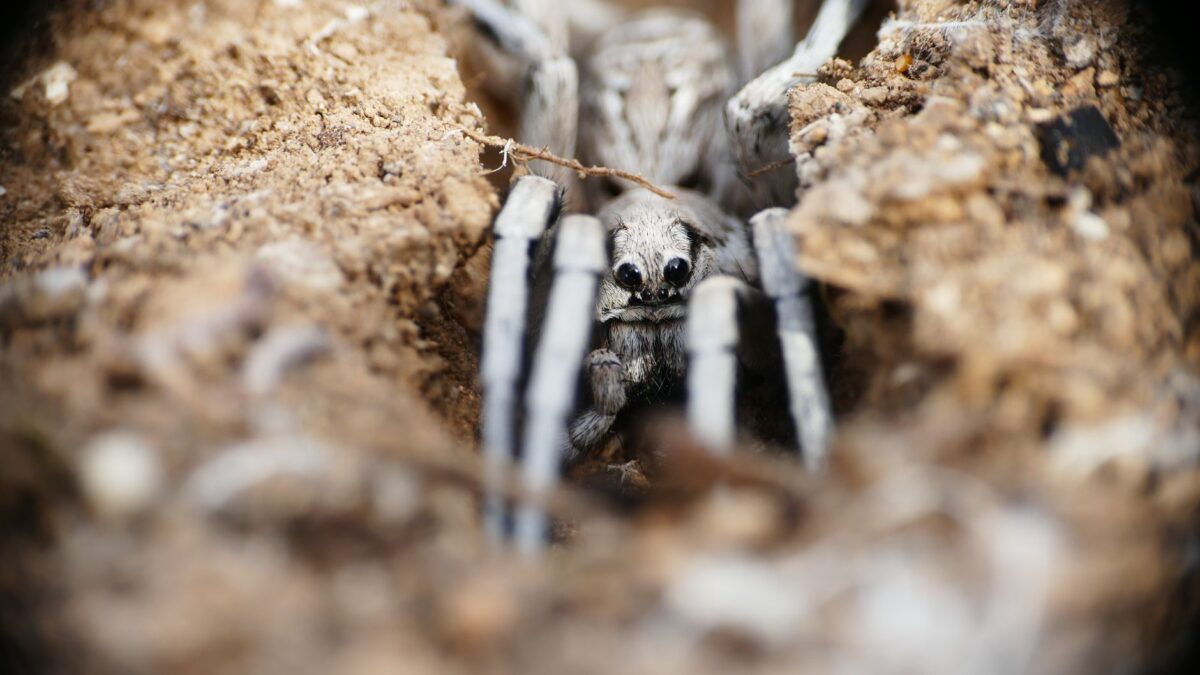
A trapdoor spider about the size of a quarter has a genome roughly 50% larger than a human’s. According to UC Davis, the species Aptostichus stephencolberti carries 4.6 billion DNA base pairs (4.6 gigabases) packed into 52 chromosomes. Humans typically have 46 chromosomes, organized in 23 pairs.
The spider lives in coastal dunes in Central California, from the San Francisco Bay area to Monterey. It is named after comedian Stephen Colbert. The genome was published in the Journal of Heredity, and the authors say it is the first sequenced genome from a spider in its family.
How the genome was read
Researchers from UC Davis, UC Santa Cruz, UCLA and Virginia Tech produced a reference genome, a full, assembled copy of the species’ DNA that other studies can compare against. Corresponding author Jason Bond, a professor in the UC Davis Department of Entomology and Nematology, said 4.6 gigabases is not the largest genome among spiders, but it is significant.
A bigger genome does not necessarily mean more genes. In this spider, about 77% of the genome is repetitive DNA, sequences that appear many times throughout the genetic material.
The team also noted that spiders lack the usual repeating DNA sequences that form telomeres, the protective caps at the ends of chromosomes. The researchers say this difference could help explain why spider chromosomes appear to evolve faster than those of vertebrates. Bond said the work broadens understanding of how genomes have evolved across the animal Tree of Life.
A spider that ambushes from underground
Females spend their whole lives in silk-lined burrows with a hinged door that blends into the sand. Vibrations tell the spider when prey is near, and it bursts out to grab it. Bond said its venom poses no danger to people, noting that of more than 50,000 known spider species, only about 30 to 50 have venom known to be toxic to humans.
The name dates to 2008. Colbert learned that Bond had named a trapdoor spider after musician Neil Young, then demanded on “The Colbert Report” that a spider be named for him. Bond agreed. The “t” in Colbert is silent.
Why conservation groups want the data
The sequencing is part of the California Conservation Genomics Project, a state-funded effort to build genomic data that can guide conservation decisions. Trapdoor spiders rarely travel far from their burrows, and their dune habitats are already split into isolated patches. Researchers hope the genetic data will reveal distinct populations that need special protection.
Bond said the spiders are likely to be very sensitive to sea-level rise and to invasive species. His team wants to understand how climate change, fire and urbanization affect the species’ genetic diversity.
The researchers also point to venom. Some compounds from spider venoms have shown promise as potential painkillers, and others may help control agricultural pests. Bond said it is not known how much untapped diversity of such natural products exists.
How sure is this?
The work is a peer-reviewed paper in the Journal of Heredity (DOI: 10.1093/jhered/esag069). It describes one species, so comparisons with other spiders, including the idea that spider chromosomes evolve quickly, rest on the authors’ interpretation of this genome and existing knowledge. The sources do not say how many individual spiders were sequenced. The venom and medicine possibilities are hopes stated by the researchers, not results from this study. The research was supported by the California Conservation Genomics Project, funded through the state’s State Budget Act of 2019, and by the National Science Foundation.
Source: ScienceDaily
Site editor: Nikita Sheikin