SpaceX Starship Flight 15 Reaches Orbit, Booster Catch Called Off
Starship's upper stage reached orbit on Flight 15 after SpaceX called off the booster catch. What happened and what the first return to Starbase requires.
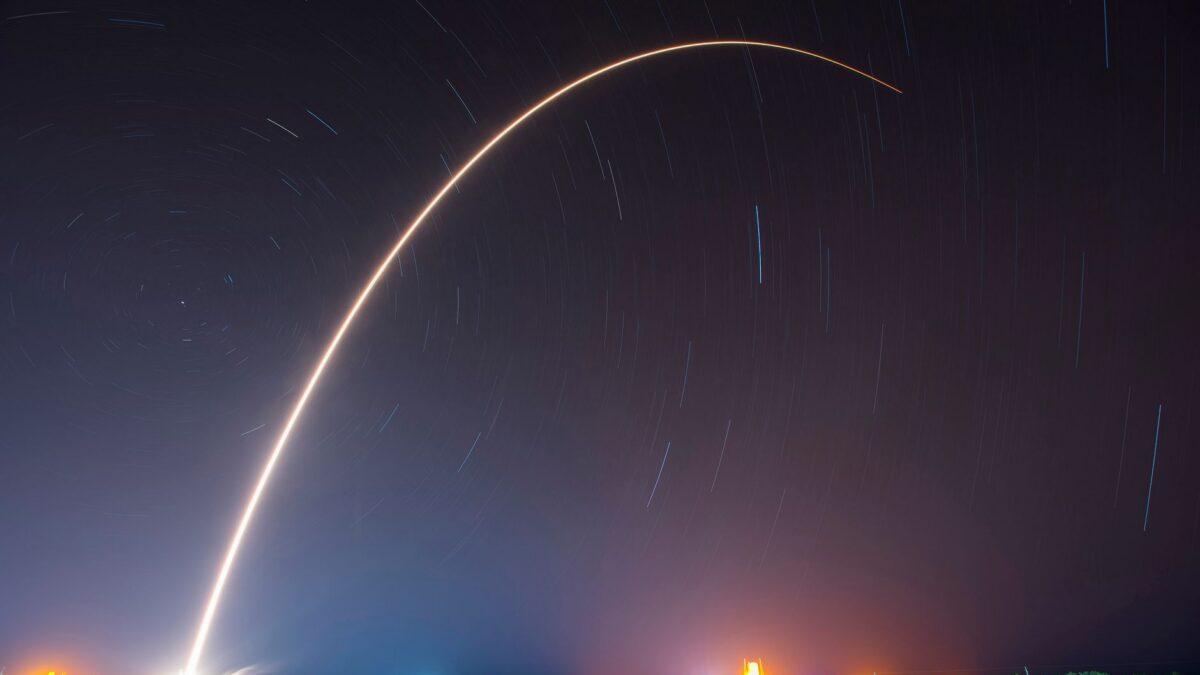
SpaceX’s Starship reached orbit for the second time on Nov. 13. Its Super Heavy booster, which SpaceX had planned to catch with the launch tower’s mechanical arms, came down in the Gulf of Mexico instead. Space.com reported that the company called off the catch about 6.5 minutes after launch and did not immediately say why.
The upper stage, called Ship, now has a harder test ahead. SpaceX plans to bring it back to the Starbase launch site in South Texas for the first time. If that works, it would be the first time any Starship upper stage has been recovered.
How the launch went
Flight 15 left Starbase at 5:47 p.m. ET (2247 GMT). The booster’s 33 Raptor 3 engines produced more than 18 million pounds of thrust. About 2.5 minutes into the flight, the booster shut down its main engines and Ship lit its own Raptors while still attached, a separation method known as hot-staging.
Super Heavy then turned around to head back toward Starbase, but SpaceX steered it to a controlled splashdown at sea. A catch would have been the first recovery of a Version 3 Super Heavy, the design SpaceX started flying this year. According to Space.com, SpaceX has recovered three of its earlier V1 boosters and flown two of them again.
Ship finished its first engine burn a little after eight minutes into the flight. A second burn of about 20 seconds placed it in low Earth orbit at roughly 170 miles (275 kilometers), at T+26 minutes and 10 seconds. “Starship now in orbit around Earth for the second time ever,” SpaceX’s Dan Huot said on the launch webcast. Ship first reached orbit on Flight 14, which launched Sept. 28.
Satellites with cameras pointed back at the ship
Ship carried 26 Starlink V3 internet satellites, set to deploy over a 42-minute window starting 35 minutes after liftoff. It is the second batch of V3 satellites, after the 26 delivered on Flight 14. SpaceX’s mission outline says the new set adds a terabit of data capacity to the network, as much as 10 Falcon 9 launches of the older V2 satellites. More than 11,000 V2 Starlinks are already in low Earth orbit.
Three of the new satellites carry cameras. After release, they are meant to turn back and photograph Ship’s heatshield tiles and other hardware so engineers can see whether the climb to orbit damaged anything. Those pictures feed into the decision on whether Ship can come home to Starbase.
What the return to Starbase requires
SpaceX’s mission description says Ship will attempt a return to the launch site only if the flight team confirms that the systems for reentry, the final landing burn and the approach to the tower are healthy. The plan gives engineers plenty of time to check: Ship is scheduled to orbit Earth 14 times and spend more than 21 hours in space.
The timeline has three exit points that would send Ship to the Pacific Ocean instead. The first comes 10 minutes after the satellites finish deploying, the second at T+7 hours and 15 minutes, and the last at T+20 hours and 41 minutes. If Ship passes all three, a 10-second deorbit burn at about T+21 hours and 36 minutes would aim it back toward South Texas, and reentry would start roughly 35 minutes later. SpaceX has also set aside a backup splashdown area in the Gulf of Mexico in case conditions rule out a catch on the final approach.
If everything goes to plan, Ship would arrive at Starbase on Saturday, Nov. 14, at about 4:17 p.m. EST (2117 GMT), some 22.5 hours after launch.
Why it matters for reusable rockets
A rocket that can be caught, inspected and flown again costs far less per launch than one thrown away after each flight. That is the idea behind how SpaceX already lands and reflies Falcon 9 boosters, and Starship is meant to take it further by recovering both stages.
The company’s launch targets depend on it. Elon Musk has said the next Starlink network will have about 100,000 satellites and that a planned network of orbital data centers would be 10 times larger. Musk has also said SpaceX is aiming for 10,000 Starship launches a year by 2030.
Reliability matters for NASA as well. The agency picked Starship as one of the crewed landers for its Artemis program, which aims to return astronauts to the moon, and the rocket’s moon role includes a demonstration flight in Earth orbit with NASA’s Orion spacecraft and the Artemis III crew, planned for the summer of 2027.
Source: Space.com