How to Read the Northern Lights Forecast and the Kp Index
NOAA's Space Weather Prediction Center publishes free aurora forecasts that look technical at first. Three numbers and one map tell you most of what you need.
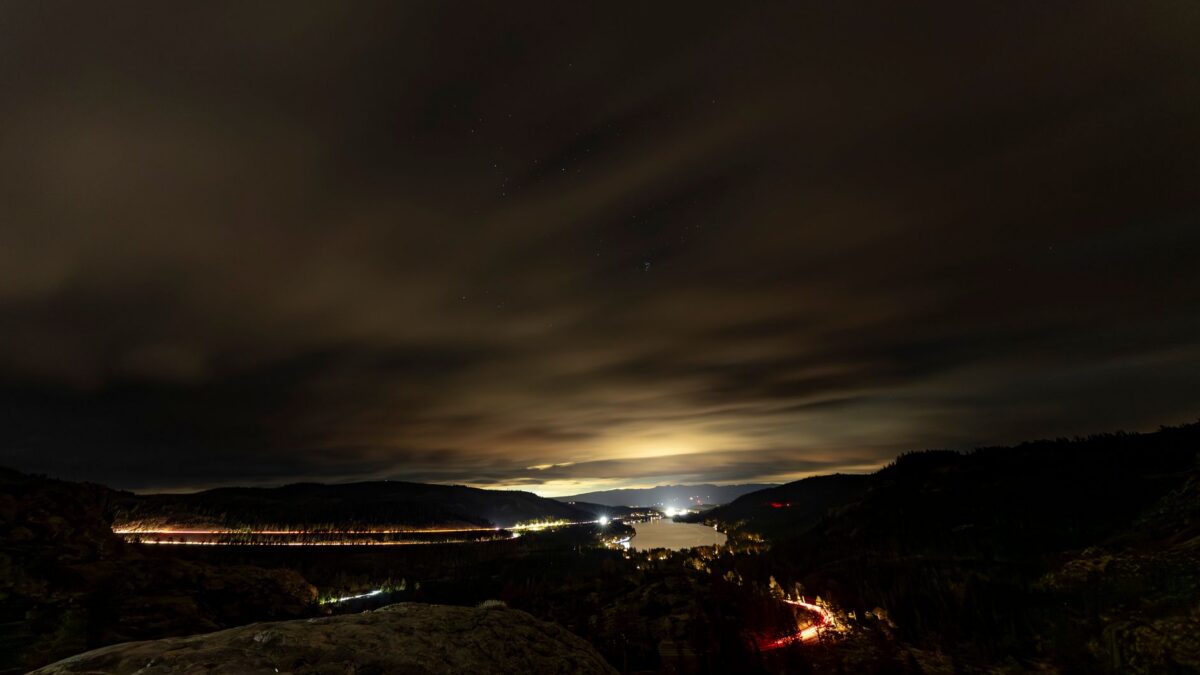
The northern lights forecast from NOAA’s Space Weather Prediction Center (SWPC) rates geomagnetic activity on the Kp index, from 0 to 9. At Kp 6 to 7, aurora may be visible from the northern edge of the United States. At Kp 8 to 9, it can appear nearly overhead across the northern states and is sometimes seen much farther south.
A high Kp is only half the answer. You also need darkness, clear skies and a view to the north away from city lights.
What does the Kp index mean?
The Kp index measures how disturbed Earth’s magnetic field is on a scale from 0 to 9. Higher numbers mean a stronger geomagnetic storm, a brighter aurora and an auroral oval that stretches farther from the poles. SWPC sums it up like this in its tips for viewing the aurora:
| Kp | NOAA storm level | What to expect in the US |
|---|---|---|
| 0 to 2 | Quiet | Aurora far north, dim and fairly still; mainly Alaska |
| 3 to 4 | Unsettled to active | Brighter and more active, mostly over Alaska and Canada |
| 5 | G1 (minor storm) | Possible low on the northern horizon in the northernmost states |
| 6 to 7 | G2 to G3 (moderate to strong) | Possibly visible from the northern edge of the US |
| 8 to 9 | G4 to G5 (severe to extreme) | Nearly overhead in northern states; sometimes seen much farther south |
SWPC gives a rough rule of thumb: the southern edge of the auroral oval sits near 66 degrees geomagnetic latitude at Kp 0 and moves about 2 degrees toward the equator for each Kp level. Geomagnetic latitude is not the same as the latitude on a map. In North America the magnetic pole sits toward Canada, so the US gets better chances than places in Europe or Asia at the same map latitude.
Extreme storms can beat these averages. During the G5 storm of May 10 and 11, 2024, people across much of the US, including parts of the South, reported seeing aurora.
How do you read NOAA’s aurora forecast?
Use the 3-day forecast to see whether a storm is expected and the 30-minute forecast to see whether the aurora is active right now. Both are free on the SWPC website.
- Open the 3-day forecast. It lists the predicted Kp for each 3-hour block in UTC. Convert to your time zone; for example, 03 to 06 UTC is 10 p.m. to 1 a.m. Eastern Standard Time.
- Look for blocks of Kp 5 or higher and any G1 to G5 storm watch. Those are the nights worth planning around.
- On the night, open the Aurora 30-Minute Forecast. It shows a map of where the aurora is likely to be visible in the next half hour or so. Green means a lower chance, red a higher one.
- Check how close the colored oval comes to your location. If it reaches your area or the band just to your north, step outside.
- Check the local cloud forecast. A strong storm behind solid cloud cover is still invisible.
Forecasts of geomagnetic storms are less certain than weather forecasts. The arrival time of a solar eruption can be off by hours, and its strength is often known only when it reaches the spacecraft that monitor the solar wind. Treat a storm watch as a reason to be ready, not a promise.
What time of night is best to see the northern lights?
The best time is usually within an hour or two of local midnight, roughly 10 p.m. to 2 a.m., according to SWPC. During strong storms the window widens, and aurora can show up earlier in the evening or later toward dawn.
Season matters too. SWPC notes that storms tend to be larger around the spring and fall equinoxes. Summer nights at high latitudes are short and may not get dark enough. A full moon washes out fainter displays.
Where should you go to see the aurora?
Go somewhere dark with an open view of the northern horizon, as far from city lights as you can manage. A hilltop, lake shore or open field facing north works well.
- Light pollution hides faint aurora, so even a short drive out of town helps.
- In the lower 48, the aurora often appears as a glow low in the north rather than overhead, so the northern horizon must be clear.
- Give your eyes 15 to 20 minutes to adapt, and use a red light instead of a white phone screen.
If you are out under dark skies anyway, the same trip works for other sights. Our meteor shower calendar lists the major showers by peak date.
How do you photograph the northern lights?
Use a phone’s night mode or a camera on a tripod with a long exposure. Cameras pick up color the eye often misses, so a gray glow in the north may show up green or red in a photo.
- Phone: turn on night mode, steady the phone on a tripod or solid surface, and turn off the flash.
- Camera: use the widest lens you have, the widest aperture (such as f/2.8 or lower), ISO 800 to 3200 and exposures of about 2 to 15 seconds.
- Focus manually on a bright star or a distant light, then leave focus alone.
- Use shorter exposures when the aurora is bright and moving fast, and longer ones for a faint glow.
Long exposures also pick up satellites as thin streaks. Our guide on how to see Starlink satellites explains why so many cross the sky after dusk.
Many photos shared during storms show more color than people saw with their eyes. That is normal and not a sign you missed the show.
Bottom line
Check NOAA SWPC’s 3-day forecast for Kp 5 or higher, then the Aurora 30-Minute Forecast on the night. Kp 6 to 7 can bring aurora to the northern edge of the US, and Kp 8 to 9 can put it overhead in northern states and sometimes much farther south. Go somewhere dark with a clear northern view, look between about 10 p.m. and 2 a.m., and use a phone night mode or a tripod to capture faint color.
FAQ
What Kp do I need to see the northern lights in my state?
It depends on how far north you are. SWPC says Kp 6 to 7 may bring aurora to the northern edge of the US, while Kp 8 to 9 can bring it overhead across northern states. Southern states usually need an extreme storm.
Is the northern lights forecast accurate?
It is useful but less precise than a weather forecast. Storm timing can shift by hours, so check the 30-minute forecast on the night and step outside when the oval nears your area.
Why does the aurora look gray to my eyes but green in photos?
Human eyes see color poorly in low light, while cameras collect light over several seconds. A faint aurora often looks like a pale glow to the eye and green or red in a photo.
Where can I get aurora alerts?
NOAA SWPC offers free email alerts for geomagnetic storm watches and warnings through its subscription service. Many people also check the 30-minute forecast map on storm nights.