Meteor Shower Calendar: Peak Dates, Rates and Moonlight
A shower-by-shower guide to the year's major meteor showers, with the next peak dates, realistic hourly counts and how much the Moon will get in the way.
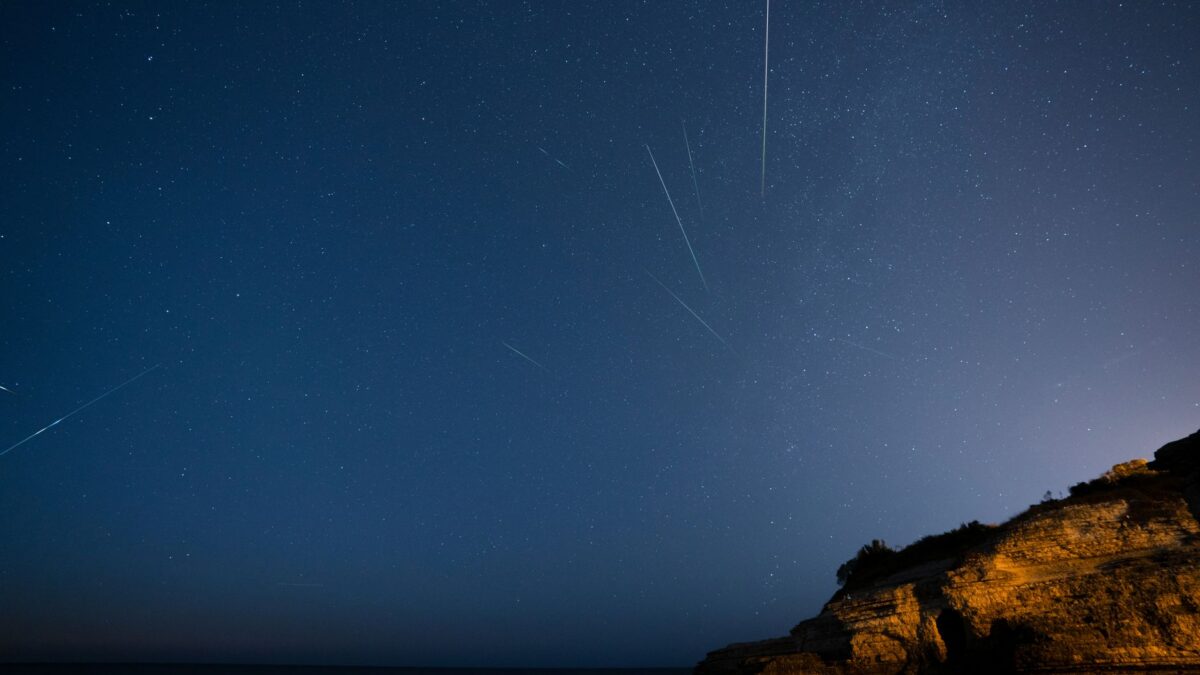
The next major meteor showers visible from the US are the Leonids, peaking on the night of November 16-17, 2026, the Geminids on December 13-14, 2026, and the Quadrantids on January 3-4, 2027. The Geminids are usually the strongest shower of the year, and in 2026 a thin crescent Moon leaves the sky fairly dark at their peak.
Peak dates and Moon figures below come from the American Meteor Society’s calendar as of November 2026. Hourly rates are what one observer under a dark rural sky might count at the peak; from a city you will see far fewer.
When are the major meteor showers in 2026 and 2027?
The table lists each major shower in calendar order starting from November 2026, with its next peak night and the Moon’s brightness at that peak.
| Shower | Next peak night | Expected rate at peak | Moon at peak |
|---|---|---|---|
| Northern Taurids | Nov 11-12, 2026 | Low rates, known for slow fireballs | 4% (thin crescent) |
| Leonids | Nov 16-17, 2026 | Low in most years; NASA says often as few as about 3 per hour | 39% |
| Geminids | Dec 13-14, 2026 | The year’s strongest; up to about 120 per hour under perfect conditions (NASA) | 15% |
| Ursids | Dec 21-22, 2026 | 5 to 10 per hour | 89% |
| Quadrantids | Jan 3-4, 2027 | About 25 per hour under dark skies (short peak) | 18% |
| Lyrids | Apr 21-22, 2027 | About 10 to 20 per hour | 100% (full Moon) |
| Eta Aquariids | May 5-6, 2027 | 10 to 30 per hour | 2% |
| Southern Delta Aquariids | Jul 30-31, 2027 | Steady rates for about a week | 14% |
| Perseids | Aug 12-13, 2027 | 30 to 50 per hour at rural sites | 79% |
| Orionids | Around Oct 21-22 each year | 10 to 20 per hour in a normal year | Varies |
Rates for the Leonids, Geminids and Lyrids are typical figures from NASA rather than AMS forecasts for these specific nights. For the full list of minor showers and updates, see the American Meteor Society calendar.
Which meteor showers are the best to watch?
The Geminids in December and the Perseids in August are the most reliable strong showers for US viewers. The Geminids produce the highest rates and are active before midnight, since the constellation Gemini is well placed from about 10 p.m. local time. The Perseids come on warm summer nights, which makes them the most popular, but in 2027 a bright gibbous Moon will wash out many fainter meteors.
The Quadrantids can match the big two for an hour or so, but their peak is short and falls in January, when the weather is often cloudy and cold. In 2027 the American Meteor Society predicts the peak near 3:30 UT on January 4, which is the evening of January 3 across US time zones (10:30 p.m. EST).
How does moonlight affect a meteor shower?
A bright Moon hides most faint meteors, and faint meteors are the majority, so moonlight can sharply cut the number you see. Only the brighter meteors and fireballs remain visible.
- New or thin crescent Moon (under about 25%): close to ideal. The 2026 Geminids, 2027 Quadrantids and 2027 Eta Aquariids fall here.
- Half Moon (around 40 to 60%): plan to watch while the Moon is below the horizon.
- Gibbous or full Moon (over 75%): rates drop sharply; the 2026 Ursids and 2027 Lyrids and Perseids face this.
A simple trick on moonlit nights is to sit with the Moon behind you and a building or tree blocking it, and look at the darkest part of the sky.
What time of night is best for meteors?
For most showers, the best time is after midnight and before the first light of dawn. In those hours your side of Earth faces forward along its orbit and the shower’s radiant, the point in the sky where meteors seem to come from, is higher.
The Geminids are the main exception, with good rates from late evening on. The Eta Aquariids and Lyrids are best in the last hours before dawn, when their radiants climb highest.
How do you watch a meteor shower?
Watching takes no equipment, only patience and a dark sky. Binoculars and telescopes do not help, because meteors appear anywhere and move too fast.
- Pick the peak night from the table and check the local weather forecast.
- Drive away from city lights if you can; even a park on the edge of town helps.
- Bring a reclining chair or blanket, warm layers and a hot drink for winter showers.
- Put your phone away and let your eyes adjust to the dark for at least 20 to 30 minutes.
- Look at a wide area of sky about halfway up, not straight at the radiant.
- Give it at least an hour; meteors come in bursts and lulls.
The same dark, clear evenings are good for spotting satellites; our guide on how to see Starlink satellites explains how to tell them apart from meteors.
Where do meteor showers come from?
Meteor showers happen when Earth passes through trails of dust left by comets and, in a few cases, asteroids. Each grain burns up high in the atmosphere as a streak of light. The Perseids come from comet Swift-Tuttle, which orbits the Sun about every 133 years, according to NASA. The Geminids come from the asteroid 3200 Phaethon, and the Leonids from comet Tempel-Tuttle. The American Meteor Society notes that the Leonids may produce displays of more than 100 per hour around the comet’s 2031 return.
Bottom line
Mark December 13-14, 2026, for the Geminids, the best shower of the season with little Moon in the way, and January 3-4, 2027, for a quick Quadrantid peak. Watch after dark from a site away from city lights, give your eyes time to adjust and expect bursts rather than a steady stream.
FAQ
What is the biggest meteor shower of the year?
The Geminids in mid-December are usually the strongest shower of the year. The Perseids in August are the best known because they fall on warm summer nights.
Do I need a telescope to see a meteor shower?
No. Meteors move fast across large parts of the sky, so the naked eye is the best tool. A wide view of dark sky matters more than any equipment.
Why do I see fewer meteors than the listed rate?
Listed rates assume a dark sky and the radiant high overhead. Light pollution, the Moon, clouds and a low radiant all cut the number you see, often by a large margin.