How Much Pressure Is in a Champagne Bottle? The Physics of the Pop
A bottle of Champagne holds about 5 to 6 atmospheres, roughly 70 to 90 psi. Where the gas comes from, what makes the pop and how to open it safely.
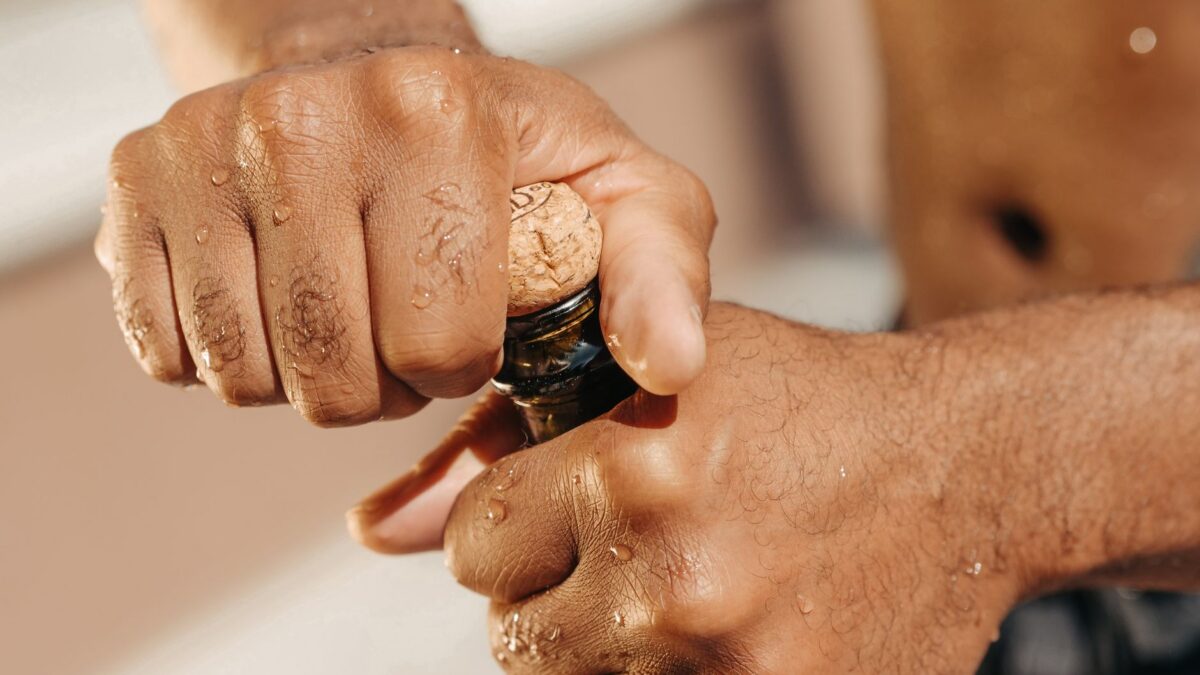
A bottle of Champagne holds about 5 to 6 atmospheres of pressure, roughly 70 to 90 pounds per square inch (about 5 to 6 bar). That is about two to three times the pressure in a typical car tire. The pressure comes from carbon dioxide dissolved in the wine, and it is why a cork can leave the bottle fast enough to injure an eye.
Where does the pressure in Champagne come from?
The pressure comes from a second fermentation that happens inside the sealed bottle. Winemakers first make a still base wine. They then bottle it with a small dose of sugar and yeast and close it with a temporary cap. The yeast eats the sugar and produces alcohol and carbon dioxide.
In an open tank, that gas would escape into the air. In a sealed bottle it has nowhere to go, so it builds up in the small space under the cap and dissolves into the wine. After several weeks the yeast runs out of sugar, and the bottle is left with a large amount of gas held in solution. This is the traditional method used in Champagne and for many other sparkling wines, such as Spanish cava.
Some cheaper sparkling wines get their bubbles from a second fermentation in a large pressurized tank, and a few are carbonated by injecting gas, the way soda is made. Lightly sparkling styles, often labeled frizzante, hold much less pressure than Champagne.
How does temperature change the pressure?
Cold wine holds more dissolved gas, so a chilled bottle has lower pressure in the space under the cork than a warm one. This follows Henry’s law: the amount of gas a liquid can keep dissolved goes up as the temperature goes down. As the wine warms, gas comes out of solution, the headspace fills with more carbon dioxide, and the pressure rises.
The practical effect is easy to see. A warm bottle pushes its cork out harder and gushes foam when opened, while a well-chilled bottle opens with a softer sigh. Serving temperatures of about 43 to 48°F (6 to 9°C) are standard for sparkling wine, and they also make the bottle easier to control. A bottle that has been shaken or bumped behaves like a warm one, because the movement creates tiny bubbles that let gas escape the liquid quickly.
Why are Champagne bottles so thick?
The glass has to hold back several atmospheres of pressure for years, so sparkling wine bottles are heavier and thicker than bottles for still wine. Most have a deep dimple in the base, called a punt, which helps the bottom resist the push of the gas. The cork is held down by a wire cage, called a muselet, which is twisted closed over a metal cap.
The cork starts as a straight cylinder that is squeezed into the neck. Over time, the part inside the bottle stays compressed while the top spreads out, which gives a used Champagne cork its mushroom shape.
What makes the pop?
The pop is the sound of compressed gas rushing out of the neck the moment the cork clears it. The carbon dioxide in the headspace expands suddenly to match the air pressure outside, and that burst of gas sends a pressure wave through the air that your ears hear as a sharp crack. Other sudden pressure changes make sound the same way, from a bursting balloon to the effect behind why cold snow squeaks underfoot.
A cork that flies out freely makes the loudest pop. A cork eased out slowly lets the gas escape a little at a time, so you hear a gentle hiss instead. Many wine stewards open bottles that way on purpose, because it keeps more bubbles in the wine and avoids spills.
Why does a little cloud appear in the neck?
The wisp of fog at the mouth of a freshly opened bottle comes from rapid cooling. When the gas expands quickly, it does work against the outside air and its temperature drops sharply. That sudden chill makes moisture in the air near the neck condense into tiny droplets, and in a cold bottle the gas itself can briefly cool enough to form a faint haze.
Spring-loaded devices use stored energy in a similar quick release. The pop-up turkey timer is a kitchen example: a small spring held back until heat lets it go.
How fast does a Champagne cork fly, and is it dangerous?
A cork can leave the bottle at speeds often put at around 25 to 50 mph (40 to 80 km/h), which is fast enough to cause a serious eye injury. Cork injuries to the eye are a known holiday hazard and can include bleeding inside the eye and lasting damage to vision. Any eye that is hit by a cork and stays painful or blurry needs prompt medical care.
How do you open a bottle of Champagne safely?
The safest way to open a sparkling wine is to keep a hand over the cork the whole time and turn the bottle, not the cork. These steps follow the standard method used by wine professionals:
- Chill the bottle well and avoid shaking it.
- Remove the foil and point the bottle away from yourself and others, at about a 45-degree angle.
- Place your thumb or palm over the top of the cork before you loosen the wire cage, and keep it there.
- Untwist the cage, usually about six half-turns, and leave it on the cork if you prefer extra grip.
- Hold the cork firmly and slowly twist the bottle from the base. Let the pressure ease the cork out.
- When you feel the cork start to move, push against it slightly so it comes out with a soft hiss.
A towel over the cork adds grip and catches it if it slips. Never use a corkscrew on a sparkling wine bottle, and never aim a bottle at a person or a light fixture. The US agency that regulates wine labels, the Alcohol and Tobacco Tax and Trade Bureau, treats sparkling wine as its own class because of this carbonation.
Quick answers
Is Champagne under more pressure than soda?
Yes, in most cases. A sealed soda bottle at room temperature usually holds a few atmospheres, while Champagne is typically around 5 to 6 atmospheres.
Does prosecco have the same pressure as Champagne?
Fully sparkling prosecco (spumante) holds less pressure than Champagne, and lightly sparkling frizzante styles hold much less. That is one reason prosecco often opens with a gentler pop.
Can a Champagne bottle explode?
A sound bottle at normal temperatures rarely breaks, but a chipped, cracked or overheated bottle can fail. Keep sparkling wine out of hot cars and direct sun, and do not use a bottle with visible damage.
Why does a warm bottle foam over?
Warm wine holds less dissolved gas, so more of it rushes out at once when the pressure drops, carrying wine with it as foam.
Site editor: Nikita Sheikin