AI Spots Hidden Sudden Death Risk Signal in Routine Heart Scans
An AI trained on 440,000-plus EKGs found a hidden sign of sudden cardiac death risk that beat standard screening, a Nature study reports.
An artificial intelligence system trained on more than 440,000 electrocardiograms has picked out a pattern in ordinary heart tracings that flags people at high risk of sudden cardiac death, according to a study published in Nature by researchers at the University of California, Berkeley. In testing, the group the AI marked as highest risk had an annual sudden cardiac death rate of 7%, compared with 4.6% for the high-risk group found by the measurement doctors use today.
The result matters because doctors already have a device that can stop many of these deaths, an implanted defibrillator, but they struggle to tell who should get one. More than 300,000 people in the United States die of sudden cardiac arrest each year, the university said.
How the team trained the AI on Swedish heart records
Sudden cardiac arrest happens when the heart’s electrical signals fail and it stops pumping. That makes it different from a heart attack, which is caused by blocked blood flow to part of the heart. Roughly 90% of people who have a cardiac arrest outside a hospital die within minutes, according to the Berkeley release.
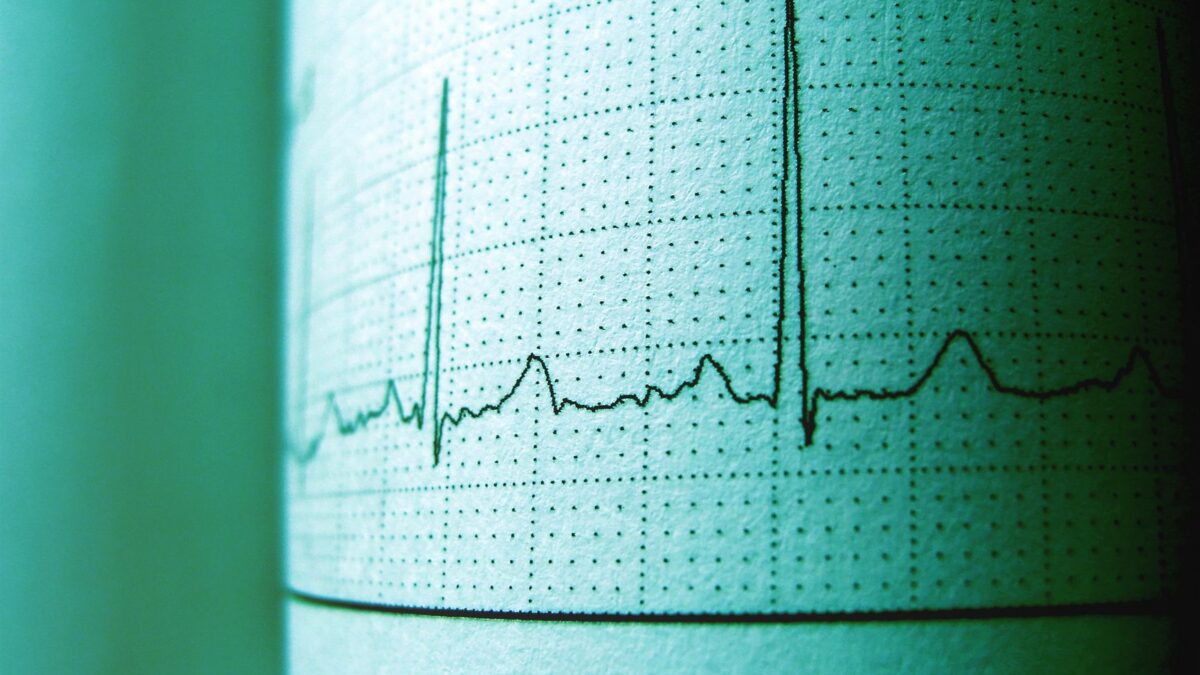
The researchers started with six years of EKG recordings from Sweden’s unified health system. An EKG, or electrocardiogram, is the routine test that records the heart’s electrical activity as a series of spikes and waves. By matching those recordings with death certificates, the team taught a deep learning model to separate healthy people, patients with known heart risks and people who later died of sudden cardiac causes.
This was an analysis of existing records, not a clinical trial. To check whether the pattern held up outside Sweden, the team ran the model on two years of anonymized EKGs from a San Diego hospital system and on a separate set of patient data from Taipei.
Why it matters for defibrillator decisions
Doctors now decide who needs an implantable cardioverter defibrillator largely by measuring how much blood the heart pushes out with each beat. Getting that number requires a fuller medical workup, and many people who later collapse never have it because nothing suggested they were in danger. Among patients who do get the devices, about two-thirds of the defibrillators never deliver a shock, the university said.
Besides finding a higher-risk group, the AI flagged a wider set of people at raised risk, including thousands who would have counted as relatively low risk under current guidelines. It works from standard EKG images, which hospitals already collect, so no new test would be needed.
“Doctors can’t figure out who needs one before it’s too late,” said Ziad Obermeyer, an emergency physician, associate professor at UC Berkeley’s School of Public Health and the study’s lead author.
What scientists still do not know
The model detects a signal the researchers cannot yet explain. They do not know what changes inside the heart produce the electrical features the AI learned to recognize, and finding out is now one of the study’s open questions. Obermeyer said the datasets took about 10 years to assemble, with help from two groups he co-founded, Dandelion Health and Nightingale Open Science. He noted that data of this kind are very hard to get, which he called a large reason clinical AI remains rare.
Next steps in Sweden, Taiwan and the US
Obermeyer is working with health systems in the three countries to run the algorithm on hospital EKG databases. Under the plan, doctors would contact patients whose scans come back high risk and offer them a patch that records the heart’s electrical activity continuously. Those longer recordings could help explain the signal, and for some patients the extra data could support a recommendation for an implanted defibrillator.
The paper, “An ECG biomarker for sudden cardiac death discovered with deep learning,” lists Obermeyer, Alexander Schubert, James Ross, Sendhil Mullainathan and Markus Lingman as authors (DOI: 10.1038/s41586-026-10674-6).
Source: ScienceDaily