Luxor Total Solar Eclipse Aug. 2, 2027: Times and Totality
Luxor gets 6 minutes 22 seconds of totality on Aug. 2, 2027, peaking at 13:05 local time. Times, path data and Karnak and Valley of the Kings tips.
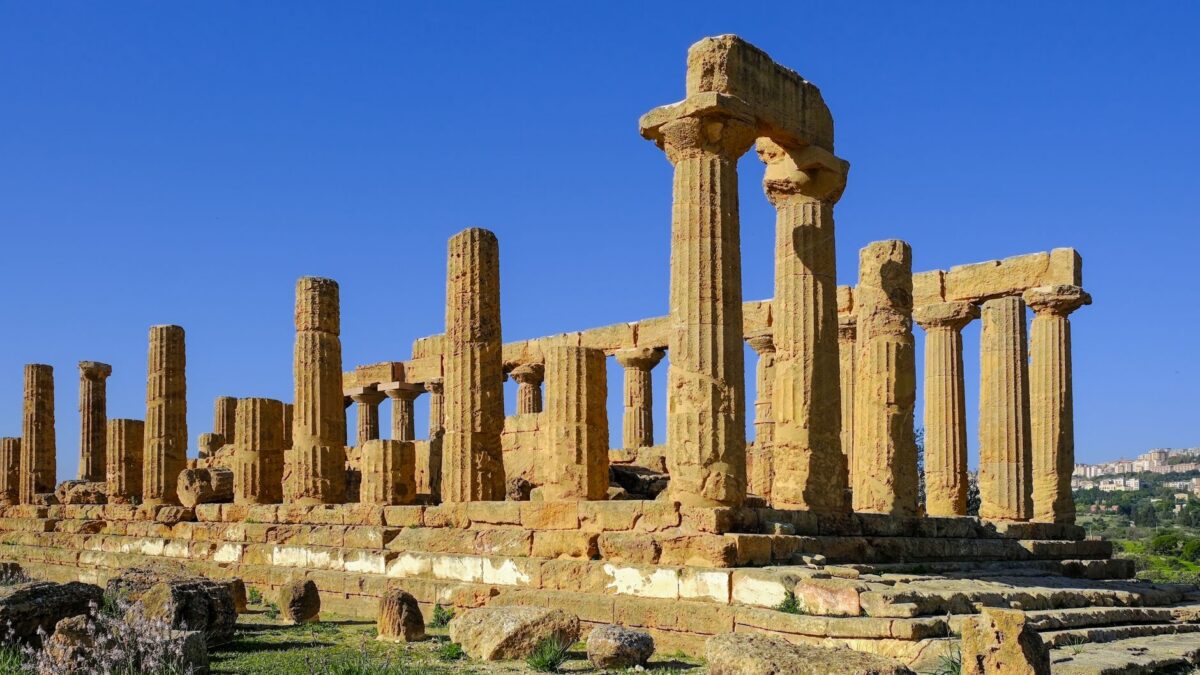
Luxor, Egypt, sees a total solar eclipse on Aug. 2, 2027, with totality lasting 6 minutes and 22 seconds. According to timeanddate, the partial phase begins at 11:40 local time, the maximum comes at 13:05 and the eclipse ends at 14:26. The city sits on the stretch of the Moon’s shadow path where totality is among the longest of the whole eclipse.
What time does the eclipse start and end in Luxor?
All times below are local time in Luxor, taken from timeanddate’s page for the city.
- Partial eclipse begins: 11:40
- Maximum eclipse: 13:05
- Partial eclipse ends: 14:26
- Whole event: 2 hours and 46 minutes
- Totality: 6 minutes and 22 seconds
The magnitude at maximum is 1.035. Magnitude above 1 means the Moon’s disk is slightly wider than the Sun’s, which is why the Sun is fully covered. Totality is centered on the 13:05 maximum, so the Sun is completely hidden only for a short stretch in the middle of an event that lasts nearly three hours.
Why does the longest totality fall near Luxor?
NASA’s path table for the 2027 eclipse lists the central line of the Moon’s shadow every two minutes. The duration on that line is 3 minutes 6.1 seconds where the path begins over the Atlantic. It grows as the shadow moves east: 4 minutes 59.1 seconds at 08:50 Universal Time (UT), 6 minutes 1.9 seconds at 09:24 UT, then 6 minutes 23.2 seconds at both 10:00 and 10:02 UT. After that it eases down, to 6 minutes 22.7 seconds at 10:06 UT and 6 minutes 18.6 seconds at 10:18 UT.
The central line at 10:06 UT is at 25 degrees 38.3 minutes north and 32 degrees 58.8 minutes east. Luxor’s coordinates are 25°41′48″N 32°38′40″E, so the city lies close to the line during the longest part of the path. Two other columns in the table explain why this stretch is so favorable. The ratio of the Moon’s apparent diameter to the Sun’s reaches 1.079 by 09:44 UT and stays there through 10:18 UT. The Sun also stands 81 to 82 degrees above the horizon along the central line in this stretch, almost straight overhead.
The path here is 257 to 258 kilometers wide. The full path and the other places it crosses are covered in the guide to the path, times and best places.
Should you watch from Karnak or the Valley of the Kings?
Both sites are inside the Luxor area, on opposite sides of the Nile. The choice comes down to how much open sky each gives you.
Karnak is a large open site on the east bank, near the village of El-Karnak, 2.5 kilometers (1.6 miles) north of Luxor. Only the Precinct of Amun-Re is open to the public. Its Great Hypostyle Hall covers 5,000 square meters (1.2 acres) and has 134 columns in 16 rows, 12 of them 21 meters (69 feet) tall. Standing among columns of that height limits your view of the sky, so watch from an open part of the precinct and choose your spot before the partial phase begins.
The Valley of the Kings is a dry valley (a wadi) on the west bank, opposite Luxor. It holds 65 known tombs and chambers cut into the rock. The tombs are underground, so you watch the eclipse from outside, in the valley or at the tourist centre. Cliffs rise around the valley floor, but with the Sun this high, the walls block little of the sky overhead.
The sources give no opening hours, ticket prices or rules about eclipse-day crowds for either site. Check the official pages for both before you plan a day around the eclipse.
How do you watch a total eclipse safely?
timeanddate gives one rule that applies to the partial phases: never look directly at the Sun without proper eye protection, because you can seriously hurt your eyes and even go blind. Use certified eclipse glasses for every minute before and after totality. Only the 6 minutes and 22 seconds of full totality are safe to watch without a filter, and you should put the glasses back on the moment the Sun’s edge reappears.
What should travelers check before going to Egypt?
The UK’s Foreign, Commonwealth and Development Office (FCDO) publishes travel advice for Egypt. In its description of the Western Desert, where it advises against all but essential travel, the FCDO lists Luxor, Qina, Aswan, Abu Simbel and the Valley of the Kings among the exceptions. The same page says the situation in the Middle East remains unpredictable and the risk of sudden escalation is high. It also warns that travel insurance can be invalidated if you travel against FCDO advice. Read the current version before booking, since it changes.
The same shadow path crosses southern Spain and North Africa earlier in the day. For those stops, see the pages on Tangier and Rabat and on Gibraltar.
Quick answers
How long is totality in Luxor?
6 minutes and 22 seconds, according to timeanddate. NASA lists 6 minutes 23.2 seconds as the longest duration on the central line.
When is the maximum eclipse in Luxor?
At 13:05 local time on Monday, Aug. 2, 2027.
Is the eclipse total all the way from 11:40 to 14:26?
No. The eclipse is partial from 11:40 until totality begins, and partial again until 14:26. Totality is the 6 minutes and 22 seconds around the 13:05 maximum.
Will the Sun be high in the sky?
Yes. NASA’s table puts the Sun 81 to 82 degrees above the horizon along the central line near Luxor.
Checked against official sources in November 2026. Hours, prices and rules change: confirm on the official page before you go or apply.