Total Solar Eclipse August 2, 2027: Path, Times and Best Places
The Aug. 2, 2027 total eclipse crosses Spain, Morocco and Egypt, with up to 6 minutes of totality. See the path, timing, best sites and safety rules.
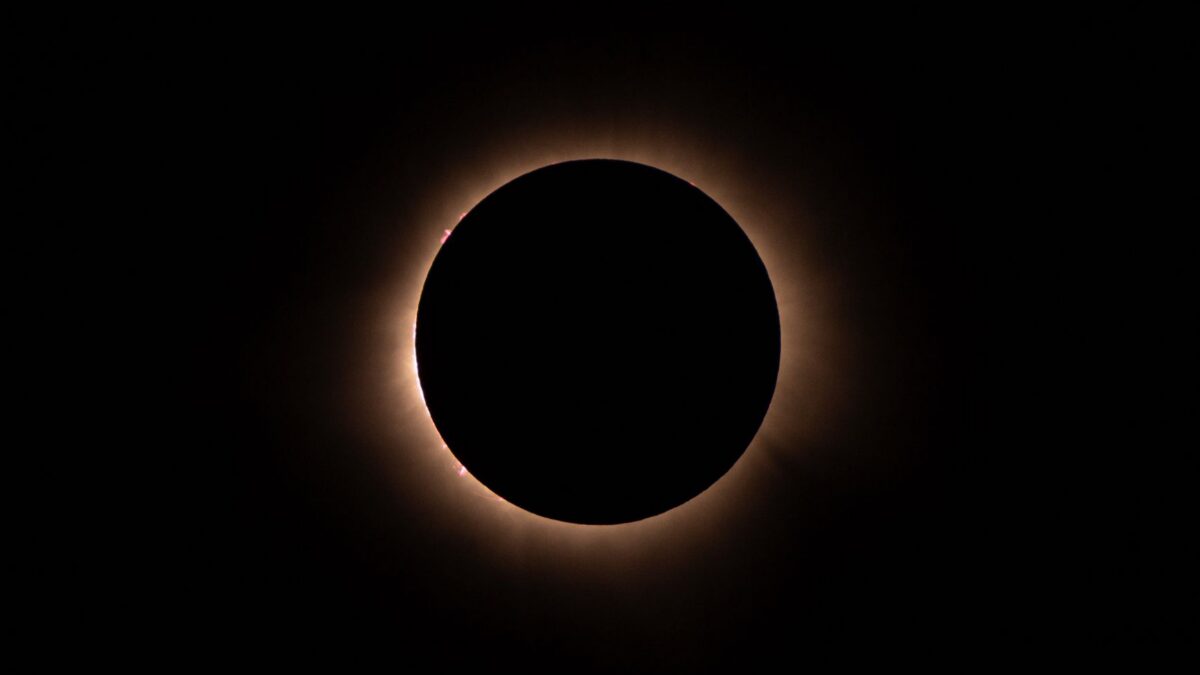
The total solar eclipse of August 2, 2027 crosses southern Spain, northern Africa and the Arabian Peninsula, and the longest totality, a little over 6 minutes, happens near Luxor in Egypt at about 10:07 UTC (6:07 a.m. US Eastern). It is the longest total eclipse visible from land until 2114. Spain and Morocco see roughly 4 to 5 minutes of totality, and a partial eclipse is visible across Europe, Africa and the Middle East.
Where does the eclipse path go?
The band of totality starts over the Atlantic Ocean and first reaches land at the Strait of Gibraltar. It then runs east across southern Spain (the area around Cádiz and Málaga), northern Morocco, Algeria, Tunisia, Libya and Egypt. After that it crosses the Red Sea into Saudi Arabia and Yemen and ends over Somalia and the Indian Ocean.
The path is about 258 kilometers (160 miles) wide at its widest point, which is unusually broad. Anyone inside the band sees totality. Anyone outside it sees only a partial eclipse, however close to the edge they stand.
What time does totality happen?
Greatest eclipse, the moment the Moon’s shadow is centered on the path, is at about 10:07 UTC. Local clock times depend on the country and on summer time rules, so convert from UTC for your exact site. Spain and Morocco, at the western end, see the eclipse earlier than Egypt and Saudi Arabia.
The full event takes a couple of hours at any one place. The partial phase begins well before totality, the Moon covers the Sun gradually, and the process repeats in reverse afterward. For a phase-by-phase description, read the guide to what happens during a total solar eclipse, minute by minute.
How long does totality last at different places?
Duration changes with distance from the center line and with where the path lies along the Moon’s shadow track.
- Southern Spain and northern Morocco: about 4 to 5 minutes near the center line.
- Tunisia and Libya: about 5 to 6 minutes.
- Luxor, Egypt: a little over 6 minutes, the longest on land.
- Edges of the path: shorter, and a site only a few kilometers inside the edge may get under a minute.
Standing near the center line is worth the effort. The difference between the middle and the edge can be a minute or more of totality.
What are the best places to watch?
The best place depends on what you want: the longest totality, the best odds of clear sky, or the easiest trip.
- Egypt, near Luxor. The longest totality, and August skies over the Nile valley are normally clear and dry. It is also very hot, so plan shade, water and an early start.
- Southern Spain. The easiest option for European and US travelers, with good roads, plenty of hotels and totality in the late morning. Coastal haze and local cloud can occur, so having a second site inland or along the coast is wise.
- Morocco, Tunisia and Libya. Dry summer climates and good sky odds, but check current travel advice from your government before booking.
- Saudi Arabia and Yemen. Also in the path with very clear skies in summer, though access rules and security conditions vary. Check official advice first.
Cloud cover is the main risk everywhere. Summer climate averages favor the Sahara and Nile regions over the Iberian coast, but weather on the day is what counts. Check forecasts about a week out and be ready to drive to clearer sky.
How do you watch a total eclipse safely?
Use solar viewing glasses or handheld viewers that meet the ISO 12312-2 standard for every partial phase. Ordinary sunglasses are not safe, and neither is looking through a camera, telescope or binoculars without a proper solar filter on the front.
During the few minutes of totality, when the Sun is completely covered, it is safe to look without protection. Remove the glasses only when the last bright sliver disappears, and put them back on as soon as the first bright point returns. NASA publishes eclipse maps and safety guidance on its eclipse pages.
What should you plan before you go?
- Book lodging in the path early. Hotels along the track fill up months ahead for an eclipse this long.
- Pick a site on the center line, with an open view toward the Sun, which will be fairly high in the sky.
- Choose a backup location in a different weather zone.
- Allow extra travel time. Roads in the path are crowded on eclipse day.
- Bring glasses for everyone in your group, plus water and sun protection.
Quick answers
Is the August 2, 2027 eclipse visible in the United States?
No. The Moon’s shadow stays over Europe, Africa and Asia. Americans have to travel, and the date of the next total eclipse at home is in the guide to the next solar eclipse in the US.
Why does an eclipse happen only at new moon?
A solar eclipse needs the Moon to pass between Earth and the Sun, which only occurs at new moon, and only when the Moon is close to the plane of Earth’s orbit. Most months it passes just above or below the Sun. The full moon calendar shows the lunar cycle that sets the timing.
Can I photograph totality with a phone?
You can, though a phone shows the corona as a small dot. A tripod and a longer lens give far better results. Photos of the partial phases need a solar filter over the lens, and many people enjoy the two minutes more by watching with their own eyes.