Drones Built to Fly Into Volcanic Plumes Test Solar Geoengineering
Researchers in Britain are building drones to fly into volcanic plumes and test how sulfur gas cools the planet, since outdoor experiments keep stalling.
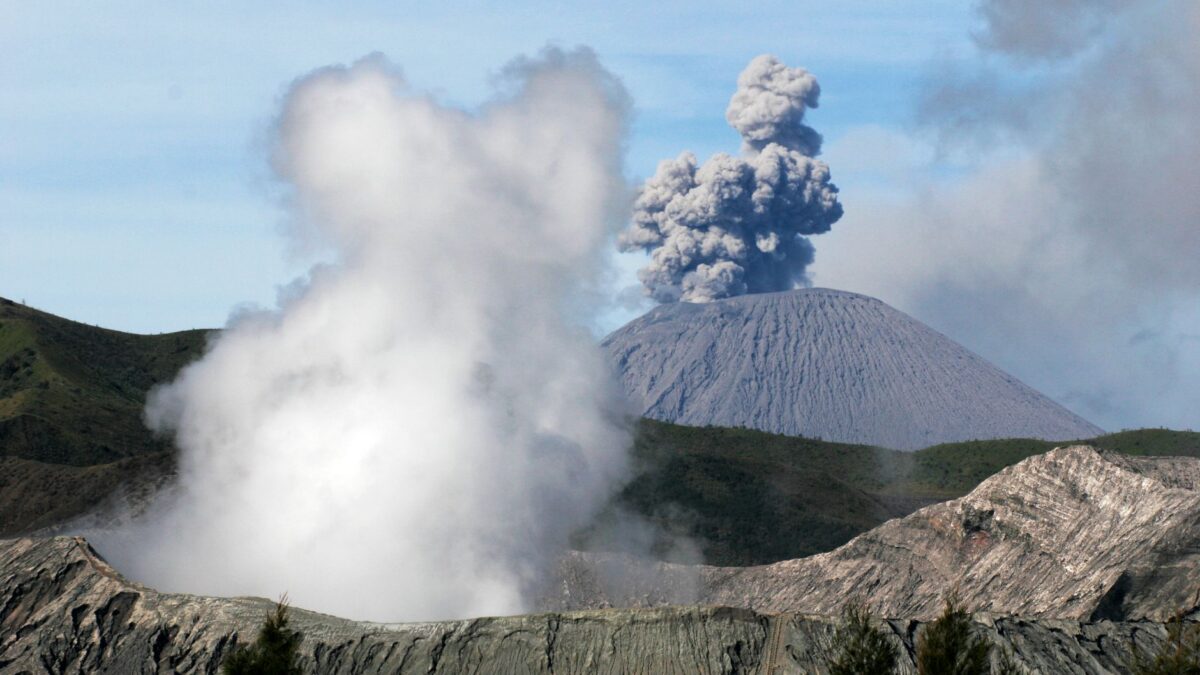
A team at the University of Bristol has finished its first successful test flights of a high-altitude drone designed to fly into a volcanic plume, Scientific American reported. The researchers, led by volcanologist Matthew Watson, hope one day to use it inside an eruption big enough to cool the planet. Nobody can say when or where that eruption will happen.
Watson has nearly £4.3 million from the U.K. Advanced Research and Invention Agency (ARIA) to build two lightweight aircraft. Their sensors will measure how volcanic aerosols and cloud droplets form and change, from the lower troposphere up to the lower stratosphere.
Why volcanoes stand in for an experiment
The work feeds into solar geoengineering, the idea of cooling Earth by reflecting a small fraction of sunlight back to space. One widely studied proposal, stratospheric aerosol injection, would release sulfur dioxide or similar compounds high in the atmosphere, where they would form reflective particles. A large, sulfur-rich eruption does much the same thing on its own.
No deliberate experiment has come close to the scale needed to see climate effects, and even small outdoor tests have met strong political and public resistance. Harvard’s SCoPEx project planned to release calcium carbonate particles from a balloon. A 2021 flight over Sweden, which would only have tested the balloon and released nothing, was called off after opposition from environmental and Indigenous groups. The team ended the project in 2024 without flying. Florida, Louisiana and Tennessee have laws banning intentional atmospheric releases meant to alter temperature, weather or sunlight.
Ying Chen, an atmospheric scientist at the University of Birmingham, told the magazine that when field experiments cannot win public support, “volcanoes give us an opportunity to do this.”
What Pinatubo showed
When Mount Pinatubo in the Philippines erupted in 1991, it sent nearly 20 million tons of sulfur dioxide into the stratosphere. The gas formed sulfate aerosols that reflected sunlight, and global temperatures fell by about one degree Fahrenheit. The cooling lasted about two years. More than 800 people died in the eruption itself, many when roofs collapsed under wet ash.
Nothing of that size has happened since. James Haywood of the University of Exeter says the world is “overdue” for another, though scientists cannot predict when a volcano will erupt or how explosive it will be. Thomas Aubry, a geophysicist at the University of Oxford, said statistics give a good idea of how often eruptions of different sizes occur, but that does not make them predictable. In the 20th century, there was a 50-year gap, from 1912 to 1963, with no large eruption.
Drones for gentler volcanoes
Pilots would be at risk in a plume, and exhaust from combustion engines could contaminate the gases being measured, so Watson’s aircraft are unmanned and electric. They must also fly where thin air gives little lift. In 2027, if all goes to plan, the team will take them to volcanoes in Guatemala, Montserrat and Chile that erupt often or release gas steadily.
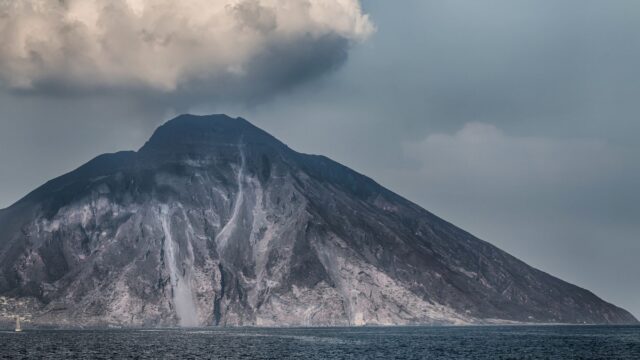
- Lascar in Chile rises more than 18,000 feet above sea level and is considered one of the tallest persistent gas emitters in the world.
- Fuego in Guatemala throws out small bursts of ash, gas and magma several times an hour.
- Soufrière Hills on Montserrat last erupted in 2013 but still sends sulfur dioxide out to sea, which makes it useful for studying marine cloud brightening, a method that would spray sea-salt particles into low clouds.
Watson’s end goal is a rapid-response system of nine drones that could be sent to any large eruption in the world.
Why it matters
Models of aerosol cooling need real plumes to test against. The VolRes initiative, created in 2015 under the World Climate Research Program with more than 250 scientists, aims to collect early data on sulfur dioxide, ash and plume height from the next big eruption. It has done so for Russia’s Raikoke in 2019 and the underwater Hunga Tonga-Hunga Ha’apai eruption in 2022.
Not every eruption helps. Raikoke put more than 1.5 million tons of sulfur dioxide into the stratosphere, yet its global cooling was negligible. Hunga Tonga was comparable in explosive power to Mount St. Helens in 1980, but its plume was mostly water vapor. Iceland’s Holuhraun eruption, which ran for six months from 2014 to 2015 and released about 40,000 tons of sulfur dioxide per day, raised regional cloud cover by about 10 percent. Chen and colleagues found that the amount of cloud cover could matter more for cooling than the brightening of the clouds.
Solar geoengineering remains controversial. Researchers warn it could weaken Asian and African monsoons, and some experts oppose even studying it, arguing it distracts from cutting emissions. For background on how scientists track volcanic unrest, see how volcanoes erupt and how eruptions are forecast.
Source: Scientific American