Solar Filters for Binoculars, Telescopes and Cameras: How to Use Them
Eclipse glasses do not protect you behind binoculars or a telescope. A solar filter must cover the front of the optics. Types and mounting tips.
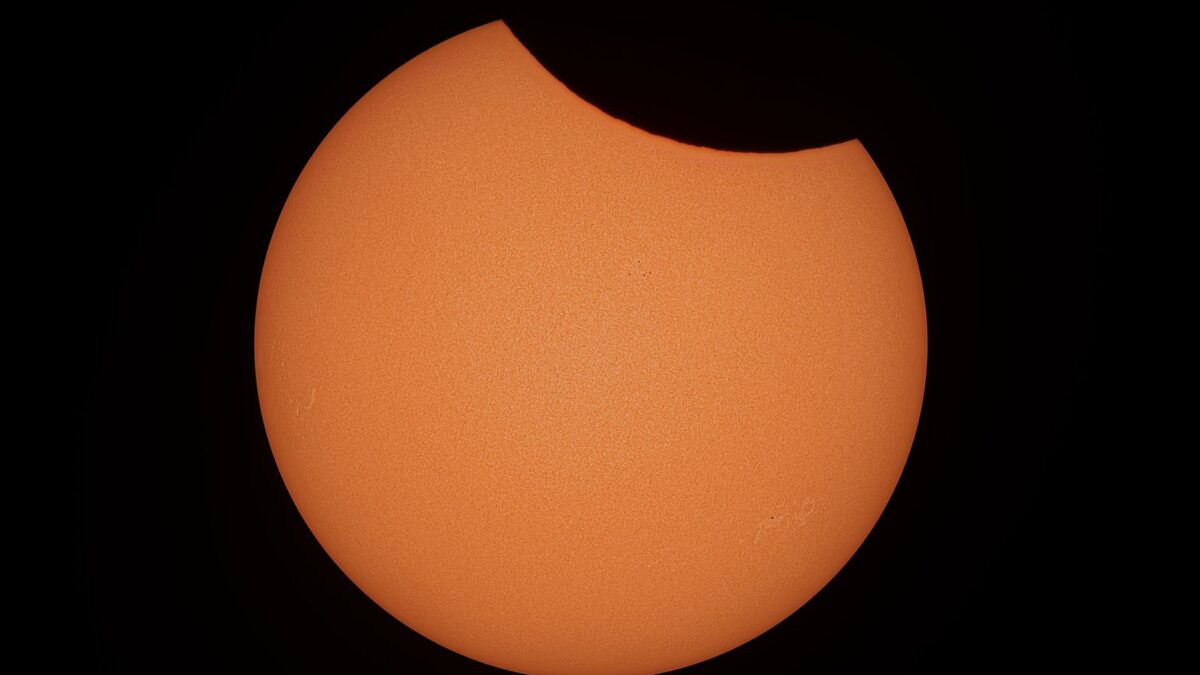
Binoculars, telescopes and camera lenses need their own solar filter, fitted over the front of the optics, every time they point at the uncovered Sun. Eclipse glasses are not enough: the lenses gather and concentrate sunlight, and that concentrated beam can burn through the thin film of the glasses and injure your eye. The only time optics can be used without a filter is during totality of a total solar eclipse, when the Moon hides the Sun’s bright face completely.
Why can’t I wear eclipse glasses and look through binoculars?
Because the optics focus sunlight onto the glasses, and the glasses were never made to handle it. NASA’s eclipse safety page warns against using any camera, telescope or binoculars while wearing eclipse glasses or holding a handheld viewer, since the focused rays burn through the filter and cause serious eye injury. NASA says looking at any part of the bright Sun through a camera lens, binoculars or a telescope without a proper filter on the front will instantly cause severe eye injury.
Eclipse glasses are built for the naked eye. According to the Wikipedia article on solar viewers, the American Astronomical Society (AAS) considers products meeting the ISO 12312-2 standard safe for looking at the Sun directly, and the recommended optical density for such eyewear is 5, letting through 1 part in 100,000 of the incoming light. Our guide on checking eclipse glasses against ISO 12312-2 covers how to tell real glasses from fakes.
The damage is hard to notice in time. NASA’s Goddard eclipse site explains that the retina has no pain receptors, so a burn happens without pain, and vision problems may not show up for at least several hours. Intense visible light sets off chemical reactions that harm the rod and cone cells, and long or repeated exposure can add a heat injury that leaves a small blind area. The loss can be temporary or permanent.
Where does the solar filter go?
On the front of the instrument, always. The AAS page on solar filters for optics gives two jobs for the filter: keeping intense sunlight and heat out of the telescope, binoculars or camera, and making sure nobody looks at the Sun through an unfiltered instrument by accident. A filter on the front stops the light and heat before they enter the optics.
Avoid filters that go at the eyepiece end. The AAS calls the filters packed with some inexpensive telescopes, which usually thread into the eyepiece, dangerous: light concentrated by the telescope can burn right through a filter placed where your eye sits. For the same reason, a pair of eclipse glasses behind unfiltered optics fails.
To set up an instrument safely:
- Choose a filter sized for the front opening of your telescope, binoculars or lens.
- Attach it securely, so a bump or a sudden gust of wind will not knock it off.
- Cap, remove or filter the finderscope or any other small aiming device on a telescope, the same way as the main tube.
- Check the filter for damage before each use. NASA advises throwing away a viewer that is torn, scratched or damaged.
- Ask an astronomer for advice before using a solar filter on any optical device for the first time, as NASA recommends.
Once the optics carry a proper solar filter, you do not need eclipse glasses as well. NASA notes that the filter on the instrument does the same protective job.
What types of solar filters are there?
The AAS describes three common kinds, and says all of them work:
- Metal on glass, usually the most durable and the most expensive.
- Aluminized polyester film, often called aluminized Mylar, though the AAS says that name is incorrect.
- Black polymer, sometimes coated with metal on at least one side.
They differ mainly in the color they give the Sun: some show it white, others yellow, orange or bluish. Pick by budget and taste.
NASA’s Goddard page sets the safety threshold: a safe solar filter should pass less than 0.003% (density about 4.5) of visible light, from 380 to 780 nm, and no more than 0.5% (density about 2.3) of near-infrared light, from 780 to 1400 nm. Most such filters use a thin coating of chromium alloy or aluminum. The same page warns that space blankets and gardening Mylar are not suitable, and neither are black-and-white films that use dyes instead of silver or negatives with images on them, such as medical X-rays.
What about telescopes and binoculars with built-in filters?
Some makers sell telescopes and binoculars with safe solar filters already fitted, in some cases built into the optics. The AAS says they work well for the partial phases of any solar eclipse and for the annular phase of an annular eclipse. Most of these filters cannot be removed, which makes the instrument useless during totality and for looking at the night sky.
How do I handle a camera filter during totality?
Plan for a fast change. Inside the path of totality, the AAS advises against screw-on filters for cameras with telephoto lenses, because they are hard to take off and put back quickly at the start and end of totality, and they are easy to drop or damage in the hurry. Outside the path, a screw-on filter is a good choice, since it stays on for the whole partial eclipse.
Some manufacturers now make magnetic lens filters. They come off and go back on faster than screw-on ones, though one may not exist for your lens. Whatever you use, the AAS suggests a fit firm enough to survive bumps and wind but loose enough to remove quickly when totality begins.
NASA’s rule for the end of totality is simple: as soon as any of the bright Sun reappears, the filters and glasses go back on. You will know totality has begun when you can no longer see any part of the Sun through eclipse glasses. Readers heading to the path of the total solar eclipse in August 2027 can check local timing there.
Is there a safe way to use optics without a filter?
Yes, by projection, as long as nobody looks through the instrument. NASA’s Goddard page describes mounting binoculars or a small telescope on a tripod and projecting an enlarged image of the Sun onto a white card. Pinhole projection is the simplest option: a small opening casts an image of the Sun onto a screen, and the screen should sit at least a meter behind the opening for an image large enough to see easily. Watch the image with the Sun at your back, and never look at the Sun through the pinhole.
Quick answers
Can I look at a partial eclipse through binoculars if 99% of the Sun is covered?
No, not without a front-mounted solar filter. NASA’s Goddard page says even when 99% of the Sun’s surface is covered, the remaining crescent is bright enough to burn the retina.
Do I need a solar filter during an annular eclipse?
Yes, for the whole event. An annular eclipse has no totality, so NASA and the AAS say filters are required throughout.
Can I reuse old eclipse glasses?
Glasses made to ISO 12312-2 from 2015 onward can be used indefinitely if they are not scratched or torn, according to the Wikipedia article on solar viewers. Viewers made before 2015 may have a three-year limit. None of them are safe behind optics.
Are regular sunglasses enough?
No. NASA says regular sunglasses, however dark, are not safe for viewing the Sun, and safe solar viewers are thousands of times darker.
Checked against official sources in November 2026. Hours, prices and rules change: confirm on the official page before you go or apply.
Site editor: Nikita Sheikin