Roman Wall Paintings of a Lion Chasing a Deer Found in Mérida, Spain
Archaeologists in Mérida, Spain, found well preserved Roman wall paintings and new mosaics in a large house. About 85 per cent of the site is still unexcavated.
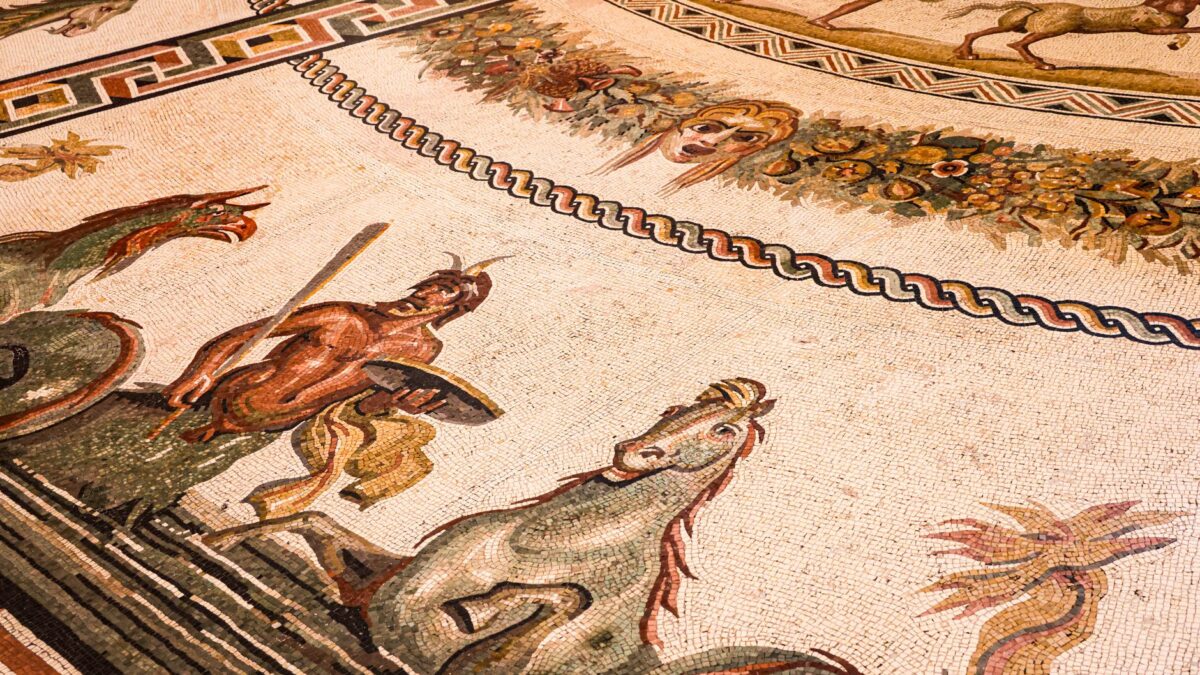
Archaeologists digging a large Roman house in Mérida, Spain, have found wall paintings of a lion chasing a deer, a satyr with a woman, and birds such as cranes, swans and peacocks, along with new mosaic floors. Around 85 per cent of the site has not yet been excavated, HeritageDaily reported, citing the Spanish newspaper HOY.
The paintings date from between the middle of the 1st century and the middle of the 2nd century AD. Their quality adds to the evidence that a wealthy family owned the house.
Where the house stands
The site, called Huerta de Otero, lies between the Roman embankment of the Guadiana River and the southern wall of the Alcazaba, Mérida’s fortress. In Roman times the city was Augusta Emerita.
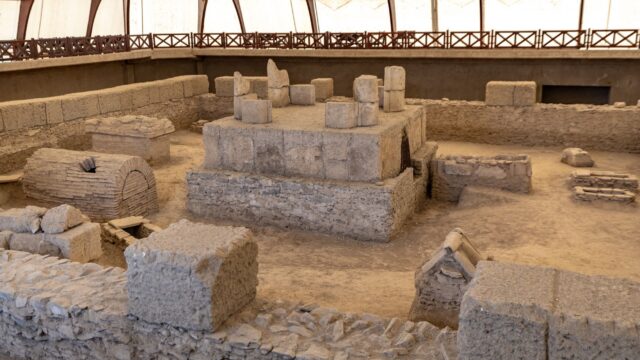
Digging began in 1976 and then stopped. Work resumed on a larger scale in 2019. Since then, the team has uncovered a richly decorated residence, or domus, with baths, several peristyles (courtyards ringed by columns around a garden) and elaborate mosaic floors. Even so, only about 15 per cent of the roughly 5,000-square-metre site has been dug.
How the paintings came to light
In the latest season, the team removed a layer of earth that the 1976 excavators had never touched. Clearing it joined areas dug earlier to one of the house’s peristyles, and that is where the paintings turned up.
Pepe Vargas, who leads the work at Huerta de Otero, said the team found “some really well preserved Roman wall paintings.” Besides the hunting scene and the mythological pair, some panels show birds with elaborate plumage.
New mosaics, including one not yet shown
The archaeologists also identified a path paved with mosaic running through the inside of the peristyle. Elsewhere on the site, they uncovered another mosaic that has not yet been formally presented to the public. Vargas said it has geometric designs and is in excellent condition.
These finds follow one of the site’s best-known discoveries, a colored mosaic of about 30 square metres. At its center, the head of Medusa sits inside an eight-sided medallion. Four peacocks in six-sided panels at the corners are read as symbols of the seasons, and the rest of the floor shows plants, birds, fish and masks. Romans often put Medusa on floors as a charm meant to keep evil away from the people living inside.
Why it matters
The house is still mostly buried, and the excavators expect more rooms and decoration under the unexplored ground. There is also evidence that the house grew until it spread over a public street, a sign of how large the complex became and, possibly, of the standing of the people who lived there.
The finds were announced through the Spanish press, and the dating and reading of the images come from the excavation team. Readers interested in how Roman builders made structures that lasted can see our piece on why Roman concrete has held up so long.
What happens next
Excavation is set to continue with a new training program starting in January. Mérida City Council is also weighing plans for a route that would let visitors into the site.
Source: HeritageDaily