Messel Pit Fossils: How a Shale Lake Preserved Bats, Birds and Meals
Messel Pit in Germany holds 47-million-year-old fossils with feathers, skin and stomach contents. Why the lake preserved them, and how the site was saved.
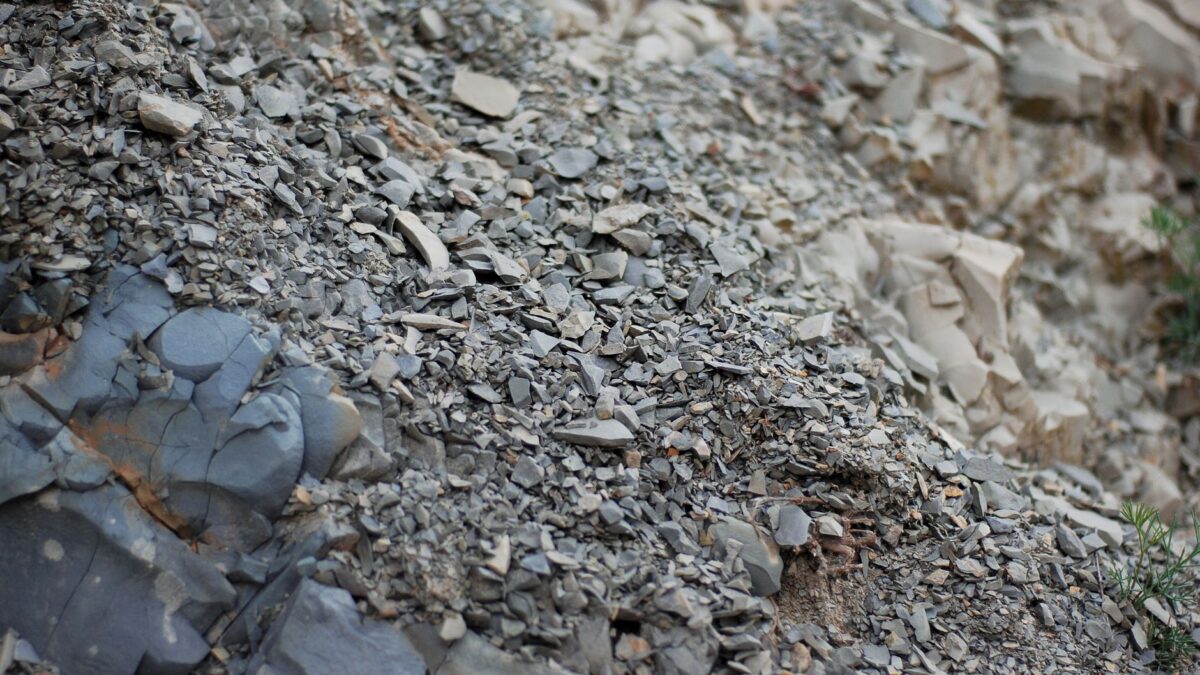
The Messel Pit is a former oil-shale quarry in Hesse, Germany, where fossils about 47 million years old survive with skeletons still joined together and, in some animals, feathers, skin, hair and the food in their stomachs. The detail comes from the lake that laid down the rock: its deep bottom water held almost no oxygen, so nothing burrowed into the mud or ate the bodies, and fine sediment buried them very slowly. More than 1400 kinds of plants, fungi and animals have been recorded there.
Where is the Messel Pit and how old are its fossils?
The pit (Grube Messel in German) lies near the village of Messel in the Darmstadt-Dieburg district, about 35 km (22 mi) southeast of Frankfurt am Main, according to Wikipedia’s entry on the Messel Pit. The fossils date to the middle of the Eocene epoch. Wikipedia gives an age of about 47 million years, based on dating basalt fragments that lie beneath the fossil layers, and the UNESCO World Heritage Centre describes the record as 47-48 million years old.
The Eocene as a whole ran from about 57 million to 36 million years ago, by UNESCO’s figures. It is the stretch of time when mammals settled into every major type of land habitat, which is why a site with complete mammal skeletons from the middle of it draws so much research.
What did the area look like when the fossils formed?
The landscape was nothing like modern Germany. When the deposits formed, the site sat 10° further south than it does today, and the period fell close to the Early Eocene Climatic Optimum, a warm phase in Earth’s history. The mean annual temperature was about 22 °C. A string of maar lakes (craters left by volcanic explosions that later filled with water) was ringed by subtropical forest, and nearby rivers and creeks probably drained into the Messel lake.
Why are the Messel fossils preserved in such detail?
The answer lies at the bottom of the lake. The upper water layers supported plenty of life, but currents barely reached the deep bottom, which became strongly anoxic. Animals that normally live on or inside lake-floor mud could not survive there, so carcasses were not dug through, scattered or eaten. Geologists call this low level of disturbance minimal bioturbation.
Mud and dead plant matter settled very slowly, at about 0.1 mm (0.0039 in) per year, and gradually turned into the dark, layered bituminous shale miners later called oil shale. Seasonal overturning of the lake’s layers also cut oxygen near the surface from time to time, causing periodic die-offs of fish and other water animals that then sank into this still, airless mud.
A body that drifted down through deep, oxygen-poor water could lie whole. That is why the site is classed as a Konservat-Lagerstätte, a term for deposits that keep soft tissue and fine anatomy, not just bones. UNESCO lists what survives: fully articulated skeletons, feathers, skin, hair and stomach contents. The stomach contents are what let researchers see what individual animals had eaten shortly before they died.
How did land animals, birds and bats end up in a lake?
Scientists still disagree. Three main ideas are in play:
- Volcanic gas. Jens Franzen and others proposed that the region, which was geologically active in the Eocene, released bursts of toxic gas such as carbon dioxide and hydrogen sulfide, similar to the 1986 gas release at Lake Nyos in Cameroon. Birds and bats flying low over the water might have dropped in, and animals on the shore could have been overcome.
- Toxic algae. Wighart von Koenigswald suggested that blooms of cyanobacteria poisoned the water, killing animals that drank it. Fossils of pregnant animals and of pairs caught mating were cited as a sign that deaths clustered in one season.
- Ordinary accidents. Krister T. Smith and colleagues tested whether any mass dying is needed at all. They found that the yearly number of fossil bats at Messel is about the same as the number of bats that drown in modern swimming pools, which does not support the mass-mortality ideas.
Whatever killed them, the completeness of the skeletons points to a very deep lake, where bodies sank into water without oxygen before they could fall apart.
What have scientists learned from the site?
The plants, arthropods and vertebrates have all been studied. UNESCO names studies of how echolocation evolved, based on very well preserved fossil bats, and new data on the evolution of primates, birds and insects. One of the best-known specimens is the primate-like animal Darwinius masillae. Research is ongoing, and Wikipedia notes that finds about early mammal and bird evolution are still being made. Fossil birds turn up at other sites too; on Flores in Indonesia, researchers described a giant extinct bird known from a single foot bone, a reminder of how rarely birds survive as complete skeletons.
How was the quarry saved from becoming a landfill?
Brown coal and then oil shale were mined at Messel from 1859, and fossils were already known there around 1900. Systematic digging only began around the 1970s, after falling oil prices made mining unprofitable. Commercial oil-shale mining ended in 1971, a cement plant built in the pit failed the next year, and the hole was earmarked as a garbage dump.
In the short window before 1974, when the state began preparing the site for waste, amateur collectors were allowed in. They worked out the “transfer technique” that keeps fine detail on small fossils, and it is still used to prepare Messel specimens. Local opposition stopped the landfill plan, the state of Hesse bought the pit in 1991, and UNESCO added it to the World Heritage List on Dec. 9, 1995. In 1996 an amnesty invited people to hand privately held fossils back to public collections.
Who looks after the site today?
Hesse owns the pit, which is protected as a cultural monument. The Senckenberg Society for Nature Research runs it as the mine operator, handling drainage, slope work, vegetation and research, and a non-profit company set up in 2003 presents the site to visitors. The protected area covers 42 ha, with a 22.5 ha buffer zone, and is fenced. UNESCO notes that roughly 20 million tonnes of rock were removed over a century of mining, yet a large volume of fossil-bearing shale remains.
Quick answers
How big and deep is the Messel Pit?
Its floor lies about 60 m (200 ft) below the surrounding land and covers about 0.7 km2 (0.27 sq mi). The oil-shale bed originally reached a depth of 190 m (620 ft).
How many species have been found at Messel?
Wikipedia counts over 1400 taxa of plants, fungi and animals; UNESCO refers to over 1000 species of plants and animals. The two figures come from different counts.
Can you visit the Messel Pit?
Yes. A non-profit company presents the site to visitors, and it has become a tourist destination. Check opening times and tour options with the site operator before you go.
Are other ancient deposits studied for what animals ate?
Yes, though usually from bones rather than stomachs. In England, researchers traced thousands of Roman-era frog bones to birds of prey that dropped them in a ditch.
Checked against official sources in November 2026. Hours, prices and rules change: confirm on the official page before you go or apply.