Sun Coral in Brazil: How the Invasive Tubastraea Spreads
Sun coral (Tubastraea) is an invasive coral in Brazil. It spreads by larvae, runners and ship hulls, and it settles on rock, wrecks and rigs.
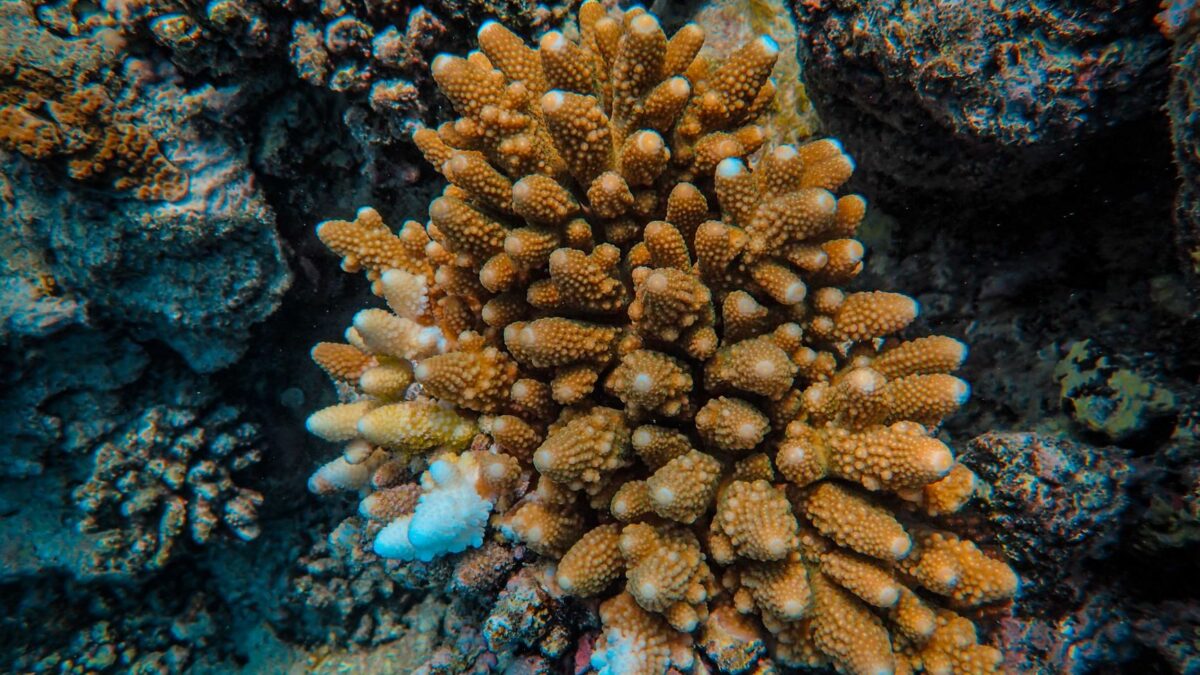
Sun coral (Tubastraea) is a genus of cup corals that has become invasive in Brazil, the Gulf of Mexico, the Caribbean and the Atlantic coast of Florida. It spreads through free-swimming larvae, through runners that creep across bare surfaces, and on ships and hard structures that carry it to new places. The details below come from two Wikipedia entries, Tubastraea and Orange cup coral, and the second page was only partly available to us.
Our own report on the Brazilian coast is in the story on how far sun coral has spread along Brazil’s shore.
What is sun coral?
Sun coral is a large-polyp stony coral. It builds a hard skeleton but does not build reefs. Different species have yellow, orange or black polyps. The genus includes Tubastraea aurea, Tubastraea coccinea, Tubastraea diaphana, Tubastraea faulkneri, Tubastraea floreana, Tubastraea micranthus, Tubastraea nomlandi and Tubastraea tagusensis.
The species most tied to the Atlantic invasion is Tubastraea coccinea, the orange cup coral. French naturalist René Primevère Lesson named it in 1830. The genus name combines the Latin word for tube with a word for star-like shapes, and the species name means scarlet. In Brazil it is described as most abundant in shallow water, between 0 and 3 m (9.8 ft) deep.
Why can it live in dark places?
Most shallow-water corals get energy from symbiotic algae called zooxanthellae. Sun corals have none. They are heterotrophic, which means they feed on prey. At night they extend long tentacles to catch passing zooplankton, and their large polyps can take fairly large animals.
Because they do not need sunlight, they can grow in shaded vertical rock faces, caves, overhangs and deep water. The source pages say they grow in complete darkness as long as they catch enough food. That is also why they settle so readily on shipwrecks, oil and gas rigs and other man-made structures. Experiments cited by the source showed similar preferences for granite, cement, steel and tile.
How does sun coral spread?
It uses several routes at once. The coral is a hermaphrodite, meaning one polyp has both male and female gonads. Eggs are held inside the polyp’s gastrovascular cavity, and the larvae, called planulae, are released later. Reproduction is described as sexual and also asexual, through budding, where new polyps grow from an adult’s oral or basal disc.
The larvae live for up to two weeks (the second page says as many as 14 days). They usually settle within 1 meter (3.3 ft) of the parent, but they can also drift far enough to start colonies elsewhere. Once a larva cements itself to rock, it stays there for life.
Colonies also grow by runners that extend 10.4 centimeters (4.1 in) per year until they reach unoccupied ground, where a new polyp forms at the tip. One source gives colony growth of about 3 cm2 per year.
Over long distances, people play the main part. Ballast water is described as a significant helper of its spread, and the coral has also been found clinging to the underside of passing ships. Structures left in the water give it more places to settle and then spread from.
Where did it come from, and how far has it gone?
The orange cup coral is native to the Indo-Pacific. It was first documented on Caribbean reefs in 1943, in Curaçao and Puerto Rico. By 2004 it had been recorded as far north as the Florida Keys National Marine Sanctuary. It has also been reported on oil rigs and wrecks along the Atlantic coast of Florida and in the Gulf of Mexico, and it is invasive in Brazil.
Why does it matter for native reefs?
The source pages say the coral’s colonizing success, its tolerance of many surfaces and its two ways of reproducing give it a potential effect on marine biodiversity. They describe a risk of disrupting native ecosystems, not a measured loss of particular species. How much damage it does in a given place depends on what it displaces, and the pages we had do not quantify it.
Why do divers remove it?
The orange cup coral entry states that attempts have been made to control its spread, but the text we received does not describe how those efforts work. It does not give removal methods, numbers of corals taken off, or results. Diving is a practical way to reach the shallow rock, wrecks and structures where the coral grows, but we cannot confirm from these sources how any particular Brazilian program works.
Anyone who dives in Brazil and sees sun coral should ask the local dive operator or a marine research group what to do. Scraping it off without guidance can be a poor idea, because the sources describe a coral that reproduces both from larvae and by budding.
Can it be kept in aquariums?
Yes, and the source calls it one of the easier non-photosynthetic corals to keep. The polyps accept fish flakes and frozen mysis shrimp. Feeding every other day is enough for survival, and daily feeding brings faster growth. The hard part is water quality, given how much food the coral needs. Aquarium keepers should never release one into the wild.
Where to check
Current distribution, monitoring and any removal rules are set by Brazilian environmental and marine research authorities, so look for their latest notices before acting. The Wikipedia entries used here are community-edited and cite journal papers for their figures.
Based on the sources linked above, November 2026.
Site editor: Nikita Sheikin