Annular Eclipse in Portugal and Spain: Faro, Málaga, Lisbon Times
The Jan. 26, 2028 annular eclipse shows a ring of fire in Faro and Málaga and a partial eclipse in Lisbon. Local times, magnitudes and eye safety.
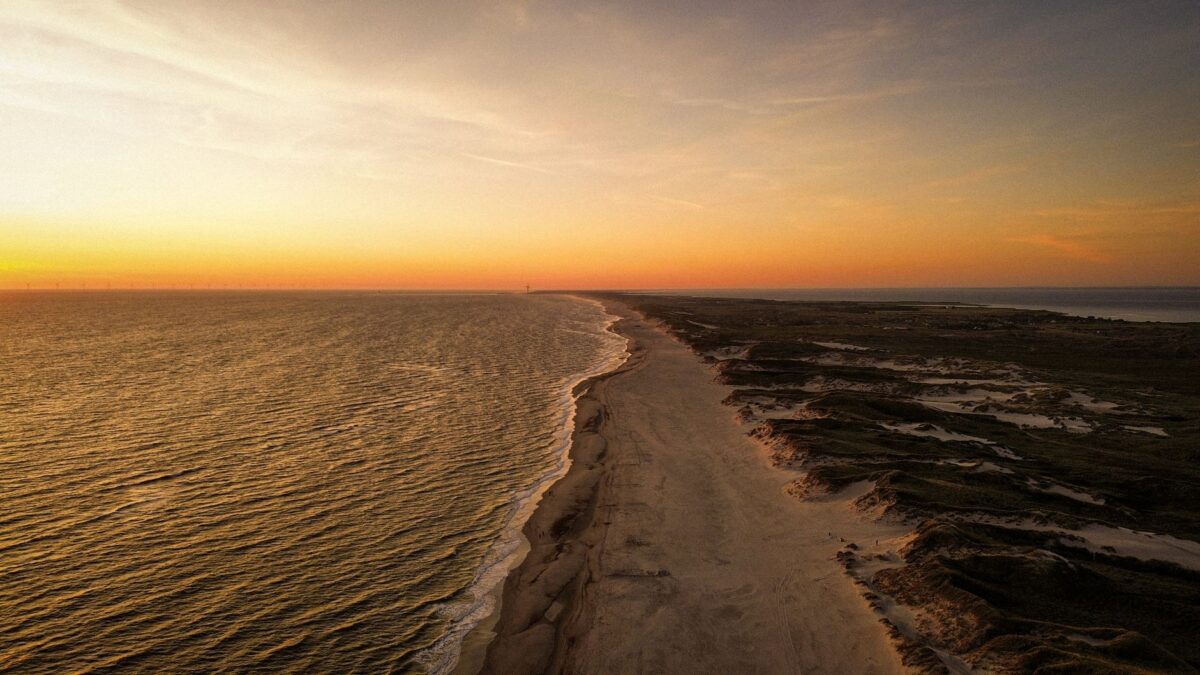
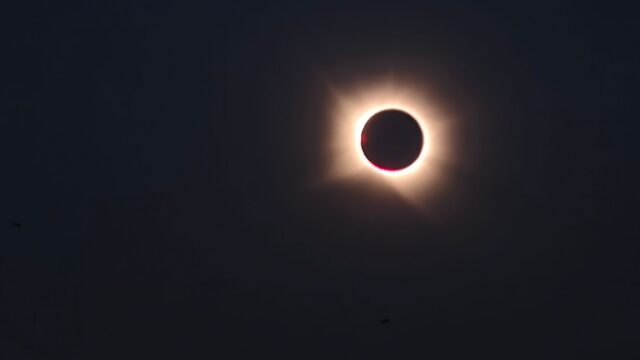
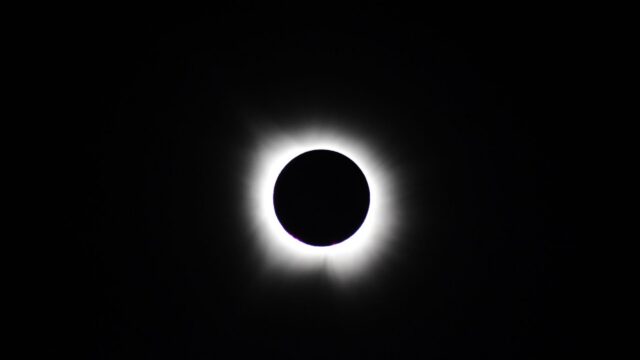
On Jan. 26, 2028, an annular solar eclipse crosses Portugal and Spain in the late afternoon. In Faro and Málaga the Moon passes in front of the Sun without covering it fully and leaves a thin bright ring. Lisbon gets a deep partial eclipse that never closes into a ring. All three cities have their own schedules, listed below in local time as calculated by Time and Date.
What will Faro see?
Faro is inside the zone of annularity. According to Time and Date’s Faro page, the partial phase begins at 15:32, the maximum comes at 16:55 and the eclipse ends at 17:49. The whole event lasts 2 hours, 17 minutes. The ring phase, called annularity, lasts 7 minutes, 1 second.
The magnitude at maximum is 0.942. Magnitude is the share of the Sun’s diameter that the Moon covers, so a value below 1 means a ring of sunlight stays visible around the dark disk.
What will Málaga see?
Málaga also gets the ring, but for a shorter time. Time and Date’s Málaga page gives 16:36 for the start, 17:56 for the maximum and 18:36 for the end, with a total duration of 2 hours. Annularity lasts 4 minutes, 55 seconds, and the magnitude at maximum is 0.921. Málaga’s times run later on the clock than Faro’s.
What does Lisbon get?
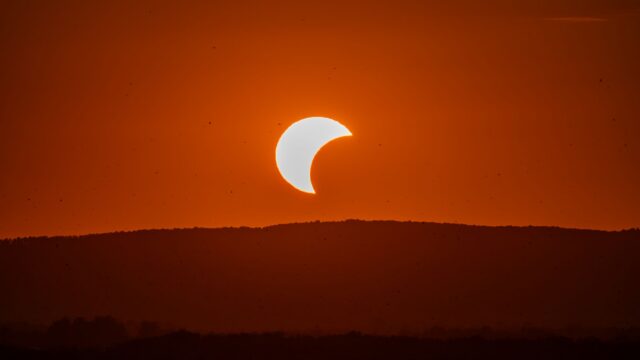
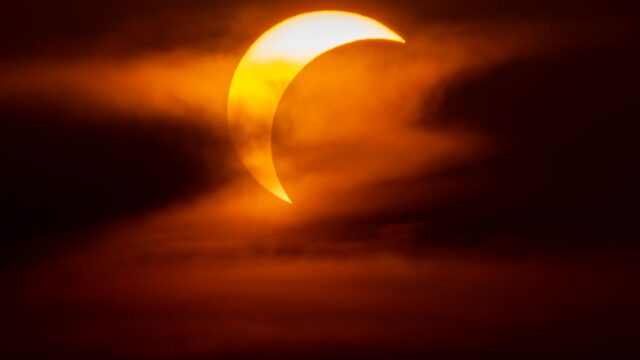
Lisbon sits outside the ring. Time and Date’s Lisbon page classes the event there as a partial solar eclipse. It begins at 15:31, peaks at 16:54 with a magnitude of 0.887 and ends at 17:50, for a total of 2 hours, 19 minutes. The Moon covers a large part of the Sun at the peak, yet no ring forms.
How does the eclipse unfold worldwide?
Worldwide timings from Time and Date’s global page are in UTC. The first location sees the partial eclipse begin at 12:06:42. The first location to see the annular phase follows at 13:14:54. Maximum eclipse is at 15:07:48. The last location loses the annular phase at 17:00:34, and the partial eclipse ends at the last location at 18:08:50. The calculation uses a Delta T value of 69.9 seconds, and the site says its eclipse calculations are usually accurate to a few seconds.
The same page lists countries where the eclipse is annular, among them Ecuador, Peru, Colombia, Brazil, Suriname and French Guiana in South America. In Europe and North Africa it lists Portugal, Spain, France, Gibraltar and Morocco. The Moon’s central shadow, called the antumbra, crosses South America and the Atlantic before it reaches Iberia. NASA’s eclipse path table gives coordinates for the northern and southern limits and the central line at 120-second intervals, along with path width and duration on the central line.
How can you watch it safely?
Time and Date repeats a warning on every city page: never look directly at the Sun without proper eye protection, because it can seriously hurt your eyes and even cause blindness. That also applies during the ring phase, when part of the Sun is still uncovered. Use solar filters made for direct viewing of the Sun, not ordinary sunglasses.
Because the eclipse falls in the late afternoon in January, the Sun is low in the sky. A clear horizon toward the southwest helps, so check the local sunset time and scout a spot before the day. Visibility depends on location and weather. Our cloud odds for the Aug. 2, 2027 eclipse show how cloud risk is usually assessed for Spain.
Which other eclipses are coming for these cities?
The 2028 event is not the first. According to Time and Date, Faro sees a partial solar eclipse on Feb. 6, 2027, which is annular elsewhere. Faro and Lisbon see a partial eclipse on Aug. 2, 2027, while Málaga sees the total eclipse that day. We cover it in local times for Cádiz, Málaga and Marbella and in Spain’s back-to-back total eclipses.
All three cities also see a partial lunar eclipse on Jan. 12, 2028, shortly before the solar one.
Where to check
Time and Date’s city pages and NASA’s eclipse path table keep the calculated times, magnitudes and path details for this eclipse. Look up your own town there before you travel.
Based on the sources linked above, November 2026.
Site editor: Nikita Sheikin