Eclipse in Seville, Granada and Almería: Why It Is Only Partial
Seville, Huelva, Granada and Almería lie just north of the path of totality on Aug. 2, 2027. See how close each city comes and where the limit runs.
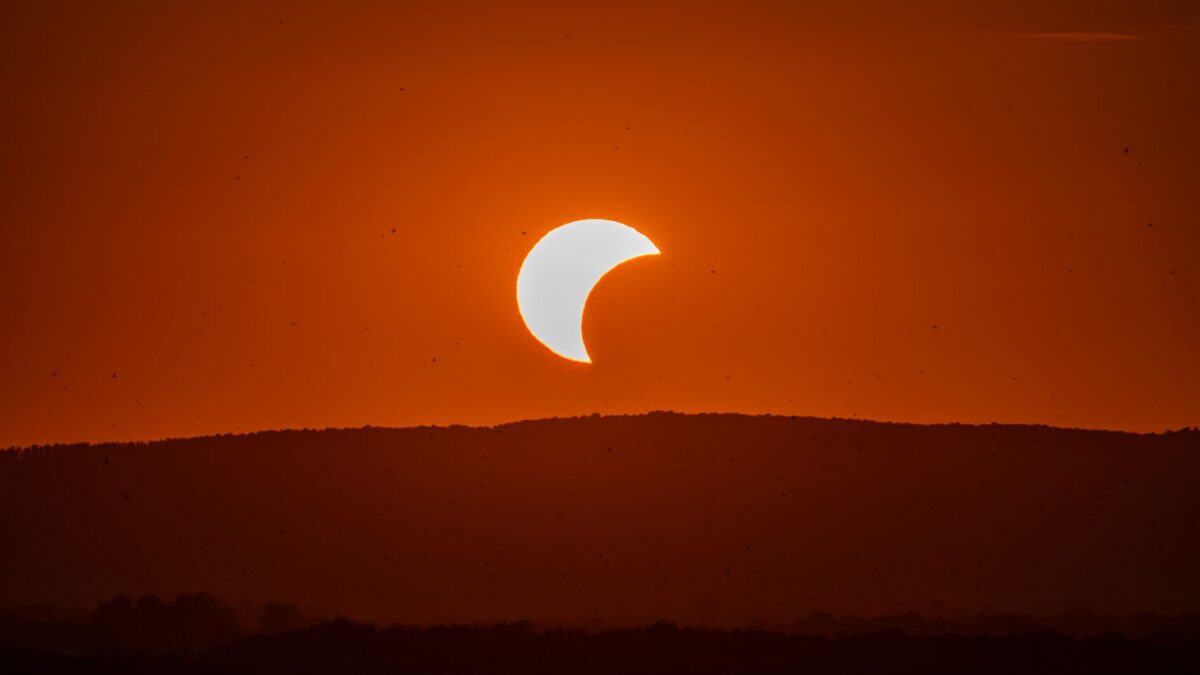
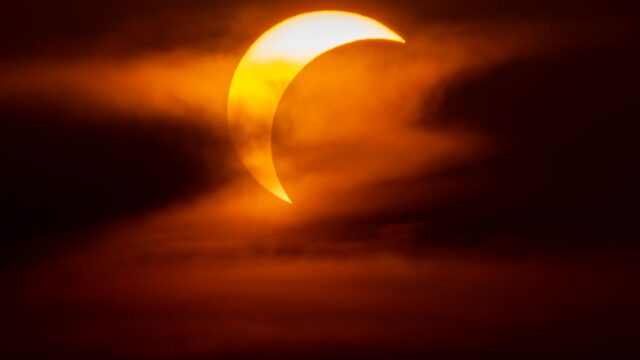
Seville, Huelva, Granada and Almería get a partial solar eclipse on Aug. 2, 2027, because all four sit just north of the strip where the Moon’s dark inner shadow touches the ground. At maximum the Moon covers between 0.979 and 1.000 of the Sun’s diameter in these cities, which is very deep but still partial. Cádiz, on the coast to the south, is inside the path and gets 2 minutes, 56 seconds of totality, and NASA’s path table puts the northern edge of totality at roughly 36 degrees 42.5 minutes to 36 degrees 49.2 minutes north as the shadow passes southern Spain.
Why is the eclipse only partial in these four cities?
A total eclipse is total only inside a narrow track, the path of totality, where the Moon hides the whole disk of the Sun. Outside that track, however near, a sliver of Sun stays visible and the eclipse counts as partial. The track on Aug. 2, 2027, crosses the far south of Spain, and the four cities are on the wrong side of its northern edge.
The track is not small. The NASA path table for the eclipse gives a path width of 236 to 240 kilometers while the shadow is at Spanish longitudes. Most of that width lies south of the Spanish coast, because the central line runs at about 35 degrees 39.6 minutes to 35 degrees 44.6 minutes north. Southern Spain catches only the northern part of the band.
How close does each city come to totality?
Astronomers describe a partial eclipse by its magnitude, the fraction of the Sun’s diameter that the Moon covers at maximum. A value of 1.000 or more is needed for totality. Timeanddate lists these local circumstances, all in local time on Monday, Aug. 2, 2027:
- Seville: partial eclipse begins at 09:41, maximum at 10:47 with a magnitude of 0.979, ends at 11:59. Duration 2 hours, 18 minutes.
- Huelva: begins at 09:40, maximum at 10:46 with a magnitude of 0.982, ends at 11:58. Duration 2 hours, 18 minutes.
- Granada: begins at 09:42, maximum at 10:50 with a magnitude of 0.988, ends at 12:03. Duration 2 hours, 21 minutes.
- Almería: begins at 09:43, maximum at 10:51 with a magnitude of 1.000, ends at 12:05. Duration 2 hours, 22 minutes.
Almería is the closest call. Timeanddate still classes the eclipse there as partial even with the magnitude rounded to 1.000, which means the city center is on or a hair outside the limit. Seville is the farthest of the four from the edge.
For comparison, Cádiz has a magnitude of 1.007. The partial phase there starts at 09:40, maximum comes at 10:46, and the Sun is fully covered for 2 minutes, 56 seconds.
Where does the northern limit of totality run?
NASA lists the northern limit at 120-second intervals in Universal Time, while the city pages above use local time. The rows that cover southern Spain give these latitudes for the limit:
- 08:46 Universal Time: 36 degrees 42.5 minutes north
- 08:48: 36 degrees 46.8 minutes north
- 08:50: 36 degrees 48.9 minutes north
- 08:52: 36 degrees 49.2 minutes north
- 08:54: 36 degrees 47.8 minutes north
The line climbs slightly as the shadow moves east, peaks near the 08:52 row and then turns back south. A place whose latitude is lower than the limit at its own longitude is in the path. Any map app shows coordinates for a town or beach, so the check takes a minute. NASA links a Google Map of the path from the same page for anyone who prefers to see the line drawn.
How far south do you need to travel?
You need to get south of the limit line, and every extra step toward the central line buys a longer total phase. The official pages do not give road distances from each city, so plan the trip against the latitudes above and against a town that is confirmed inside the path.
Cádiz is the confirmed example in these sources: it is far enough inside for 2 minutes, 56 seconds of darkness. Our page on local eclipse times for Cádiz, Málaga and Marbella covers the coastal cities that viewers from Seville and Granada usually look at first. For Almería, where the city itself sits at the edge, the latitude check matters more than the distance driven.
Totality is longest on the central line. NASA gives 04m48.3s to 05m04.1s there between the 08:46 and 08:52 rows, but that line lies south of the Spanish mainland coast. The wider route of the shadow is described in our guide to the full path of the Aug. 2, 2027, total eclipse.
What time do you need to be in place?
Be at your viewing spot before 09:40 local time if you want the whole event, and well before 10:46 for totality. The partial phase starts between 09:40 and 09:43 across the five cities listed here, and maximum falls between 10:46 and 10:51. The eclipse is on a Monday morning, so a same-day drive from Seville or Granada means an early start.
The Sun will be easy to find. NASA’s table puts it 37 to 42 degrees above the horizon on the central line during these minutes.
Is a 0.98 partial eclipse worth staying home for?
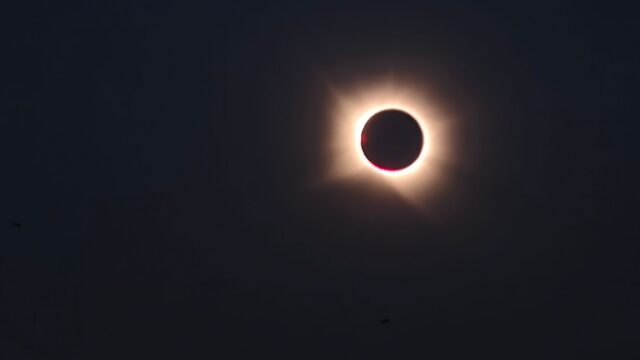
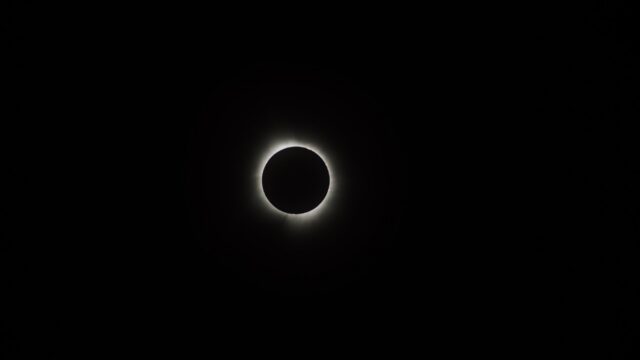
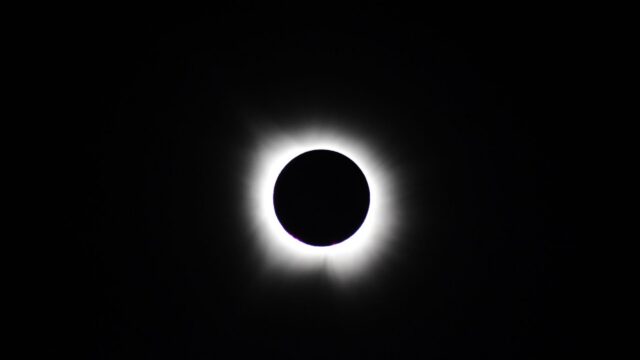
A deep partial eclipse is a real event: the light turns thin and odd, and through eclipse glasses the Sun shrinks to a fine crescent. It is still a different experience from totality. The corona, the Sun’s faint outer atmosphere, and the sudden darkness appear only where the disk is completely covered.
Eye protection matters more for those who stay. Timeanddate warns never to look directly at the Sun without proper eye protection, because it can seriously hurt the eyes and even cause blindness. In a partial eclipse some of the Sun’s surface is exposed from start to finish, so certified eclipse glasses or a solar filter stay on the whole time in Seville, Huelva, Granada and Almería.
Quick answers
Is Almería in the path of totality?
Timeanddate lists the eclipse in Almería as partial, with a magnitude of 1.000 at 10:51 local time. The city is at the edge of the path, so check the exact spot you plan to watch from against the NASA limit.
How long is totality in Cádiz?
Timeanddate gives 2 minutes, 56 seconds of totality in Cádiz, with maximum at 10:46 local time.
Which city gets the deepest partial eclipse?
Almería, at a magnitude of 1.000, followed by Granada at 0.988, Huelva at 0.982 and Seville at 0.979.
Will the weather cooperate?
Visibility depends on location and on the sky that morning. Check the forecast close to the date and have a second viewing spot in mind.
Checked against official sources in November 2026. Hours, prices and rules change: confirm on the official page before you go or apply.