Westminster Abbey’s Roman Coffin Skeleton Dated to 987 to 1052 AD
Radiocarbon dating places the skeleton in Westminster Abbey's Roman sarcophagus in the late Saxon era, pointing to one of two medieval abbots.
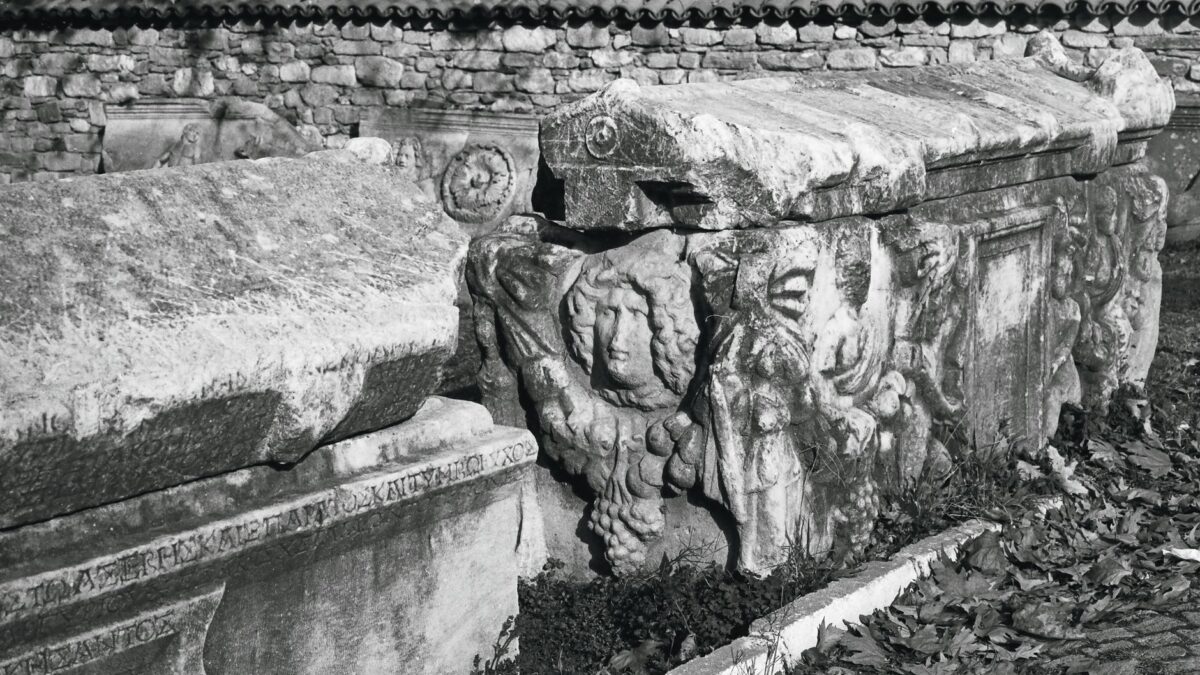
A bone sample from the skeleton inside a Roman sarcophagus at Westminster Abbey dates to between 987 and 1052 AD, according to research published in the Journal of the British Archaeological Association. That puts the burial in the late Saxon period, centuries after the coffin was made, and points to one of two medieval abbots of the abbey.
The limestone coffin was formally excavated in 1869. Its inscription names Valerius Amandinus, a wealthy Briton who lived in London sometime between 300 and 400 AD. A large Latin cross carved into its lid dates to roughly the 10th or 11th century, which has long suggested that whoever lay inside lived much later than the coffin’s first owner.
What the team examined
The study comes from Warwick Rodwell, Consultant Archaeologist at Westminster Abbey, and draws on work done with specialists over the years. That includes a 2009 look at the site of King Henry III’s original sacristy for Channel 4’s Time Team, and a later excavation by Pre-Construct Archaeology completed in 2025 ahead of the King Charles III Sacristy, a new facility the abbey expected to open the following year.
Workers first found the Roman coffin in 1820 and broke its lid into six pieces. The damage was repaired around the time of the 1869 excavation. Researchers believed for years that the skeleton had been lost. In 2016, when the sarcophagus went to a conservation studio, the lid came off and an almost complete skeleton was inside.
Bone specialist James Young Langthorne of Pre-Construct Archaeology re-examined the remains. He concluded the person was a man aged 35 to 49 who stood about 5 feet 9 inches tall. An assessment from the 1800s had described a robust young man no older than 30 and about 5 feet 7 inches tall.
A bone sample went to the Scottish Universities Environmental Research Centre for radiocarbon dating, which gave the 987 to 1052 AD range. Inside the coffin, researchers also saw the rectangular outline of a vanished structure, preserved as a white residue left by lime. Rodwell reads it as the mark of a wooden coffin that held the man before he was placed in the stone one.
The two candidates
Rodwell names Aelfwig, an abbot who died around 1020, as the strongest candidate. Westminster was then a Benedictine monastery, and Aelfwig had been a monk there before leading it. The other possibility is Wulnoth, who followed him and died in 1049. Both are believed to have been buried at the abbey.
“We have two viable contenders for the occupant of the sarcophagus,” Rodwell says. He adds that Aelfwig’s earlier time as a Westminster monk might favor him. The use of a fine sarcophagus is, in his view, consistent with the standing of an abbot. For the Roman stone coffin, the mourners reused an older one and added the cross to its lid instead of ordering a new one.
How sure is this?
The paper is peer-reviewed. The radiocarbon range fits the deaths of both Aelfwig and Wulnoth, so it cannot separate them. Rodwell says the birth dates of both men are unknown, and either would fit if the abbot was in his early twenties when appointed and close to fifty at death. The man’s identity has not been established beyond doubt.
The age estimate also differs from the description made in the 1800s, and the source does not say what accounts for the gap. The sarcophagus can be seen in the Queen’s Diamond Jubilee Galleries at Westminster Abbey.
Source: ScienceDaily
Site editor: Nikita Sheikin