Is Pluto a Planet? The Three IAU Tests Explained
Pluto is classed as a dwarf planet, not a planet, since the IAU vote in 2006. See the three IAU criteria, why Pluto fails one and why the debate continues.
Pluto is officially a dwarf planet, not a planet. The International Astronomical Union (IAU) voted in August 2006 to define a planet by three conditions, and Pluto meets two of them. It orbits the Sun and is round, but it shares its orbital zone with many other icy bodies. Some planetary scientists reject the IAU definition, so the argument has not fully ended.
What did the IAU decide about Pluto in 2006?
At its General Assembly in Prague in August 2006, the IAU, the body that names and classifies astronomical objects, adopted the first formal definition of “planet.” It created a new class called dwarf planets and placed Pluto in it. Before that, Pluto had been counted as the ninth planet since its discovery by Clyde Tombaugh in 1930.
The vote was taken by the astronomers present at the meeting, which is one reason critics say the decision did not represent the whole field.
What are the three criteria for a planet?
Under the IAU definition, an object is a planet if it meets all three of these conditions:
- It orbits the Sun.
- It has enough mass for its own gravity to pull it into a nearly round shape.
- It has cleared the neighborhood around its orbit, meaning it is the dominant body in its path.
A dwarf planet meets the first two conditions but not the third. Pluto passes the first two and fails the third.
Why does Pluto fail the “clearing the neighborhood” test?
Pluto orbits inside the Kuiper Belt, a wide region of icy bodies beyond Neptune. Its gravity does not dominate that region, and many similar objects share its zone. Planets such as Earth and Jupiter have swept up or flung away most other material near their orbits. Pluto has not. Our article on the Kuiper Belt and scattered disc describes the region where Pluto sits.
The trigger for the vote was a run of discoveries in that region. Astronomers found other large icy bodies there, including Eris in 2005, which was first thought to be about the size of Pluto or larger. If Pluto counted as a planet, many more similar objects would have to as well.
Why do some scientists still say Pluto is a planet?
Critics argue the “clearing the neighborhood” rule is vague, because no planet fully clears its orbit. Earth, for example, shares its path with thousands of asteroids. They also point out that the rule depends on where an object is: a body the size of Earth placed in the Kuiper Belt would fail the test, even though it would be round and massive.
Many planetary scientists prefer a definition based on an object’s physical properties alone. Under a “round and large enough” definition, Pluto would count, along with the large moons and other dwarf planets. The IAU has not changed its 2006 definition, so the official status stays the same.
What did we learn about Pluto after the vote?
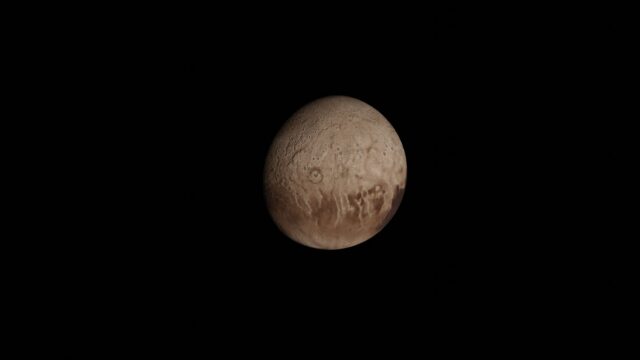
NASA’s New Horizons spacecraft flew past Pluto in July 2015 and showed a world with mountains, plains of nitrogen ice and a thin atmosphere. Pluto turned out to be an active, varied place, which gave new energy to the argument that it deserves the planet label. The flyby did not change its official class.
Is Pluto the only dwarf planet?
No. The IAU recognizes several dwarf planets, including Eris, Haumea, Makemake and Ceres, the largest object in the asteroid belt between Mars and Jupiter. Pluto is the best known and was the first one visited by a spacecraft.
Common questions
Is Pluto still a planet in 2026?
Officially no. The IAU still lists Pluto as a dwarf planet, and the 2006 definition remains in force. Individual scientists and teachers are free to call it a planet in everyday speech, but astronomical catalogs use the IAU class.
How many planets are there in the solar system?
Eight: Mercury, Venus, Earth, Mars, Jupiter, Saturn, Uranus and Neptune. Dwarf planets such as Pluto are counted separately.
Could Pluto become a planet again?
Only if the IAU votes to change the definition. The debate keeps coming up, and later surveys such as the Vera C. Rubin Observatory may find more distant bodies that sharpen the question.
Site editor: Nikita Sheikin