How Honeybees Survive Winter: Clustering, Honey and Winter Bees
Honeybees survive winter by huddling in a heated cluster around the queen and eating stored honey. Here is how winter bees and food stores work.
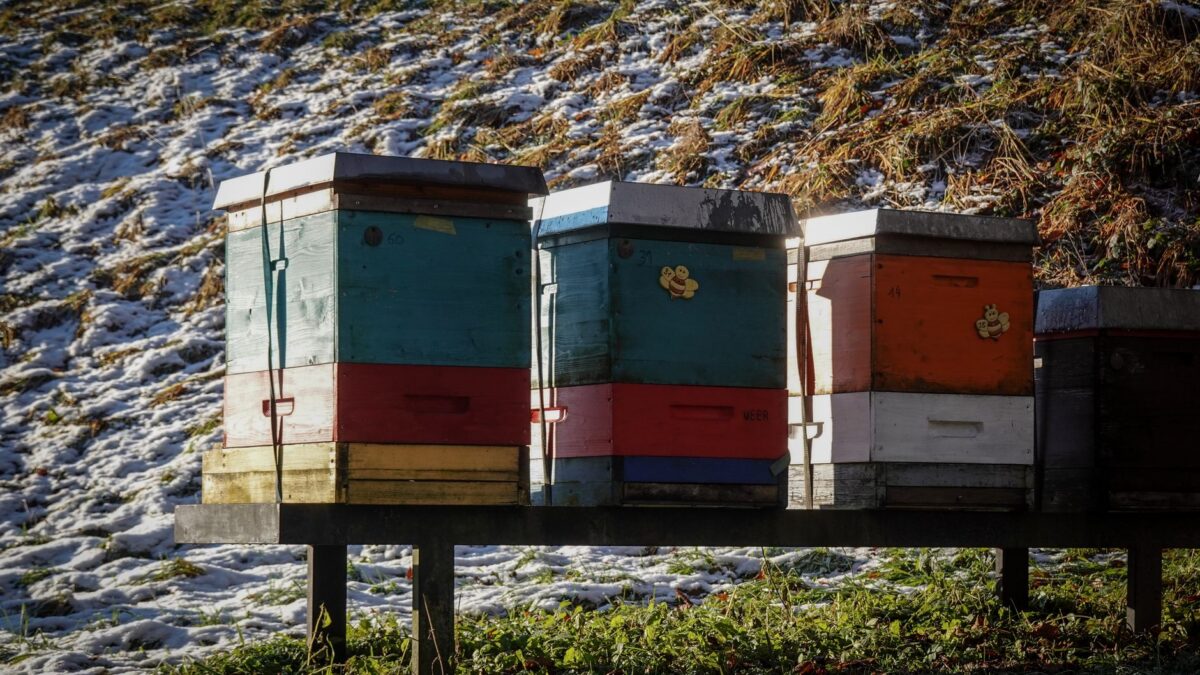
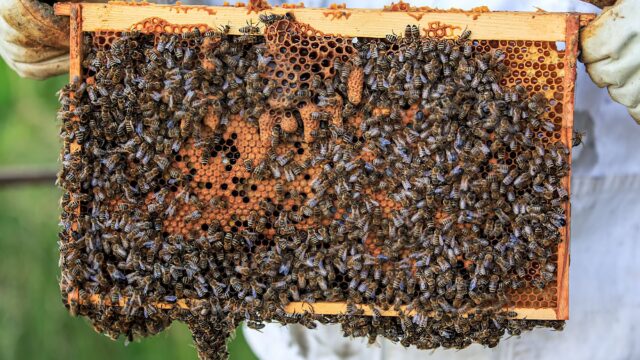
Honeybees survive winter as a colony, not as individuals. Thousands of workers pack into a tight ball called the winter cluster around the queen, shiver their flight muscles to make heat, and eat honey stored during summer. Unlike bumblebees or wasps, the whole colony stays alive, and the queen lives through the cold in the middle of the cluster.
Honeybees do not hibernate. For how true hibernation differs from other cold-weather strategies, see this comparison of hibernation, torpor and brumation.
How does the winter cluster keep bees warm?
The cluster keeps bees warm by turning honey into heat. Bees in the core vibrate their wing muscles without moving their wings, a shivering that releases heat the way a human body does. The ball tightens when outside air falls below roughly 57°F (14°C) and loosens when it warms.
The cluster works like a living insulated coat. Bees on the outside form a dense shell with their bodies packed together, and they trade places with bees from the warmer inside so no one stays out in the cold for long. The center is kept much warmer than the edge. When the colony is rearing brood (young bees), the core is held at a much higher temperature than when there is none.
What do honeybees eat in winter?
Honeybees eat the honey and stored pollen (called bee bread) that they put away in the comb during spring, summer and fall. Honey is the fuel for shivering. A colony in a cold climate can use tens of pounds (more than 10 kg) of honey over the winter, and the amount varies with the length and severity of the cold.
The cluster moves slowly across the comb as it empties cells, usually upward. A cold snap can leave bees stuck on empty comb a short distance from food they cannot reach, which is one way colonies starve even when honey remains in the hive.
Why do winter bees live so much longer?
Winter bees live longer because they are a different generation, raised in the fall with large fat reserves and a body built for endurance. A summer worker typically lives about five to six weeks, wearing out as she forages. A winter worker can live for several months, because she does little foraging and spends the cold season in the cluster.
Their body fat stores protein and nutrients, and these reserves help them feed the first young bees of the new year. When the old winter bees die off in early spring, the new generation raised from late winter takes over.
What happens to the queen and the drones?
The queen stays at the center of the cluster. She slows or stops laying eggs in the coldest weeks, then starts again in late winter as days lengthen. For how quickly daylight returns, see this minute-by-minute look at the days after the solstice.
Drones, the male bees, do not survive in the winter hive. In fall, workers push them out because they eat honey but do not gather food or keep the cluster warm.
Do bees ever leave the hive in winter?
Bees rarely leave in winter, but on a calm, mild day they may take short cleansing flights. Honeybees avoid soiling the hive, so they hold waste for weeks, and a warm day of about 50°F (10°C) or more lets them fly out and relieve themselves. Bees that land in the snow and cannot warm up do not return, which is why dead bees often speckle the ground near a hive after such a day.
What threatens colonies in winter?
The main threats are starvation, moisture, and weak colonies going into the season. Varroa mites, a parasite that feeds on adult bees and brood and spreads viruses, shorten the life of winter bees, so heavily infested colonies often fail before spring. A small cluster also cannot generate enough heat to stay warm.
Moisture is a problem because the bees’ breathing and honey use add humidity inside the hive, and condensation dripping onto the cluster can chill it. Beekeepers address this with ventilation and insulation, and they guard entrances against mice that can nest in the comb. Anyone who wants to keep bees should talk to a local beekeeping association or the U.S. Department of Agriculture for guidance suited to the regional climate.
The same energy logic applies to plants. Evergreens keep their needles through the cold by other means, described in this look at how needles survive winter.
Common questions
Should you help bees you see outside in winter?
A single bee on the ground in cold weather is usually a worker that left the cluster and cannot get back. It will not survive outdoors. Wild honeybee colonies and managed hives both depend on the cluster, so a lone bee has little chance whatever is done.
Do wild honeybees survive winter too?
Yes, when the colony is large enough and has stored enough honey, wild colonies in hollow trees and similar cavities use the same cluster method. Many do not make it through, particularly small colonies or those weakened by mites.
Do other bees behave the same way?
No. Most bumblebees and many solitary bees die in the fall, leaving young queens or developing young to wait out winter underground or in hollow stems. Honeybees are unusual because the entire worker force stays in the hive.
Site editor: Nikita Sheikin