Kīlauea Starts Its 57th Lava Fountain Episode, Plume Hits 16,500 Feet
Kīlauea's episode 57 of lava fountaining began at 1:32 a.m. Monday, with a plume at 16,500 feet. See what officials report and where ash may fall.
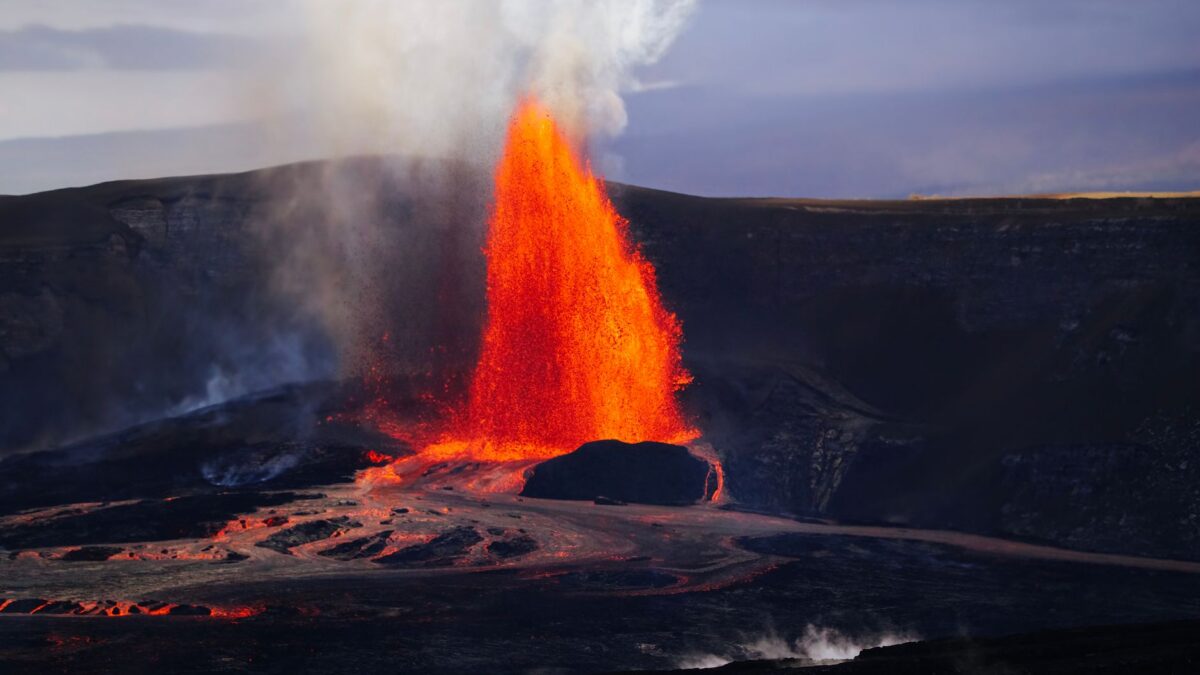
Kīlauea began its 57th episode of lava fountaining at 1:32 a.m. on Monday, and the activity was still rising when the Hawaiʻi Volcano Observatory made its announcement. The National Weather Service reported that the volcanic plume was reaching 16,500 feet above sea level.
The fountaining is taking place at Halemaʻumaʻu, the crater at Kīlauea’s summit. The observatory said all eruptive vents and lava flows are confined to the crater within Hawaiʻi Volcanoes National Park.
What the observatory is tracking
Ground-level sensors near the vents show light winds blowing from the northeast. The observatory said that pattern suggests volcanic gas and material may drift to the southwest of Halemaʻumaʻu, and that light tephra (fragments of rock and ash thrown out by an eruption) is possible around the summit.
Tephra fall is greatest within 3 miles of the vents. Lighter ash and Pele’s Hair, thin strands of volcanic glass, can stay suspended in the air and travel large distances from the vents.
Two cameras, KPcam and MKcam, give views of plume height for aviation purposes. Three livestream videos of the summit fountains are available on the USGS YouTube channel.
A long run of short episodes
The current eruption began with its first fountaining episode on Dec. 23, 2024. Most episodes since then have lasted a day or less, according to the observatory. The observatory keeps a timeline of all 57 episodes on its eruption information page.
For background on what drives eruptions and how scientists forecast them, see this explainer on why volcanoes erupt.
How sure is this?
The timing and status come from the Hawaiʻi Volcano Observatory, part of the USGS, and the plume height from the National Weather Service. Both are early readings from an episode still under way, so plume height, wind direction and the area of ash fall can change as it continues. The wind-based ash outlook is the observatory’s assessment of likely drift, not a measurement of where material has landed. The sources do not say how long episode 57 is expected to last.
What comes next
The observatory said it will post short updates as the episode progresses on its observatory messages page. It also asks the public to report tephra fall through an online form at hawaiiash.science, which supports its science and community awareness work. Readers near the volcano should follow official guidance from the observatory, the National Park Service and local authorities.
Source: Big Island Now
Site editor: Nikita Sheikin