How Long Does It Take to Get to Mars? About 7 Months by Rocket
A robotic spacecraft takes roughly six to nine months to reach Mars, and the exact time depends on the launch window. See why crewed trips take longer.

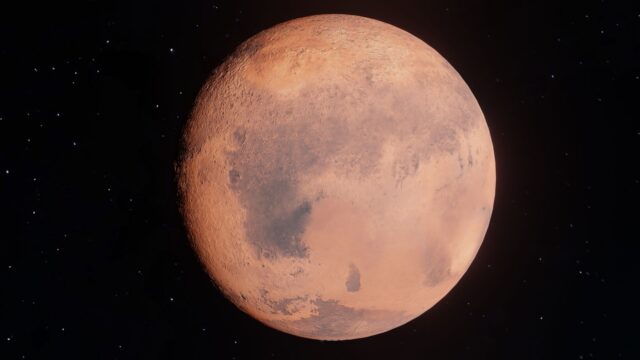
A spacecraft takes roughly six to nine months to travel from Earth to Mars using today’s rockets. NASA’s Perseverance rover launched on July 30, 2020 and landed on Feb. 18, 2021, a trip of about seven months. The travel time is not fixed, because Earth and Mars both orbit the Sun and the distance between them keeps changing.
Why does the trip take months and not days?
Mars is far away even at its closest. The two planets approach each other at their nearest roughly every two years, when the gap is tens of millions of miles. A spacecraft cannot fly in a straight line, because it must travel along a curved path around the Sun while Mars moves ahead on its own orbit. The craft is aimed at where Mars will be when it arrives, not where Mars is at launch.
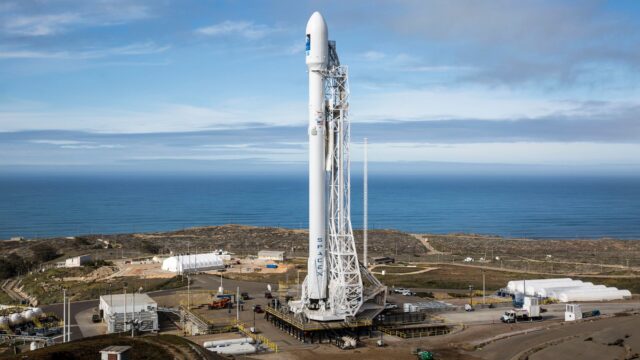
Current chemical rockets burn fuel for only a short time after liftoff. After that, the spacecraft coasts. Carrying enough fuel to keep accelerating all the way would make the vehicle far too heavy to launch.
What is a launch window?
A launch window is the period when Earth and Mars are positioned so a spacecraft can reach Mars with the least fuel. Windows open about once every 26 months. Missions that launch in a given window arrive after a similar number of months, but each mission has its own path, so travel times differ by weeks. Missing a window usually means waiting for the next one, because launching at another time needs much more fuel or a much longer trip.
How long did past missions take?
Robotic missions have taken between about six and ten months, depending on the planet’s position and the mission design. Perseverance needed about seven months. Orbiters and landers that follow the same fuel-saving curve arrive on a similar schedule. A faster path is possible, but it requires a larger rocket or a smaller payload, so most missions choose the efficient route.
How long would astronauts take to reach Mars?
Crewed missions that use chemical propulsion are generally expected to need about the same six to nine months each way. A round trip would be much longer, because the crew must wait on Mars until Earth and Mars line up again for the return. Mission plans put the total near two to three years. Landing heavy equipment, living supplies and a return vehicle adds more constraints than simple travel time.
Faster propulsion is under study. Our report on NASA’s nuclear-powered Mars craft describes one such project. The agency’s own Mars pages at NASA list current missions and their schedules.
Why does the distance change so much?
Earth takes about a year to circle the Sun and Mars takes nearly two. Because the planets travel at different speeds, they drift closer and farther apart in a repeating cycle. Mars can be on the opposite side of the Sun from Earth, which is the worst time to send anything, since the signal and the spacecraft must go around it. The route also has to account for gravity: the craft is pulled by the Sun for the whole trip and by Mars as it approaches.
What happens when the spacecraft arrives?
Arrival is the most delicate part. The spacecraft must slow down enough to be captured by Mars’ gravity, or it will fly past. Orbiters fire an engine to settle into orbit. Landers such as rovers enter the thin atmosphere, slow with a heat shield, parachutes and rockets, and touch down. The final minutes are automatic, because radio signals take several minutes to cross the gap and controllers cannot steer in real time.
Common questions
Can we get there faster?
Yes, with more powerful engines or a lighter load. Nuclear-powered and electric propulsion are studied for this reason. None has flown a crew to Mars, so seven months remains the practical figure.
How long does a radio message take?
Signals travel at the speed of light, yet the distance means a delay of several minutes each way, and it changes with the planets’ positions.
Is the trip the same for every mission?
No. Each launch window and spacecraft has its own timetable, and mission teams choose the path that balances time, fuel and safety.
Site editor: Nikita Sheikin