Faint Supernova 30 Million Light-Years Away Breaks a 30-Year Rule
SN 2024vjm, one of the faintest supernovae seen, stayed bright for over 70 days and defied the Phillips relation, a Nature Astronomy study reports.
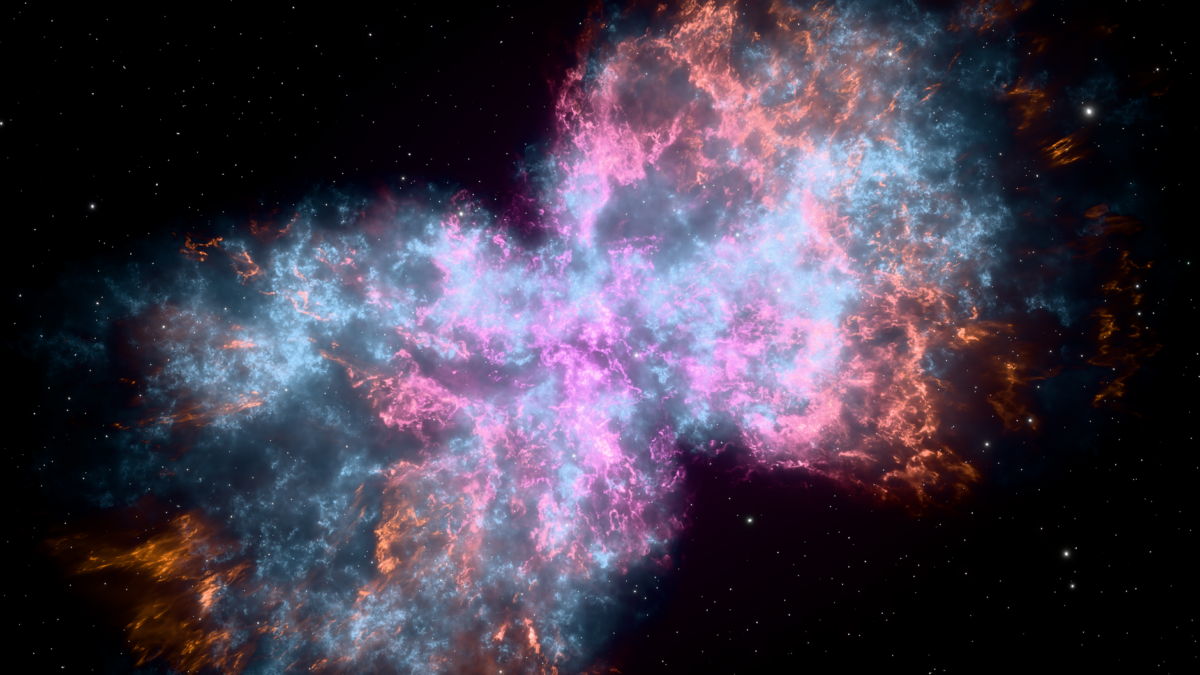
A stellar explosion 30 million light-years from Earth was one of the faintest supernovae ever observed, yet it stayed visible far longer than a rule used for more than 30 years says it should. The result comes from an international team led by Professor Avishay Gal-Yam of Israel’s Weizmann Institute of Science, published in the journal Nature Astronomy.
The explosion, designated SN 2024vjm, was tracked for nearly a year. The team reports that it may have come from a pair of small, dim stars rather than a bright one.
How the explosion was caught and measured
In autumn 2024, the BlackGEM telescope array in Chile’s Atacama Desert recorded a new point of light a minute before midnight GMT, according to doctoral student Erez Zimmerman, who led the study. BlackGEM scans wide areas of sky for short-lived events, unlike the Hubble and James Webb space telescopes, which look at narrow patches in fine detail. The next morning, Professor Paul Groot of Radboud University in the Netherlands spotted the unusual source and alerted the team, which then coordinated follow-up observations.
The first surprise came from the spectrum, the light split by wavelength to reveal what the material is made of and how fast it moves. In typical supernovae of this type, material expands at about 10,000 kilometers per second. In SN 2024vjm the gas moved at just 3,000 kilometers per second. The composition confirmed a supernova powered by nuclear fusion.
The team then found that the European Space Agency’s Euclid space telescope had photographed the same galaxy 11 months before the blast. Using hundreds of BlackGEM images, the researchers pinpointed where the exploding star should have been in the Euclid data. No star was visible there, so they calculated how bright a star could be and still go unseen. That limit points away from a luminous star. The authors suggest a white dwarf (the dense remnant of a star) paired with a faint companion star, or possibly two white dwarfs.
Why it kept shining
The Phillips relation links the brightness of certain supernovae to how quickly they fade: fainter ones normally vanish sooner. SN 2024vjm did the opposite. Zimmerman said the team expected it to disappear quickly, but it kept shining.
In a typical fusion-powered supernova, radioactive nickel made in the blast decays and releases high-energy radiation that heats the surrounding gas. The supernova stays bright for roughly a month to six weeks, until the expanding cloud thins and radiation escapes. In SN 2024vjm the explosion was too weak to spread the gas efficiently. According to Zimmerman, the cloud became thin enough for radiation to escape only after more than 70 days. The radioactive material was also moving slowly, which delayed the escape of energy further.
The team used computational methods that included the Katz integral, developed at the Weizmann Institute in the 2010s by Professor Boaz Katz, who was consulted during the analysis.
How sure is this?
The work is published in Nature Astronomy, a peer-reviewed journal. It describes a single explosion, so it is not yet known how common such events are. The progenitor system, the stars that exploded, was not seen directly. The white dwarf pairing is the researchers’ interpretation, based on the failure to detect any star in the Euclid images, and they describe it as a possibility.
The findings suggest that relationships between supernova brightness and duration may not hold for every explosion, particularly the faintest ones.
What comes next
Future instruments are expected to detect even fainter and more distant supernovae. Researchers hope to learn how common explosions like SN 2024vjm are and whether other unusually dim ones have gone unrecognized.
Source: ynetnews
Site editor: Nikita Sheikin