How Does Nuclear Power Work? Fission, Reactors and Steam
Inside a reactor, splitting atoms boil water. Here is how fission becomes electricity, how operators keep the chain reaction steady, and what went wrong at Chernobyl and Fukushima.
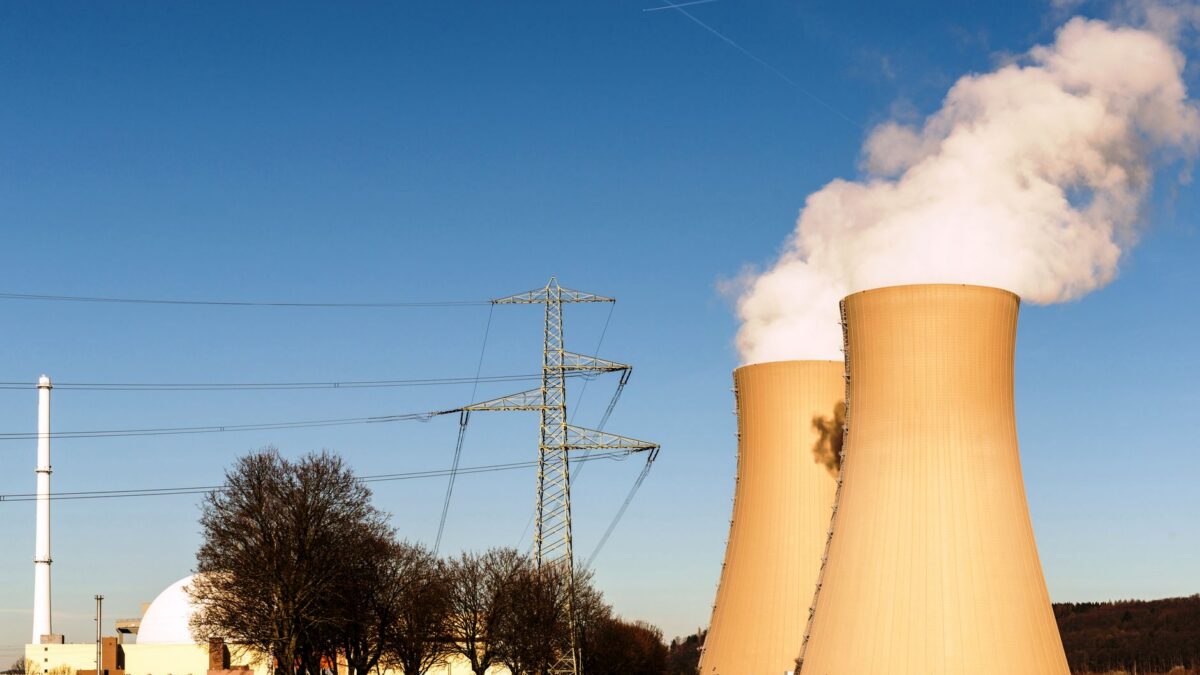
Nuclear power plants make electricity by splitting atoms. In a process called fission, uranium nuclei in the reactor fuel split apart, releasing heat and more neutrons that keep a chain reaction going. The heat boils water into steam, and the steam spins a turbine connected to a generator. The US had 94 operating reactors at 54 plants as of March 2026, according to the EIA.
Past the reactor itself, the plant works much like a coal or gas power station. Only the heat source is different.
What is nuclear fission?
Fission is the splitting of a heavy atomic nucleus into two smaller ones. The US Energy Information Administration describes it simply: fission occurs when a neutron slams into a larger atom, forcing it to split into smaller atoms and release energy and more neutrons.
The fuel in most power reactors is uranium, enriched so that a larger share of it is uranium-235, the type that splits readily when struck by a slow neutron. Each split releases a burst of energy, mostly as the motion of the fragments, which turns into heat in the surrounding fuel and water. The EIA says the fuel is made into ceramic pellets that are stacked inside 12-foot-long fuel rods, which are bundled into assemblies in the reactor core.
Fission is the opposite of fusion, which joins light nuclei such as hydrogen together and powers the Sun. Fusion has not yet produced electricity for the grid, as we explain in how nuclear fusion works.
How do reactors control the chain reaction?
A chain reaction happens because each fission releases neutrons, and some of those go on to split more nuclei. In a power reactor the goal is a steady state, in which on average exactly one neutron from each fission causes another fission.
Operators manage this mainly with control rods, made of materials that absorb neutrons. Pushing the rods deeper into the core soaks up more neutrons and slows the reaction; pulling them out lets it speed up. In an emergency, the rods are driven fully in to shut the reaction down, an event called a scram. Water in most reactors also acts as a moderator, slowing neutrons down so that uranium-235 can capture them more easily.
Stopping the chain reaction does not stop the heat right away. Radioactive fission products in the fuel keep giving off heat, called decay heat, for a long time after shutdown, so the fuel must be cooled continuously. That point matters for understanding Fukushima.
How does the steam make electricity?
The EIA explains that reactors use the heat from fission to boil water and produce pressurized steam, which spins turbines that drive generators. That steam-turbine-generator section works on the same principle as in coal and many natural gas plants.
The two main US reactor designs handle the water differently. In a pressurized water reactor, water in the core is kept under high pressure so it does not boil; it passes its heat to a separate loop of water that becomes steam. In a boiling water reactor, water boils directly in the core and the steam goes to the turbine. Either way, the steam is condensed back to water and reused. The giant cooling towers seen at some plants release heat from that cooling water as water vapor, not smoke.
| Step | What happens |
|---|---|
| 1. Fission | Uranium-235 nuclei split, releasing heat and neutrons |
| 2. Control | Control rods and water keep the chain reaction steady |
| 3. Heat transfer | Water carries heat from the core and becomes steam |
| 4. Turbine | Steam spins a turbine connected to a generator |
| 5. Cooling | Steam is condensed back into water and reused |
How much US electricity comes from nuclear power?
About a fifth. The EIA says the US nuclear industry has supplied about 20% of total annual US electricity since 1990. Its FAQ on nuclear plants lists 94 operating reactors at 54 power plants as of March 2026. Reactors run at high output almost around the clock, which is why a relatively small number of plants supply such a large share.
What happened at Chernobyl and Fukushima?
Chernobyl was a nuclear plant in Soviet Ukraine. On April 26, 1986, a sudden surge of power during a reactor systems test destroyed Unit 4, according to the US Nuclear Regulatory Commission. The explosion and the fire that followed released large amounts of radioactive material. Two workers died within hours from non-radiation causes, and severe radiation effects killed 28 of the site’s 600 workers in the first four months. Chernobyl’s RBMK reactors used graphite to help sustain the chain reaction and were cooled by water, a design that differs from US reactors.
Fukushima Daiichi, in Japan, was struck by the earthquake and tsunami of March 11, 2011. The three reactors that were operating shut down automatically, but NRC documents describe a tsunami estimated at 45 feet (14 meters) that knocked out the backup power needed to keep cooling water flowing. Without cooling to remove decay heat, the cores of those three reactors were damaged, and hydrogen explosions damaged reactor buildings. Large areas around the plant were evacuated. For how such waves form, see how tsunamis form.
What happens to spent nuclear fuel?
Spent fuel is the used fuel removed from a reactor after several years. It is still highly radioactive and hot, so it goes first into deep pools of water at the plant, where the water both cools it and shields workers from radiation. The NRC says most US spent fuel is stored in these pools at reactor sites.
As pools fill, plants move older fuel into dry casks, large sealed containers of steel and concrete that sit on pads at the site. The NRC considers both pools and dry casks adequate to protect public health and safety. The US does not yet have a permanent underground repository, so for now the fuel stays mostly where it was used.
Bottom line
A nuclear plant splits uranium-235 atoms in a controlled chain reaction, managed with control rods and water. The heat makes steam that spins a turbine, just as in a coal or gas plant. Nuclear power has supplied about 20% of US electricity since 1990, from 94 reactors as of March 2026. Spent fuel is stored on site in pools and dry casks.
FAQ
Is the steam from cooling towers radioactive?
The plumes are water vapor from the cooling system, which is kept separate from the water that passes through the reactor core. Not every nuclear plant has cooling towers; some use water from rivers, lakes or the sea instead.
What is the difference between fission and fusion?
Fission splits heavy nuclei such as uranium; fusion joins light nuclei such as hydrogen. Today’s power reactors all use fission. Fusion powers the Sun but has not yet supplied electricity to the grid.
Can a nuclear reactor explode like a nuclear bomb?
No. Power reactor fuel is not enriched enough and is not arranged to produce a nuclear explosion. Accidents like Chernobyl involved steam and chemical explosions and fires that spread radioactive material.
How many nuclear reactors does the US have?
The EIA lists 94 operating reactors at 54 power plants as of March 2026. Some plants have one reactor, while others have two or three.